The Russia-Ukraine asymmetric war. How Moscow created tactical advantages at the expense of Ukrainian innovations

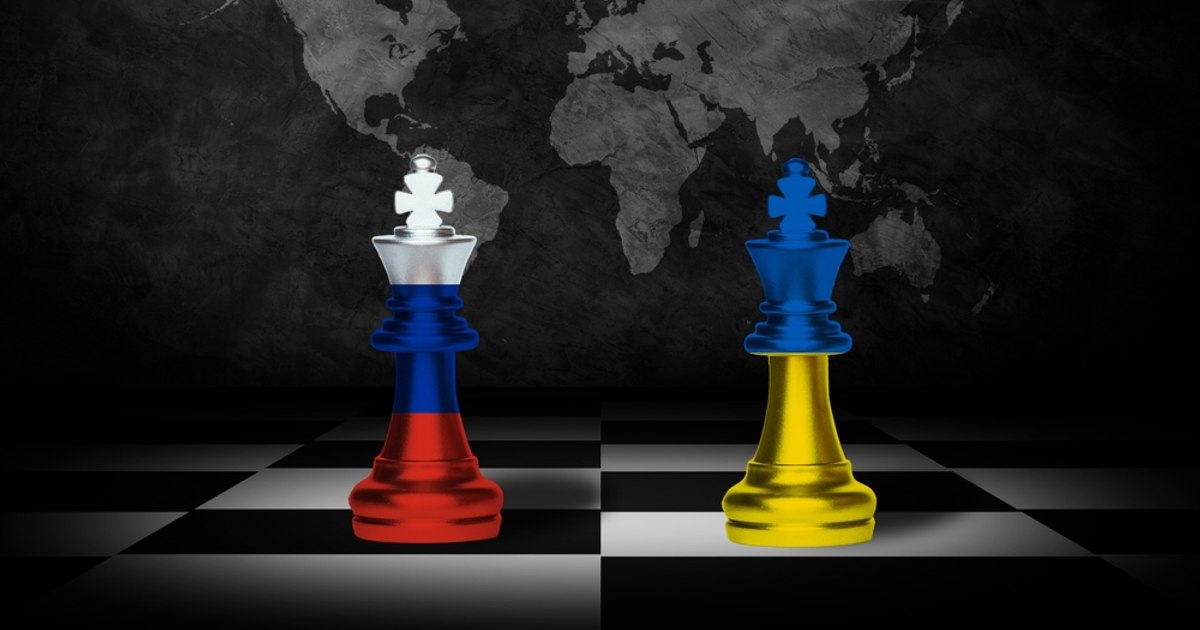
After more than three and a half years of war, Russia has managed to develop and accumulate several asymmetric advantages over Ukraine, including the Rubicon drone center and powerful threats such as glide bombs. On the other hand, the Ukrainian army maintained a number of advantages acquired during 2022-2023, which even today have an important contribution to maintaining a certain degree of strategic balance.
shutterstock photo
Both sides are currently struggling to formulate a strategy that could realistically lead to a military victory, according to an analysis of developments on the battlefield in Ukraine by Reserve General Mick Ryan for CSIS, Defense Express reports.
Ryan outlines several factors that he says represent asymmetric advantages that Russia has been able to acquire:
– transition to fiber-optic guided FPV drones for reconnaissance and attack missions;
– the establishment of specialized drone warfare units, including the Rubikon center;
– increasing the production and increasing the use of glide bombs;
– exploitation of advantages in terms of combat power, associated with constant tactical adaptation on the part of assault units.
Drones are saturating the front, but infantry is essential
“Despite the heavy use of drones, infantry troops are more important than ever to hold the ground. And despite their increasingly advanced drone capabilities, infantry remains essential to Russian ground-conquering operations.”writes the general in reserve.
Russian innovation in drones probably now exceeds Ukraine's, according to front-line commanders, and this is likely due to the following developments: Russia pioneered fiber-optic controlled drones and continues to be a leader in their development and use – providing a stealthy platform and continuous high-quality imagery for targeting; Russia has standardized its drone production around a limited number of models, while Ukraine uses dozens if not hundreds of different models – a fact with logistical, training and production implications; Russian Rubicon units have transformed Russian drone operations, including by making drone control centers in Ukraine targets – moreover, procedures have been standardized and these units are able to innovate quickly.
Ukraine is not actually fighting a war of drones, as it was presented with enthusiasm and optimism, but a war in which drones have gained prominence, the analyst notes, warning of an excessive emphasis on these weapons that at most extend, but do not replace, conventional capabilities. As Ukrainians have discovered on the front lines around the besieged city of Pokrovsk in eastern Ukraine and elsewhere, drones are no substitute for a soldier holding a position.
Tactical adaptation
Russia has advanced (marginally) in the race of tactical adaptation. This entails tactics that change more quickly and are more successful, as well as the systematic distribution, across the entire front line, of new and improved tactical methods. For example, Russia is combining its evolving ground infiltration tactics with the use of fire (particularly attack drones and glide bombs with improved resistance to electronic warfare and longer range) to attack where it identifies gaps in Ukrainian defenses.
Ukrainian commanders describe Russia's latest tactics as “1,000 bites,” in which groups of 2.3 soldiers look for gaps in the Ukrainian front – positions can be up to 1,000 meters apart – which generally lacks deep positions. When they spot such a gap, the Russians pour in infantry and drones, hunting headquarters and drone operations centers. If there is no gap, I use hover bombs or even Shahed drones to create a breach, especially in urban environments.
Long range attack operations
Ukraine has developed a robust remote strike capability: to this end, it integrates Western and Ukrainian intelligence, weapons and assessments to launch strikes on Russia's strategic military and energy production infrastructure, with a secondary focus on Russian missile and drone launch and storage facilities.
One aspect of this Ukrainian campaign that does not receive the same attention as the spectacular attacks on Russian oil refineries or strategic airfields is the planning and advance operations to penetrate Russian airspace. This action is extraordinarily complex, given the density of sensors and air, anti-missile, and anti-drone defense systems.
According to Ukrainian intelligence agencies, Ukraine's long-range strike operations contributed as much to Russia's economic woes as the international sanctions regime in place near the start of the February 2022 full-scale invasion.
However, it should not be assumed that these attacks are a magic solution for Ukraine. They are a tremendously important military effort, but they are insufficient on their own to force Putin to the negotiating table or to win the war.
A final aspect of the long-term attack campaign is its adaptive nature. Ukrainians describe an attack-counterattack feedback spiral as continuous and rapid strategic action.
According to the Ukrainians, new attack and penetration techniques that work for a week can be overtaken in just a week or two by Russian adaptations.
What Russia's asymmetric advantages mean for Ukraine
“Each of these advantages is cause for concern for Ukraine,” Ryan notes. This raises further questions: “What institutional factors allowed Russia to accumulate these advantages? Was Ukraine's spirit of improvisation in 2022–2023 somehow eroded by excessive bureaucracy?”
Ryan concludes the argument with two questions for further thought: “How come these asymmetric advantages were not enough for Russia to achieve victory? And how is Ukraine able to hold on?”
Regarding Ukraine, Ryan argues that for a long time the country has been a “consumer rather than a strategist.” Currently, Ukraine lacks an “obvious theory of victory or a theory of success” beyond continuing what it is already doing:
– conducting remote attacks inside Russia to maximize disruption of the war machine;
– expanding defense cooperation with Europe,
– maintaining the current level of relations with the United States.
This “success theory” may not be enough to force Russia to give up the war.
As for Russia, its strategy seems to be to continue the war without a clearly defined political goal. At the same time, the maximalist goal of completely subjugating Ukraine remains unattainable.
Paradoxically, the most advantageous option for Russia would be to freeze the war and redirect resources to preparing for a future confrontation with NATO. But the Kremlin prefers to keep the situation “on hold”, avoiding the internal shock that would result from the reintegration into society of hundreds of thousands of veterans and the inevitable social destabilization that would bring.
Ryan notes that this accumulation of asymmetric advantages, however, does not resolve Russia's fundamental strategic dilemma: a clear justification for continuing the war, a viable path to achieving its initial objectives, and an acceptable political exit.
In the meantime, Ukraine has no choice but to stay on its current course, even if that offers no guarantee that the Kremlin will reach a point where it will be forced to end the war.