The Dacian helmet from Coțofenești was guarded with “glass that you also have at home”. Investigation in the foreign press about the robbery at the museum in Drents


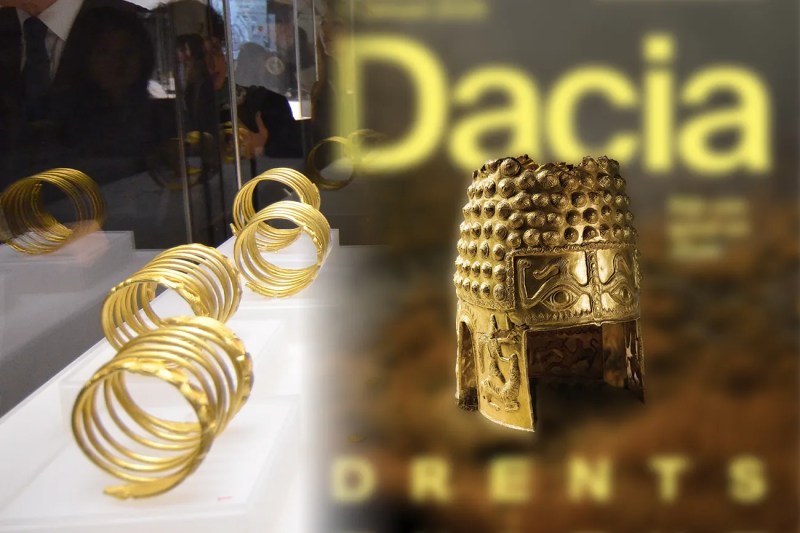
Exhibits from the exhibition Ancient Gold and Silver of Romania, left, Inquam Photos / Bogdan Danescu and the golden helmet from Coțofenești. Collage: Ion Mateș / Hotnews
The Drents Museum in the Netherlands, from where the Coiful de la Coțofenești treasure was stolen at the beginning of the year, had previously been warned about the vulnerabilities of the security systems, according to an RTL investigation, cited by Mediafax. The insurer had recommended the use of more resistant anti-burglary display cases, but the suggestion was ignored by the museum representatives
On the night of January 25, three men broke into the museum. According to RTL, the showcase where the helmet from Coțofenești was displayed was broken with two blows from a sledgehammer, and the thieves needed about three minutes to take the items and run away.
The outer door was blown up with nothing but powerful fireworks and the police arrived within 15 minutes, enough time for the thieves to disappear into the night.
Insurer's warnings
Four weeks before the opening of the “Dacia, Empire of Gold and Silver” exhibition, an expert from insurance broker Aon had inspected the museum. The findings, cited by RTL, indicated that the display cases had “too little resistance to burglary” for the value of the exhibits.
The report recommended the use of display cases that would withstand at least five minutes in the event of an attempted break-in. The expert noted that the showcases used P2A glass, considered similar to ordinary glass in homes.
“It's basically the same glass you have at home. You can break it quite quickly with a blunt object,” Glass Knowledge Center specialist Peter van Dijk explained to RTL: “Burglary-resistant glass takes a much longer time to break.”
Romania received “verbal assurances” from the Dutch
On the Romanian side, the resigned director of the National History Museum of Romania, Ernest Oberländer, who gave the approval for the loan of the works of art, said at the time that the Drents Museum gave “verbal assurances” that burglar-proof glass would be used.
“I was informed that the display cases meet anti-burglary standards and were designed to withstand mechanical impacts for ten minutes. The museum and the insurer did not raise any concerns about the display cases,” Oberländer told RTL.
Museum security experts declared themselves amazed by the low quality of the display cases used to protect the Coțofenești helmet.
A former head of security at a major museum has strongly criticized the security system used to protect the Dacian treasure.
The showcase was supposed to have some rebates (edges) that strengthen it significantly, but, for aesthetic reasons, they were abandoned.
The windshield shattered after just two hits.
During the robbery, the thieves tried to break another window that had been reinforced with such a flap, but it did not yield and they quickly gave up.
Estimation of the priceless
The Netherlands guaranteed 9 million euros for the exhibition “Dacia, the Empire of Gold and Silver” and estimated at 5.7 million euros, insured value, the priceless Dacian treasure, which affects Dutch taxpayers.
The compensation scheme was designed to reduce insurance costs for museums, and insurers significantly reduce insurance premiums.
The Dutch Ministry of Education, Culture and Science said the Drents Museum met the insurance requirements for compensation, but this was not determined on the spot but “on the basis of an administrative inspection”.