VIDEO A researcher burst into tears after making a discovery in the jungle that he had been waiting for 13 years


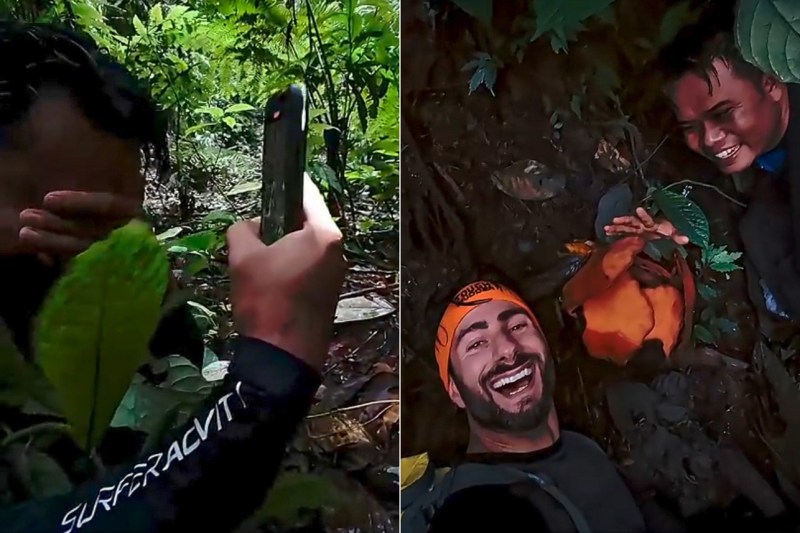
Screenshot from Oxford University YouTube channel
A researcher was moved to tears after coming across an extremely rare species of flower in Sumatra, Indonesia, marking the culmination of a search that lasted more than a decade. The emotional moment was captured in a video released by Oxford University, which quickly spread online and was picked up by media organizations such as the BBC.
“Moments like this are electrifying,” Dr. Chris Thorogood, a lecturer in biology at Oxford University who was on the expedition, told The New York Post. “The road was difficult and the flower so special that we were all very emotional.”
The species in question is Rafflesia hasseltii, a giant, parasitic red flower that, according to the Oxford University Press release, “has been seen more often by tigers than by humans.”
According to the message shared by the British university, Thorogood and his team “traversed the tiger-patrolled rainforests of Sumatra day and night” to find this botanical “Grail”.
In the clip, one of the team members, Indonesian flower hunter 'Deki' Andrikithat, can be seen on his knees, crying with joy at the rare find, as Thorogood comforts him. The video then cuts to the huge white speckled flower unfolding its huge petals.
The two researchers describe their discovery as a once-in-a-lifetime discovery. “It's amazing,” exclaimed Andrikithat, who said he's been hunting this particular flower for “13 years.”
“I'm the luckiest man alive,” Thorogood added.
Researchers liken the experience to something that seems 'otherworldly'
Thorogood told The New York Post that “sitting quietly next to the flower was something otherworldly” and compared the experience to “something sent from another planet.”
To witness the opening of the flower was all the more special as the flowering cycle of the Rafflesia is an ephemeral one.
“It takes up to 9 months for the bud to develop and it only opens for a few days,” Thorogood explained. “It opened right before our eyes,” he added excitedly.
“The chances for something like this are – I don't even know how to express them. It's like it opened up specifically for us,” the Oxford University researcher added.