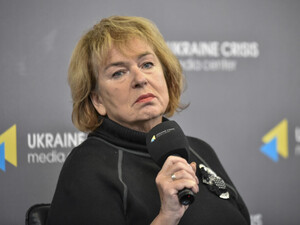
According to her, Ukrainians “did not expect from themselves” the level of patriotism that arose from the beginning of the full-scale invasion.
“The ability of Ukrainians to self-organize, the ability to unite when necessary, has played an important role since February 24 [2022 года]. This subconscious ability to self-organize has always been inherent in us, but there was no reason to demonstrate it. The war shaped these reasons,” says Libanova.
When the war ends, some of these manifestations of national character will weaken, she believes, and cites as an example the unprecedented level of support for the authorities in the country during the war.
“Since February 24, all polls without exception say (most people believe) that Ukraine is moving in the right direction. There will be no such unity. Support for the authorities in peacetime at the level of 70-80% in a democratic society almost never happens,” the expert points out.
At the same time, Libanova does not predict post-war discord.
“We are paving the way for the final formation of the Ukrainian political nation and real democracy, which will not be involved in corruption and money. Still, the war gives a chance,” she concluded.
Context
According to all-Ukrainian survey of the Kyiv International Institute of Sociology (KIIS), the results of which were published September 19, pUkrainian resident Vladimir Zelensky is trusted by the majority of Ukrainians remaining in the country. 58% of respondents chose the “Trust” answer option, 34% – the “Don’t trust” option. The rest are undecided. Compared to the previous sociological study, which was conducted in July–August, the level of trust in Zelensky increased by one percentage point and the level of mistrust decreased by the same amount. The study was conducted in early September among 1023 respondents, the sampling error does not exceed 4.1%.