The biggest challenge Ukrainian soldiers have faced in Western training programs. Instructor Testimonials


British instructors told about the most difficult aspects of training Ukrainian soldiers and recruits in the Interflex program, coordinated by Great Britain.
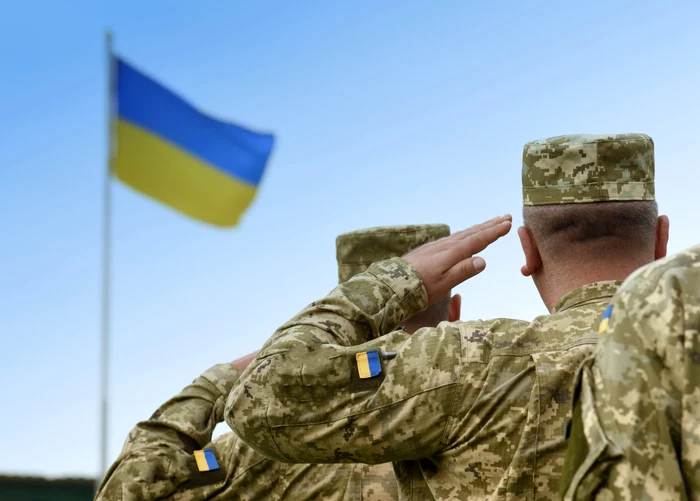
Photo shutterstock
Among the biggest challenges were training exercises related to discipline and fire control so that the Ukrainian military would gain the ability to dose ammunition resources in a tense engagement.
The tendency of the Ukrainians was to fire continuously at the Russians until they gave up or fell to the ground, but the problem was having enough control to stop when it was appropriate, and not to use up more ammunition than necessary.
Ukrainian soldiers in the Interflex training program had an “uncontrollable tendency” to unload all available weapons on enemy forces, Major Maguire, a British Army instructor, revealed to Business Insider.
Their mentality was: if you see a Russian, “shoot him” and don't stop until he's dead or surrenders.
At that rate, thousands of rounds are expended, “and obviously that's not sustainable,” the British officer explained, noting that it was “the most important lesson I think I gave them” – helping them to identify and communicate clear targets and then assess the appropriate response.
This type of control and coordination was the most difficult aspect to convey to soldiers in training, as it aimed at a strong, hard-to-repress fighting impulse. The solution was to rechannel it.
“They were much more aggressive in their aggressive use of offensive firepower than I think any Western military could be,” Maguire said.
Under the Interflex program, coordinated by Great Britain with the support of 13 partner nations – including Canada, Australia and Denmark – more than 56,000 Ukrainians, new recruits as well as military with combat experience, were trained.
For the past year, Maguire has been training experienced soldiers, while also preparing reports for Britain and allies on the combat tactics observed in Ukraine and the lessons that Western forces could learn from them.
A problem that Ukraine faced throughout the war
Ukraine faced shortages of ammunition and other weapons throughout the war. Western aid has often been delayed – or temporarily suspended – due to stockpile concerns and political debate in countries such as the US. Ukraine's defense industry has exploded and expanded rapidly in the meantime, but it has the capacity to produce everything the military needs.
The training was designed so Soldiers could get the most out of every gunfight, Colonel Boardman, commander of the “Operation Interflex” training program, explained on another occasion.
“The Ukrainians cannot afford the luxury of consuming a huge amount of ammunition like the Russians,” he said. Therefore, Ukraine must “make maximum use of the ammunition it has.”
Maguire pointed out that the Ukrainian troops displayed a level of aggression that exceeded anything he had observed in Western troops, probably a consequence of the fact that Western armies have not fought a war of great scale and intensity for a long time.
Ukraine, on the other hand, had to fight without many of the advantages enjoyed by Western militaries, such as rapid medical care for wounded soldiers.
Lessons for Western Armies
Maguire admitted that the British military had learned a lot from Ukraine, lessons learned both from observing the war and aid, and from interactions with Ukrainian soldiers in Operation Interflex.
The British military has already picked up a number of tactics from the Ukrainians, from how to use drones and trenches to how quickly troops should advance.
Ukrainian soldiers are often “much more comfortable taking high tactical risks and therefore are able to show a bit more imagination,” he said, noting that many Ukrainian officers are “less indoctrinated” by military rules and norms.
“I think we took from the Ukrainians that they have a much richer tactical imagination than we do,” Maguire said.
The creativity shown by the Ukrainians even in training conditions greatly impressed the instructors.
For example, when planning an ambush, Ukrainian officers would come up with what he describes as “the most brilliant tactical plan I could think of,” using the terrain in ways that had never occurred to him and showing the confidence to deviate from standard doctrine.
Program coordinators are not shy about admitting that many of the Ukrainian trainees have more battlefield experience than their own Western instructors.
Instructor Boardman previously told Business Insider that the program is designed to take into account the Ukrainians' combat experience, combining their battle-tested methods with NATO doctrine to create even more effective tactics.
Training Ukrainians who have been involved in high-intensity confrontations “can be intimidating for us” because in some areas “they are much better than us”, says Maguire.
This was not an obstacle, on the contrary.
“We're not here to impose our doctrine on you. We're here to show you different ways of doing things,” was his message to newcomers to the program.