The last important Customer of Gazprom in the EU has decided to buy natural gas in Turkmenistan

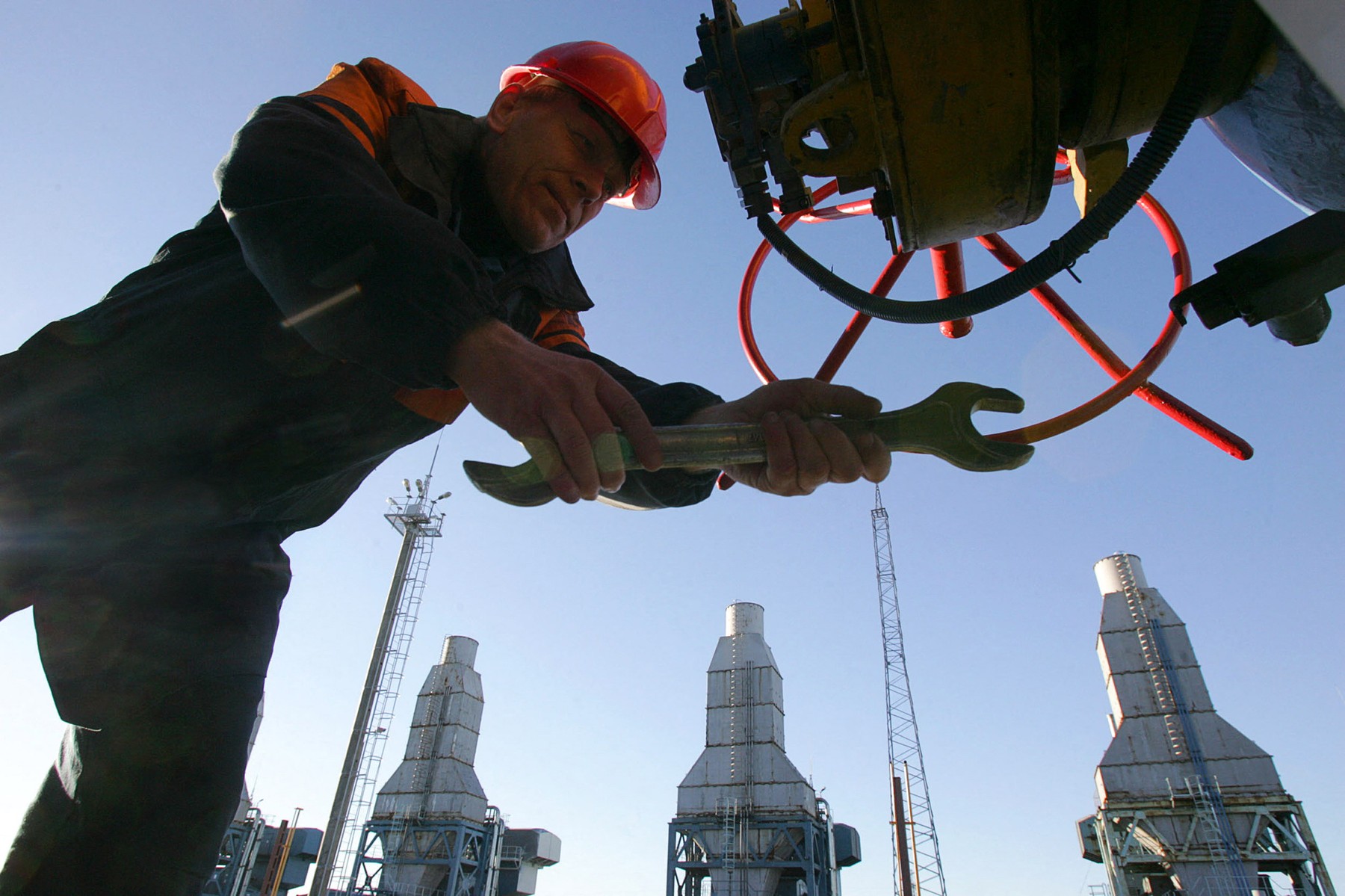
Employee of a gas company during maintenance operations (illustrative image), photo: Viktor Drachev / AFP / Profimedia Images
The largest client of Gazprom in the European Union, Hungary, would like to start buying natural gas from Turkmenistan. This was announced by the Undersecretary of State of Hungary for Eastern Affairs, Adam Stifter, during an official visit he made in Aşgabat, the capital of the country of Central Asia, The Moscow Times reports.
“In the energy sector, we count on Turkmenistan as a trusted partner (…) Hungary depends on the imports of natural gas from various countries, so we also look at Turkmenistan and we hope that Turkmenistan will soon become a gas supplier for Europe, or more precisely, for Hungary,” said Stifter, quoted by the State Agency.
His comments came after the Hungarian Foreign Minister Peter Szijjarto, announced on Thursday the signing of the longest contract in the history of the country for the purchase of liquefied natural gas (LNG). It was concluded with the French company Engie and will be valid from 2028 to 2038. The total supply volume will be 4 billion cubic meters.
At the beginning of September, Hungary signed with the British company Shell a contract for the purchase of 2 billion cubic meters of gas annually. The deliveries will start in 2026, and the agreement itself is 10 years. The gases will be delivered through the Czech Republic and Germany.
Change of Budapest rhetoric in terms of dependence on Russian gases?
Hungary and Slovakia, countries without exit to the sea that import Russian oil and gas through, have so far opposed the abandonment of Russia's energy supply. Natalia Milchakova, an analyst at Freedom Finance Global, said that the sudden change of Budapest rhetoric on the possibility of importing gas from another country could indicate that Hungary is trying to diversify its supply.
However, she emphasizes, it is still not clear how much gas can provide Turkmenistan and how. “It will have to use either Azerbaijan pipeline infrastructure, which has its own plans to export gases to Europe, or Iran, with which the EU has very difficult relationships due to sanctions, or provide gases through the Turkish Stream pipeline on the basis of a Gazprom contract,” explained Milchakova.
Budapest is currently spending about 500 million euros per month for Russia's energy supply, according to Finnish Think Tank creation. In July, gas supplies to Hungary totaled 285 million euros, while oil deliveries totaled 200 million euros. Slovakia also continues to purchase Russian gases through pipes, but at a significantly smaller volume – about 50 million euros per month.
The current contract with Gazprom in Hungary, for 4.5 billion cubic meters annually, remains in force by 2036.
Viktor Orban's government says that for Russia's oil imports it has no alternatives
Regarding oil deliveries, Hungarian Prime Minister Viktor Orban reiterated on Wednesday that his country will continue to import from Russia.
“The US president respects the sovereignty of other countries, he just asked me to present his situation-it is an important difference,” Orban said in front of journalists, at the informal summit of EU leaders on Wednesday in Copenhagen.
Orban said that, given that Hungary is a country without exit to sea, it has no “other option” than to continue to import oil from Russia. “We cannot change geography, regardless of political requirements,” he argued.
He made the statements in the context in which the White House administration recently asked the EU to put an end to Russian oil imports to press Russia to end the Ukraine. The White House proposed the community block including imposing 100% punitive customs duties against China and India because of their Russian oil imports, promising that the US will follow the EU example.
These requests have difficulty Hungary and Slovakia, which remained the most important importers of oil and Russian gas in the EU. Other strongly dependent countries on energy imports from Russia, such as Germany and Italy, have found ways to disconnect Russian imports after imposing sanctions against Moscow and explosions that stopped the Nord Stream gas pipelines in September 2022.
Slovak Prime Minister Robert Fico also rejected Trump's request, saying that he hopes that Bratislava will find a “common land” with Washington on this subject.