Alarm signal on the “chronic disease pandemic”. The foods that make us sick, named by scientists


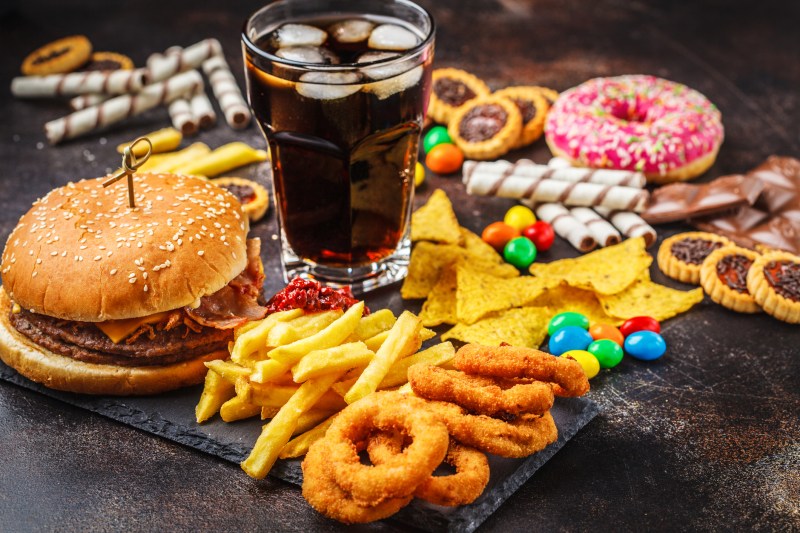
Junk food: Burger, sweets, chips, chocolate, doughnuts, soda. Illustrative image. PHOTO: © Nina Firsova | Dreamstime.com
Ultra-processed foods (UPFs) are one of the main causes of the “chronic disease pandemic” associated with diet as food companies put profit above all else, warned several global experts, quoted by German news agency DPA on Thursday.
In a study published in the medical journal The Lancet, 43 scientists joined forces to explain that AUPs “replace” fresh food and preparations, worsening the quality of the diet, and are associated with multiple chronic diseases.
“The key factor in the global rise of AUPs is the increasing economic and political power of the AUP industry and its restructuring of food systems to place profitability above all else,” the scientists wrote, according to Agerpres.
“This industry has AUP factories at its core, but also a wider network of co-dependent establishments that collectively drive the production, marketing and consumption of AUPs,” the experts added.
Ultra-processed foods are associated with poor health, including an increased risk of obesity, heart disease, cancer and premature death.
Ultra-processed foods, full of saturated fat, sugar and salt
Examples of ultra-processed foods include:
- ice cream;
- processed meat (mainly sausages);
- the chips;
- industrially produced bread;
- certain assortments of breakfast cereals;
- biscuits;
- many semi-prepared foods;
- carbonated drinks.
UPAs often contain high concentrations of saturated fat, salt, sugar and additives, which health experts say leaves less room in people's diets for more nutritious foods.
AUPs also tend to include additives and ingredients that are not used when people cook in their kitchens, such as preservatives, emulsifiers, artificial colors and flavors.
“Government Policy Inertia”
Experts from this global team say that while some countries have already adopted rules to reform food preparation and control AUPs, “the global public health response is still nascent, much like the movement to control tobacco manufacturers was decades ago.”
They say government policies, including in high-income countries, have done too little to change the “commercial and structural determinants of the problem”, focusing instead on consumer responsibility, industry partnerships and voluntary industry self-regulation, such as when companies replace sugar in certain foods with sweeteners or when they reduce the fat content of various preparations.
“This inertia of government policies reflects the coordinated efforts of the AUP industry to distort the decision-making process and the framework of public debates in its interest and to invent the appearance of scientific doubts,” the experts added.
They argue that “the continued rise of AUPs in the human diet is not inevitable” and that although studies on the effects of AUPs continue, this fact should not delay policies aimed at promoting whole-food diets.
The share of AUPs in food remains below 25% in countries such as Italy, Cyprus, Greece, Portugal and regions in Asia, but is over 50% in the United States and the United Kingdom, the authors of the study warned.
Junk food: Burger, sweets, chips, chocolate, doughnuts, soda. Illustrative image. PHOTO: © Nina Firsova | Dreamstime.com