Colombia has officially dropped the US bid for F-16 jets and instead signed a $3.6 billion contract with Swedish company Saab for Gripen E/F fighter jets, ending the search for a successor to its aging Kfir fleet, Newsweek reports.
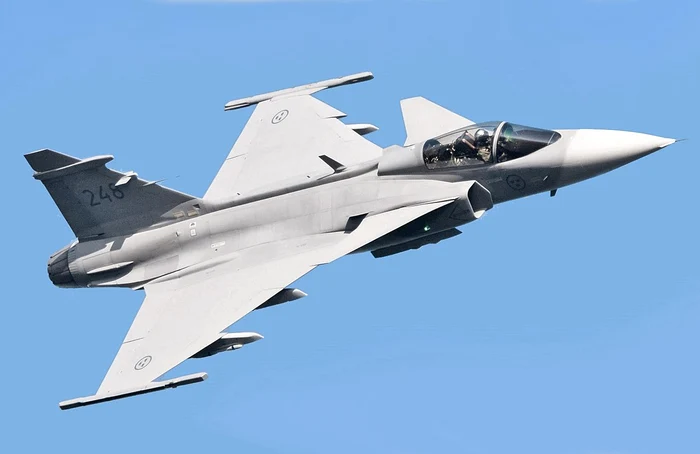
Gripen aircraft PHOTO ARCHIVE
The deal, finalized over the weekend, marks a notable shift in Bogotá's defense procurement strategy and confirms President Gustavo Petro's long-signaled preference for the Swedish bid. Saab shares rose 7.4 percent on Monday, reflecting strong market reaction to the billion-euro deal.
The decision marks one of the most significant turns in Colombian defense policy in decades, a departure from its long-standing pattern of choosing American systems for major air defense programs. For Washington, the rejection of its offer – despite several months of intense lobbying – signals a recalibration of Bogotá's strategic posture as it seeks deeper industrial and technological partnerships with European states.
This decision comes at a time of heightened tension in northern South America. Colombia has stepped up surveillance and preparedness along its border with Venezuela amid ongoing disputes over migration, territorial claims and military activity. The need for a fleet of modern and reliable fighter jets has become pressing as Bogotá balances diplomacy with the practical demands of securing its airspace.
Colombia has an aging fleet
The Kfir aircraft, manufactured in Israel and purchased in the late 1980s, have become increasingly difficult and expensive to maintain as components become obsolete and specialist technical support is required.
The diplomatic rift between Colombia and Israel, following President Gustavo Petro's criticism of Israeli operations in the Gaza Strip, has blocked Bogota's access to essential parts, software updates and certified support.
With the discontinuation of the single helpline, the imperative to find a modern and sustainable replacement became a necessity.
Why Gripen planes
The Gripen E/F has become attractive to Colombian defense officials due to its relatively low maintenance costs, high mission rate, capability for dispersed operations, and long-term affordability. Saab's extensive offering, which includes technological cooperation within Colombia, was a decisive factor in this choice. Bogotá thus becomes the second Gripen operator in South America after Brazil.
Petro confirmed Colombia's purchase of 17 Gripen aircraft in a series of social media posts.
“This is a weapon of deterrence to achieve peace,” he wrote.
For his part, Swedish Defense Minister Pål Jonson commented on X: “With the purchase of 17 Gripen E/F aircraft by Colombia, our defense relations will deepen significantly and Colombia will receive one of the greatest fighter jets in the world.”
The US made a robust bid, offering a combination of new Block 70 F-16s and donated Block 50/52 aircraft valued at around $4.2 billion. US officials highlighted advantages such as NATO-style interoperability and opportunities for future cooperation, presenting the F-16 as a platform aligned with Colombia's role as the alliance's sole “global partner” in Latin America. Despite this, Petro maintained its previous ratings that placed the Gripen first in terms of maintenance costs, operational flexibility and industrial commitments.
The French Rafale jet impressed with its raw performance, but the higher price and more limited technology transfer package made Saab's offering stronger by comparison. The Chinese J-10CE aircraft was considered the least compatible with Colombia's systems and network of partnerships.
The agreement comes as US military activity is ramping up and anti-shipping operations in the Caribbean and eastern Pacific continue, keeping Colombia and much of Latin America under tension.
Bogotá will begin detailed planning for infrastructure upgrades, pilot training and industrial cooperation programs, paving the way for the Gripen to enter service later this decade as the backbone of this country's future air combat capability.