In a world where job descriptions come to look like technical contracts, relationships operate on emotional multitasking, and the body registers every notification as a danger signal, anxiety is the natural product of constant overstimulation, experts say. The rhythm is fragmented, attention is divided in hundreds of directions, and the body is left alone trying to keep up.
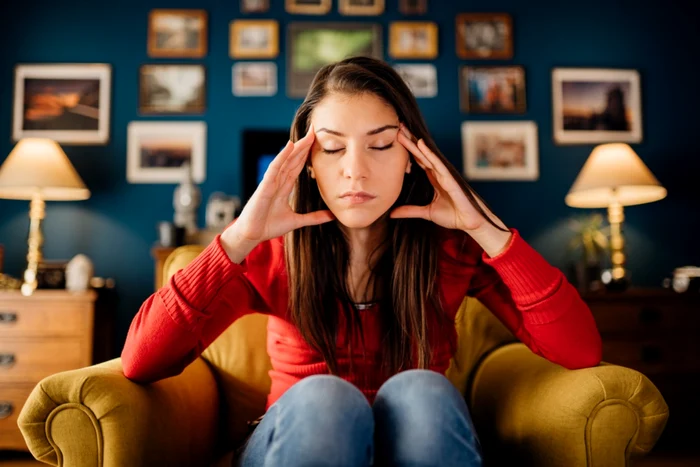
Photo credit: Shutterstock
Adlerian psychotherapist and clinical psychologist Gabriela Răileanu explains for Adevărul that “overstimulation and anxiety have a two-way connection: anxiety can make you more sensitive to external stimuli, while overstimulation can trigger or worsen anxiety symptoms. When the brain is overwhelmed, the response to stress or perceived danger is activated, releasing hormones like cortisol and adrenaline. Basically, the automatic fight-or-flight response is triggered. Conversely, anxiety can cause the nervous system to be on constant alert, reducing tolerance to stimuli or stress.”
How overstimulation leads to anxiety
In practice, this translates to: the brain goes into “alert” mode, the body responds with acceleration, and perceptions are amplified. Any sound becomes too much, any requirement seems critical, any email can trigger a “micro-crisis”. The pace of modern life, the phone that doesn't go silent, the tasks that follow, the pressure to perform, turn vigilance into a background state, she explains.
“Although anyone can experience overstimulation, certain people are more prone to it and the associated anxiety: neurodivergent people, people with anxiety disorders, people suffering from post-traumatic stress or people under chronic stress. Because we live in a world that demands more and more of us, we are all the more susceptible to fatigue, chronic stress or burnout.” scores the specialist.
In this equation, it is not technical complexity that attacks us, but accumulation. Physiologically, the body is always trying to reach a state of equilibrium. In an environment with too many signals, however, balance becomes an unstable goal. That is precisely why apparently trivial solutions gain weight. “The recommendations seem simple, but still complicated to follow at times. Exercise, a balanced diet and restful sleep are essential in managing anxiety… but they take time, effort and are seen by some as just another task to add to a long to-do list. That's why they can be rejected from the start”adds Gabriela Răileanu.
Techniques that calm the nervous system on the spot
She recommends those techniques applicable “here and now”, without training and without tools. “People are looking for quick fixes that can be applied as soon as they feel overwhelmed and in any place. This is where techniques like grounding, diaphragmatic or abdominal breathing or, more recently, non-doing come in.”
Diaphragmatic breathing, explained by the specialist in exact terms, becomes an adjustment tool: “When levels of anxiety or overstimulation increase, breathing tends to become shallow. Diaphragmatic or abdominal breathing involves inhaling deeply, inflating the abdomen, and exhaling slowly. […] Five minutes a day can have benefits not just for stress management, but for overall health.” she confesses.
In the complementary register, non-doing works as an antidote to over-activation. “It is the practice of refraining from unnecessary muscular and mental tension. It involves consciously letting go of excessive effort and allowing the body to move with ease and balance. It is not passive inaction, but rather an intentional release or inhibition of tension patterns.” So, in an environment where pressure is the norm, non-action does not mean giving up, but recalibrating.
The efficiency of these techniques comes from biology. “These techniques work because they stimulate the vagus nerve, which is involved in how the body responds to stress.” explains Gabriela Răileanu. The sympathetic nervous system activates fight or flight; the parasympathetic, through the vagus nerve, returns the body to a tolerable rhythm. Breathing, sensory anchoring, and non-doing target exactly this internal switch.
So complexity destabilizes and minimalist solutions deliver. “In a world where complexity is becoming the norm, effective solutions are surprisingly simple. The body doesn't need more effort, it needs less noise.”
In an ecosystem built on constant alert, minimalism becomes a form of therapy, and the body (if we make room for it) already knows its way back to calm.
The senses as the “gateway” between body and mind
The research published in the International Journal of Ayurveda Research in early 2025 (Anjana Roy Shivakumar Shankar Harti) confirms the direction observed in psychology: overloading the senses decreases the brain's ability to filter information and increases vulnerability to anxiety, depression and concentration disorders. The study starts from an old principle of Ashtanga Hridaya, synthesized in a phrase that is becoming surprisingly current in the digital age: “the sense organs should neither be overtaxed nor excessively indulged.” The researchers translate this idea into a contemporary setting: repeated exposure to high-intensity digital stimuli, the pressure of always-on connectivity, and the constant flow of media produce a form of ongoing stress that erodes mental resilience.
“In Ayurveda, the senses are part of the same mind-body complex. How we see, hear, touch, smell or taste determines how we understand the world and how we react to it. Perception is not only physical; it also has an emotional and cognitive level. Therefore, the interaction between the senses and the mind can generate both body reactions and emotional states such as anxiety or depression. The same idea appears in psychology and neuroscience: the quality of stimuli that we receive directly influences our emotional state. When there is an imbalance, too much stimulation or too little activation, mental health begins to deteriorate.” it shows in the study.
According to the cited source, visual and auditory overstimulation gradually reduces the brain's ability to focus and induces a type of “restlessness” specific to the connected world. Attention is forced to refocus continuously, with no time to recalibrate, and this instantaneous transition keeps the nervous system on diffuse alert. Roy and Harti explain that the mechanism is not just physiological. Sensory perception is intertwined with emotional responses: how we see, hear, or process stimuli determines the resulting psychological states. The study describes exactly this circuit: an imbalance in sensory input: either through excess or deprivation, destabilizes emotional responses and contributes to anxiety.
Another relevant point: overstimulation comes not only from the intensity of stimuli, but also from “idealizing” them. Constant exposure to perfect social media images disconnects from reality and amplifies negative self-evaluation. The authors show that this constant comparison produces a type of pressure that functions as a sensory-emotional stressor, triggering a vicious cycle between perception, tension, and anxiety.
The study also talks about the opposite trap: overindulging the senses. In modern terms, this means excessive consumption of comfort: non-stop entertainment, food as a regulatory mechanism, instant dopamine. The result is a form of desensitization: the stimuli lose their effect, and the brain demands even more. Roy and Harti call the phenomenon “perceptual confusion”: the mind is no longer able to coherently process or interpret what it receives, which creates a sense of mental clutter.
Therefore, the study shows, sensory balance reduces anxiety, and tuning techniques work because they reset the circuit between stimulus and response. Ayurveda speaks of satva (mental clarity and stability) and contemporary psychology describes the same in terms of parasympathetic regulation through the vagus nerve. Slow pace, low input, focused attention.