Considering the long history of attempts to block sanctions against the Kremlin by Orban, EU legal experts develop a scheme that will ensure that the decision on the proposed “reparation loan” for Ukraine She could be taken by a qualified majority of votes. Four people informed about the plans told Politico that the Commission was hoping to base their activities on the set of conclusions of the European Council, to which all EU leaders, including Orban, agreed on December 19 last year.
In this statement, the leaders declared: “Russia's assets should remain immobilized until Russia stops the war of aggression against Ukraine And it will not compensate for its damage caused by this war. “At that time, this was interpreted in this way: the assets themselves should remain frozen, primarily at the Belgian Bank Euroclear, and Russia should not have access to them, while interest could be used for war.
The new argument of the commission is that this statement constitutes A sufficient basis for changing the rules of sanctions with unanimity to the qualified majority. For this to work, all or most of the other countries would have to agree.
Continued article under video material
“It would require high -level political agreement Between all or majority of heads of state or government, “said the committee in the note to the EU ambassadors who met on Friday.
Belgium is afraid of Putin's revenge
Obtaining this wider agreement will not be easy. The potential mixture has other Russian -friendly countries, such as Slovakia. There is also a Belgian problem. The local government has already withdrawn, fearing that the takeover of cash by the EU may expose Belgium and Euroclear, a financial institution that stores frozen state -owned acts of Russia, legal retaliation on the part of Moscow.
– You take Putin's money and leave the risk to us. This will not happen, I will say it very clearly – declared Prime Minister Bart de Wever in New York on the occasion of the UN General Assembly. – If the countries see that the money of central banks may disappear, if European politicians consider it appropriate, they can decide to withdraw their reserves from the euro area.
Despite this, De Wever announced that he was ready to discuss this matter, and Belgium, unlike Hungary and Slovakia, basically supports the funds against Putin. The key offer of calming down Belgians will probably consist of replacing assets from Euroclear sent to Kiev jointly guaranteed by other countries with loans.
EU leaders will meet next week in Copenhagen, where discussions about the loan are planned. No formal decisions will be made – This is to take place only at the top at the end of October, after finance ministers have the opportunity to read the proposal at the meeting in Luxembourg on October 10.
– goal [spotkania w Kopenhadze] there is a meeting sufficient support from other countries to isolate Orban Subsequently one of the EU diplomats said. – We're in a gray zone.
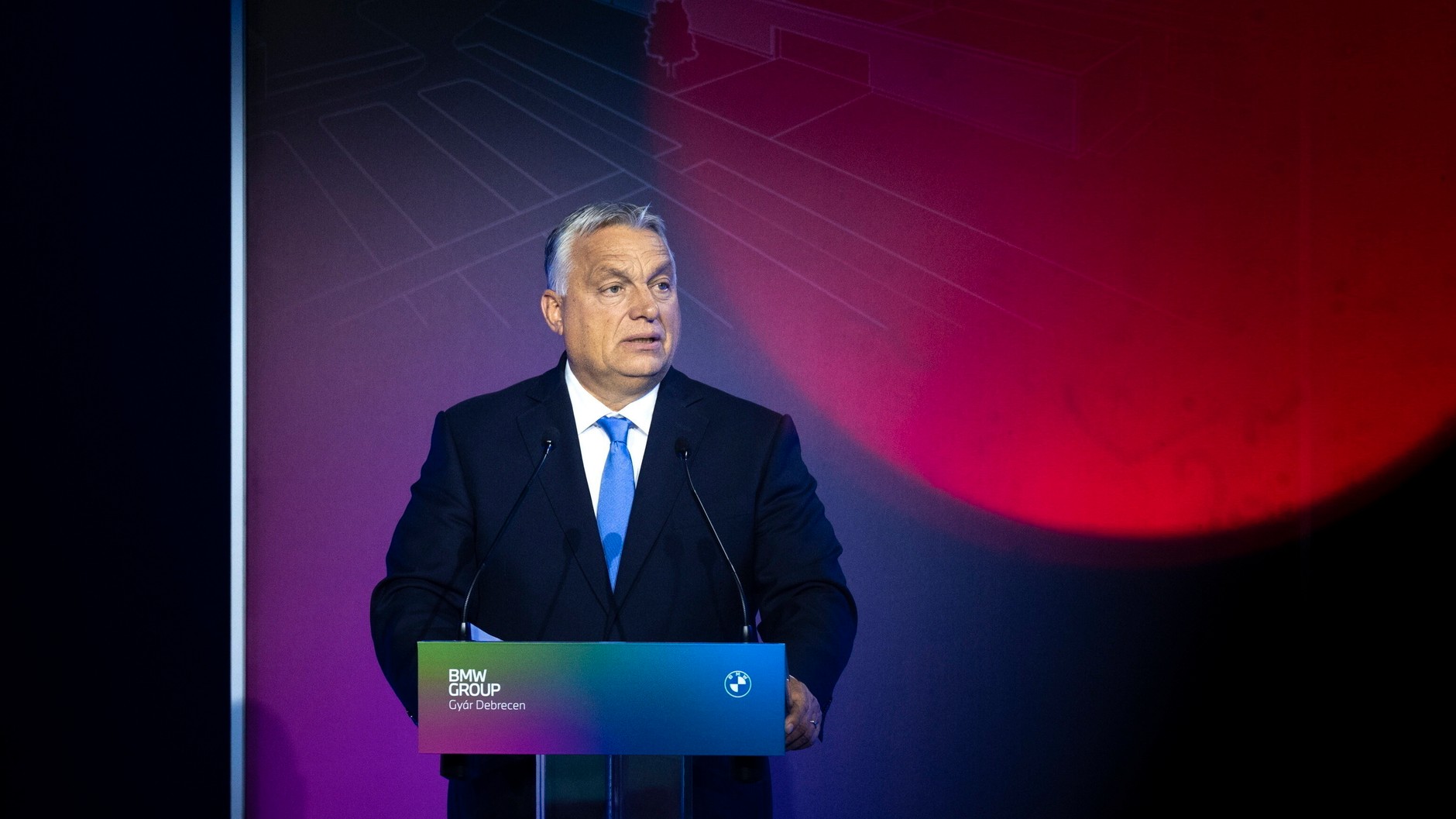
Viktor Orban speaks during the opening of the new BMW factory in Debreczyn, September 26, 2025.PAP /EPA /Vivien Cher Benko /Hunggarian PM? S Office /Handout
Germany, Spain, Poland and the Baltic States bordering Ukraine are the key supporters of the Commission plan. But France and Italy previously carefully approached all innovative ideas use of immobilized state assets.
Zoltan Kovacs, a Hungarian secretary of state for international communication, did not answer the request for comment.
Risky playing hundreds of billions of euros
Since Putin began an invasion of Ukraine on a full scale in February 2022, most Russian state assets were frozen in Euroclear. A large part of them were invested in Western government bonds, which were converted into cash. This cash is currently on a deposit account at the European Central Bank.
Brussels has already thought about the idea of using frozen assets, but previous attempts to use cash covered by sanctions met with strong political resistance.
A loan to pay reparations would be paid in tranches and used for “European defense cooperation” and “covering budget needs”the commission said in its note.
The effect of veto Budapest would be actually transferring Russian money back to Moscow, which would force European capitals to pay back the loan. The new proposal to circumvent Hungary would reduce this risk. However, several countries are afraid that The use of old declarations for dictating future policy creates a dangerous precedent.
“Hungary has sufficient grounds to initiate court proceedings,” said the second EU diplomat. Another said that “if skeptics do not change their minds, there would be no Orban's issue.”
I’m Ashley Davis as an editor, I’m committed to upholding the highest standards of integrity and accuracy in every piece we publish. My work is driven by curiosity, a passion for truth, and a belief that journalism plays a crucial role in shaping public discourse. I strive to tell stories that not only inform but also inspire action and conversation.