They protested against the war. Former Russian prime minister and famous economist considered terrorists

2025-11-17 15:42
publication
2025-11-17 15:42
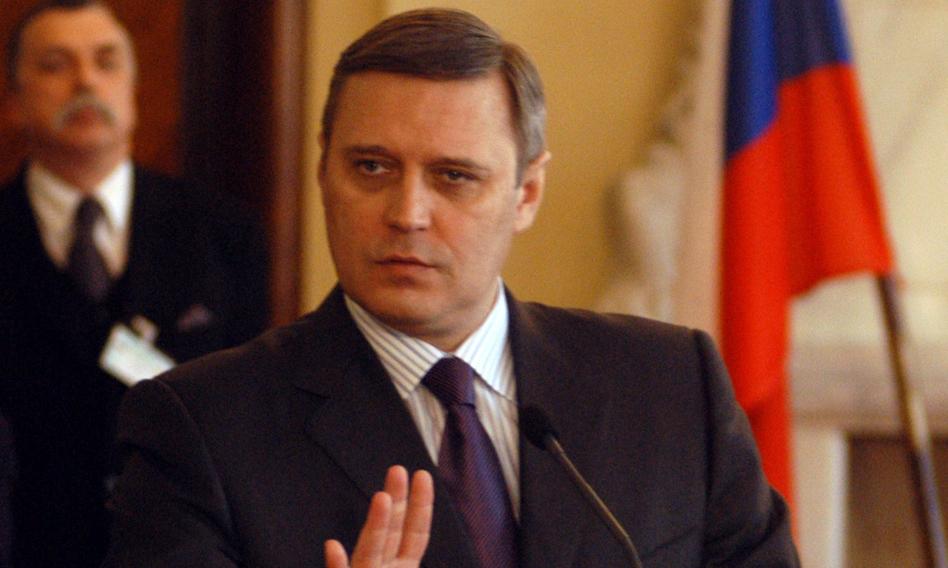
Former Russian Prime Minister Mikhail Kasyanov, who left Russia to protest the war in Ukraine, and economist Sergei Guriev have been included on the list of “extremists and terrorists” by Rosfinmonitoring, Russia's financial crimes prevention office, Reuters reported on Monday.
As the agency comments, this is the latest installment of the Kremlin's repression against well-known critics of the Russian authorities.
Rosfinmonitoring, which is supposed to officially prevent the financing of terrorism, added Kasyanov and Guriev to a list that already contains over 19,000. names and 823 organizations – Reuters reported, citing a message posted on the website of this office.
In November 2023, Kasyanov was included by the Russian authorities on the list of “foreign agents”. The Ministry of Justice then accused him of being “against a special military operation in Ukraine” and of being a member of the Russian Anti-War Committee, which the authorities consider an “organization aimed at discrediting Russian foreign and domestic policy.”
The committee was created abroad in 2022 by several Russian oppositionists, including former oligarch Mikhail Khodorkovsky.
Kasyanov was prime minister during Vladimir Putin's first presidency from 2000 to 2004. Previously, in 1999-2000, he held the position of Minister of Finance. He later became an outspoken critic of the Kremlin. He left Russia in 2022.
Sergei Guriev, former chief economist of the European Bank for Reconstruction and Development (EBRD), dean of the London Business School, fled Russia in 2013. In an article published in October, Guriev appealed to Western governments to intensify sanctions against Moscow, provide Ukraine with technically advanced weapons and organize a “brain drain” from Russia, reports Reuters.
The provisions on “foreign agents” in Russia initially applied to non-governmental organizations, which were recognized as such if they engaged in political activities and received funds from abroad. In practice, the criteria for recognizing organizations as “agents” were unclear from the beginning and were used to repress independent groups. Later, the provisions on “agents” began to apply to the media and even individuals. (PAP)
fit/ mal/