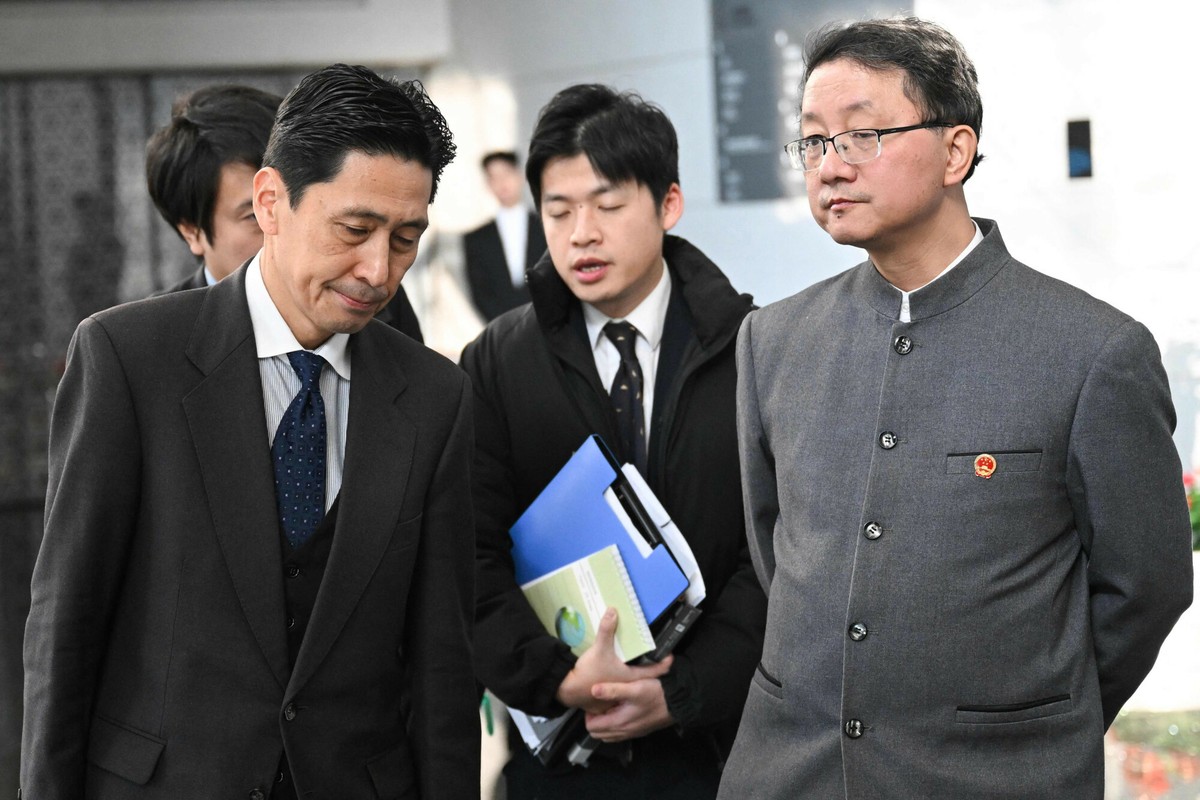
The warning issued by the Japanese embassy in China came as a senior Japanese Foreign Ministry official traveled to Beijing to hold talks with his Chinese counterpart on Tuesday to ease tensions.
China, in turn, has urged its citizens not to travel to Japan, which could seriously damage the Japanese economy given that Chinese now make up almost a quarter of all tourists visiting Japan, according to official data. Shares of Japanese tourism-related companies fell sharply.
China-Japan. The most serious diplomatic crisis in years
This is a reaction to Takaichi's words on November 7, who suggested that a Chinese attack on Taiwan could pose a threat to Japan. The communist authorities in Beijing interpreted this as Tokyo's potential military support for Taipei. Taiwan, considered a rebellious province by the Chinese authorities, is located only 100 km from the Japanese islands.
In response, a Chinese diplomat in Japan posted a harsh comment on social media directed at Takaichi. It was met with a strong response from Tokyo, but did not stop the wave of vicious comments directed against it in Chinese state media.
The Japanese embassy in China, noting media reports, reminded its citizens on Monday to respect local customs and be careful when dealing with Chinese people. They were advised to pay attention to their surroundings when outdoors, advised against traveling alone and urged to be especially careful when traveling with children.
“If you see an individual or group that looks even slightly suspicious, do not approach them and leave the area immediately,” the embassy said in a note.
Beijing and Taiwan. What is this conflict about?
Beijing considers democratically governed Taiwan as its part and does not rule out using force to take control of it. The Taiwanese government rejects Beijing's claims and emphasizes that only its inhabitants can decide about the future of the island.
Taiwan is located approximately 100 km from Japanese territory, and the waters around the island constitute an important sea route for trade, on which Japan is heavily dependent. Japan also hosts the largest foreign contingent of U.S. troops.
On Sunday, Chinese coast guard ships sailed through the waters around a group of islands in the East China Sea controlled by Japan but claimed by China. The Japanese Coast Guard said it had forced Chinese vessels to leave the area.
The United States does not formally recognize the islands — known as Senkaku in Tokyo and Diaoyu in Beijing — as Japanese territory, but since 2014 it has said it is committed to defending them in the event of attack, in accordance with the Japan-U.S. security treaty.
“In case anyone was in any doubt, the United States is fully committed to the defense of Japan, which includes the Senkaku Islands. And no amount of Chinese Coast Guard ship formations will change that,” wrote U.S. ambassador to Japan George Glass on Platform X.
Not only tourism
In addition to tourism, Japan is highly dependent on China for supplies of key minerals used, among others, in electronics and automotive.
“If we rely too heavily on a country that resorts to economic violence when it doesn't like something, it creates risks not only for supply chains but also for tourism,” Japan's Economic Security Minister Kimi Onoda said Tuesday.
“We must realize that it is dangerous to become economically dependent on a place that poses such threats,” she added, responding to a question about China's appeals to its citizens to avoid traveling to Japan.