The latest corruption scandal in Ukraine made international headlines. And rightly so – corruption is destructive, immoral and weakens every country from within.
According to the National Anti-Corruption Bureau of Ukraine (NABU) and the Specialized Anti-Corruption Prosecutor's Office (SAPO), high-ranking officials and businessmen carried out a practice in which they demanded bribes of 10-15 percent. from contracts aimed at protecting Ukrainian energy infrastructure.
Investigators conducted high-profile searches, discovered large amounts of cash and released audio recordings of officials discussing the “laundering” of funds. The Financial Times called this case the biggest corruption scandal since the beginning of the full-scale invasion.
First of all: corruption exists everywhere
Not in “some places”, not in “Eastern Europe”, not just in “developing countries”. Every democracy, from the United States to France to Japan, struggles with corruption. The real difference is not whether corruption occurs, but whether institutions are strong enough to detect and prosecute it.
The fact that Ukraine's biggest wartime corruption scandal was exposed by Ukrainian anti-corruption institutions is not bad news. This is proof that Ukrainian institutions work.
Second: Ukraine has made enormous progress.
Since the Revolution of Dignity, Ukraine has built some of the strongest anti-corruption institutions in Europe: NABU, SAPO and WAKS (High Anti-Corruption Court of Ukraine).
Ukraine also showed one of the best scores in the world on the Corruption Perceptions Index. Since 2014, Ukraine has increased by 10 points – the highest among current EU candidate countries.
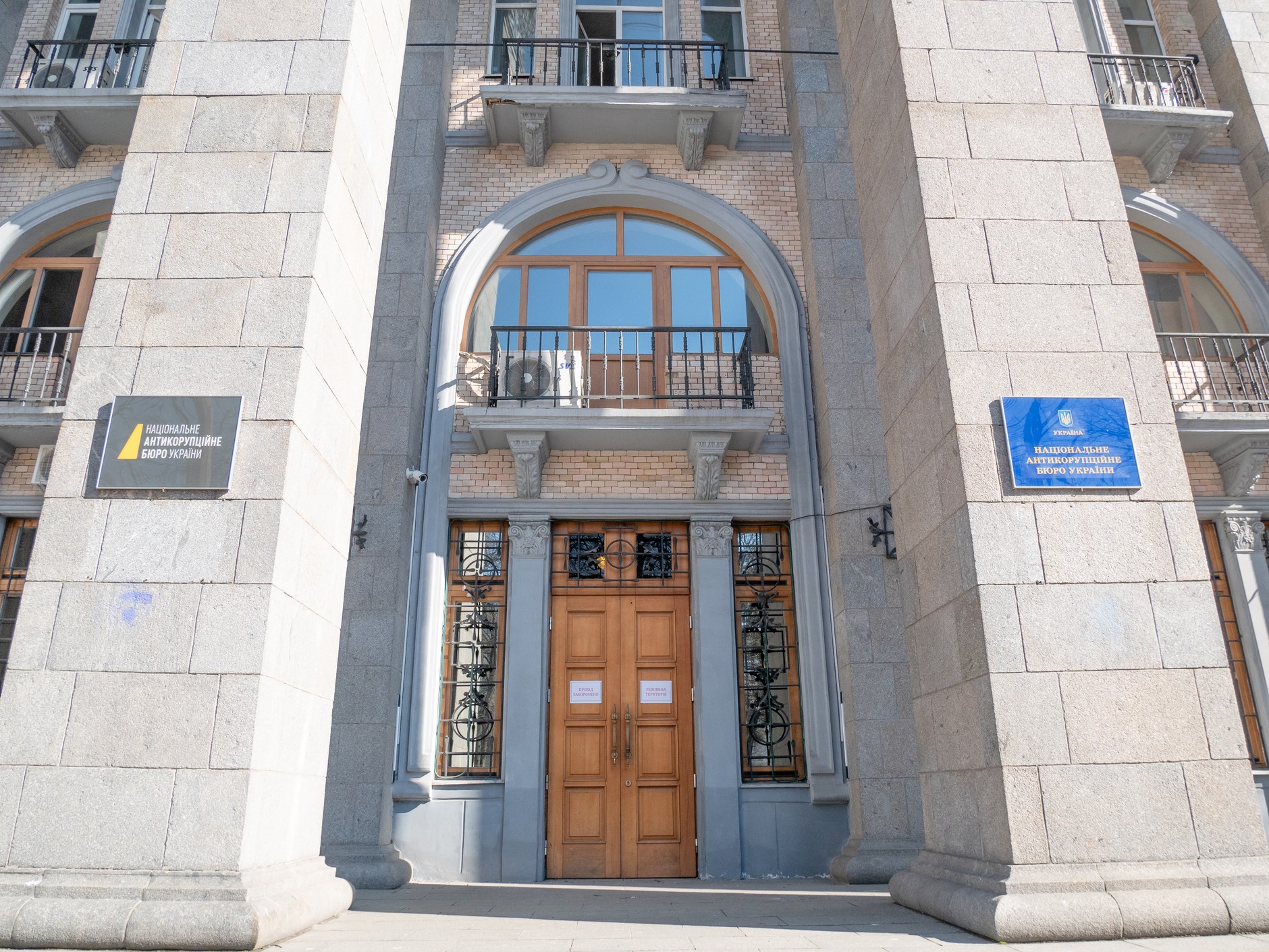
Headquarters of the National Anti-Corruption Bureau of Ukraine (NABU). Illustrative photoPabloUA / Shutterstock
Yes, Ukraine still has a long way to go. But it openly fights corruption and achieves better and better results every year. The fact that we regularly hear about NABU, SBU and other agencies exposing corruption schemes is a sign of progress.
In a full-scale war – amid power outages, missile attacks and existential pressure – Ukrainian investigators are pursuing high-profile cases, including against people close to power. This is not a sign of weakness. This is a sign of institutional strength. It shows that Ukraine is heading in the right direction.
Corrupt practices that once hid in the shadows are now exposed in broad daylight.
Thirdly: support for Ukraine cannot be dependent on the corruption narrative
This is one of the Kremlin's favorite propaganda lines: “Don't help Ukraine – it's corrupt.” Meanwhile Russia remains one of the most corrupt countries in the world — a nuclear-armed mafia in which corruption is not an anomaly, but the very heart of the system of governance. According to the Corruption Perceptions Index 2024 published by Transparency International, Russia scored 22 points, well below Ukraine's 35 points.
Ukraine is fighting corruption and a genocidal invasion. Russia, on the other hand, exports corruption as a weapon: buying influence, spreading disinformation, and trying to convince the world that helping Ukraine is somehow a “waste.” Is not.
Supporting Ukraine is defending freedom, security, democracy and international orderthat keeps Europe safe. Corruption must be confronted – and Ukrainian institutions are confronting it. But using corruption as an excuse to reduce support only serves Russia's interests.