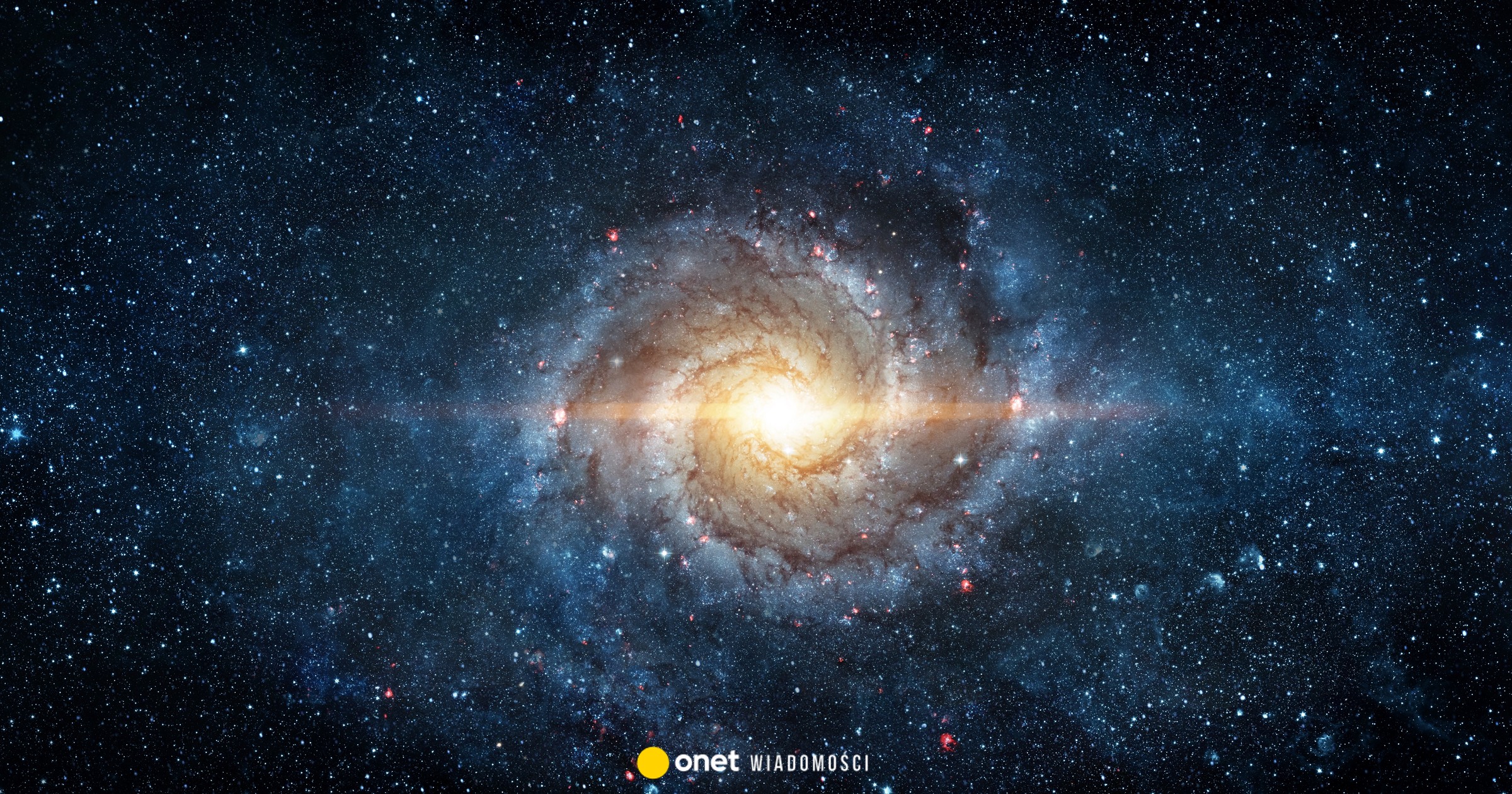
The existence of the universe was estimated in trillions of years. However, the Big Crunch hypothesis has returned to scientists' models. This is the process by which the expansion of the universe is reversed. All matter and space-time collapse to a state resembling the conditions during the Big Bang. For a long time, this disturbing scenario was rejected – explains the Livescience website.
The universe will end sooner than we thought. Scientists have pinpointed the moment of cosmic destruction
The latest conclusions are based on the study of dark energy using Dark Energy Survey (DES) and Dark Energy Spectroscopic Instrument (DESI) models. It is believed to be an invisible form of energy that fills the universe and is responsible for its constant expansion. Researchers have mapped hundreds of millions of galaxies. As the data show, the “equation of state” of dark energy changes over time.
An article published in arXiv, operating at the American Cornell University, indicates that the components of dark energy, i.e. the axion field and the cosmological constant, interacting with each other, “pull down” the universe, leading to the Great Collapse.
Scientists have chosen the best model and, according to them, the exact moment of cosmic destruction will occur in 33.3 billion years.
This is a new area of research, so the hypotheses may change. Verification of the model will certainly require more data.