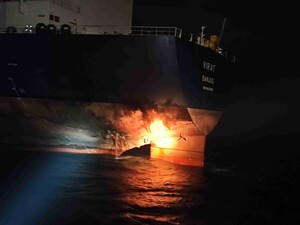
In recent days, for the first time since the beginning of the year, Ukraine admitted naval drone strikes on two sanctioned oil tankers linked to Russia off the coast of Turkey in the Black Sea, the media emphasized. According to the WSJ, in 2025, explosions occurred on at least six other ships associated with the Russian Federation. However, some explosions could also be caused by collisions between ships and drifting sea mines in the Black Sea or other incidents, experts say.
In response to attacks on tankers, illegitimate Russian President Vladimir Putin threatened to “expand the range” of Russian strikes against “port facilities and ships that enter Ukrainian ports.” “The most radical way,” in his words, “is to cut off Ukraine from the sea.”
Last week, Ukraine also struck a major oil terminal in Novorossiysk, through which more than 1% of global oil supplies pass.
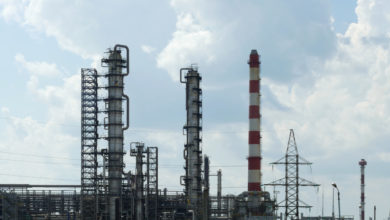
These attacks complement Kyiv’s months-long campaign against Russian refineries, designed to increase Russia’s costs for the almost four-year war against Ukraine, the WSJ emphasized.
As the media has pointed out, the Ukrainian attacks raise the stakes for Russia on oil transportation by increasing insurance premiums for ships and ultimately reducing revenue to finance Putin's war. In addition, Ukrainian attacks on Russian refineries have already forced the Russian Federation to divert air defense forces from the front and provoked a fuel shortage in a number of regions, which affected the Russians themselves.
Such a strategy also carries diplomatic risks, since attacks encroach on the maritime territory and assets of third countries, the media pointed out.
Turkish President Recep Tayyip Erdogan has already stated that the war between the Russian Federation and Ukraine “has clearly begun to threaten the safety of navigation in the Black Sea.” He sent a warning to “all interested parties.”