The unexpected effect of Ozempik. It's not just that patients' weight is getting lower


The United States has long been famous for its huge portions. We have king-size candy bars, family-size chips and all-you-can-eat buffet restaurants. Many restaurants list calorie counts on their menus, which may suggest to customers that they should take half of their meal home.
Recently, however, food has started going in the opposite direction. Portions are getting smaller – due to tight consumer budgets, the growing popularity of weight loss drugs and, perhaps, corporate gimmicks.
Both customers and companies want miniature portions.
Read also in BUSINESS INSIDER
After pandemic inflation, you may remember the uproar around shrinkflation, when brands made products smaller without reducing their prices. But even now, as the price surge has slowed, the contraction continues. Coca-Cola is focusing on its “mini cans” with a capacity of 7.5 ounces (approx. 222 ml) in the US and plans to introduce them to convenience stores in 2026, selling them individually for $1.29. (approx. PLN 4.7) per piece. Pepsi offers smaller packages of snacks (the company produces more than just drinks), wanting to appeal to people who save money and control portions. Packaged goods companies like Utz Brands and Mondelēz are experimenting with sizes, expanding offerings on the smaller side of the scale.
— American consumers like exaggeration. They like huge portions and like to indulge. It hasn't gone away, says Neil Saunders, retail analyst and managing director of GlobalData. – But on the other hand a more frugal mindset has emerged – in terms of money and calories – and the market has moved somewhat towards supporting this approach – he adds.
This change is beneficial in that if you are trying to save or watch your weight, you have more options, but it is not a case of corporate altruism on the store shelf: smaller products can also improve companies' financial results.
See also: The words of the head of Nestlé herald a new era in corporations. It announces a lack of mercy
America is already tightening its belt
Consumer budgets are increasingly tight in the US (except for the wealthiest Americans). Total credit card debt is near records. Although households as a whole were able to maintain their spending despite inflationary pressures and a worrying labor market situation, many people began to look for places where they could cut costs.
— A large part of the population struggles with financial dilemmas, and the food budget is an obvious target for cuts – says Rick Miller, partner at Big Chalk Analytics. People have more leeway to reduce their bills on groceries and eating out than they do on their rent, mortgage or car payment.
In a Big Chalk Analytics survey of 4,500 U.S. consumers conducted during the first week of June, more than half said they planned to reduce their grocery spending for the rest of 2025. One of the tactics used by people on a limited budget is to buy smaller, and therefore cheaper, packages. Someone might be hesitant to spend $8. for a standard package of your favorite cookies, but will spend $2. for a smaller package and treat yourself to a little pleasure. Companies, for their part, are trying to meet demand for smaller options.
— This taps into consumers' desire for value and simply spending less in the face of rising costs says Zak Stambor, senior retail and e-commerce analyst at eMarketer, a sister company of Business Insider.
Pitfalls of small and large packages
The greatest value for consumers usually comes from buying in bulk. Counting by weight, it is more profitable to buy a large box of cereal or a family-sized bag of chips than their smaller counterparts. Many wealthier consumers who can afford a Costco membership do this.
“People say, 'Yes, I've changed my habits. Now I buy large multi-packs, larger family products, because I get more for my money,'” says John Owen, deputy director of food and trade at research agency Mintel.
However, buying a pack of 24 pieces instead of two pieces requires a larger start-up expense. For consumers who are really struggling financially, this isn't always possible – what matters to them is the price at the checkout, not the cost per unit. Producers must also take care of them. Low-income families are being forced to cut food costs because of the chaotic fight for SNAP benefits.
Ozempic is driving the trend
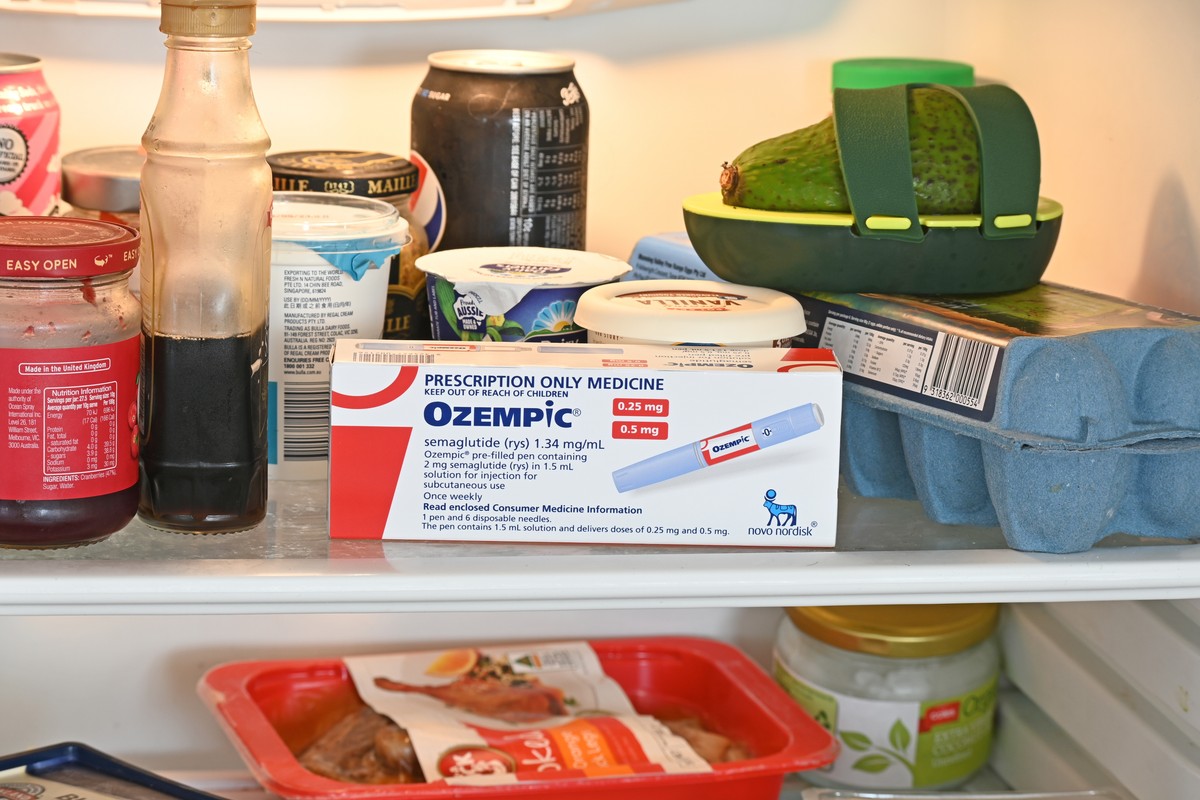
Growing health awareness and the increasing use of GLP-1 drugs (like Ozempic) for weight loss are also contributing to smaller portion sizes and packaging. People want a 100-calorie bag of chips that they can eat without too much guilt, and in the era of Ozempik, that may simply be the maximum they can eat at one time.
— GLP-1 drugs send a signal to the brain to feel full faster and slow down stomach emptying, which means “you fill up in smaller portions and feel less hungry,” explains Morgan Dickison, a dietitian at Weill Cornell Medicine. People experiencing side effects, mainly nausea, may eat especially small portions at the beginning of therapy. Over time, medications can also affect your overall food preferences. “It's almost as if many people's overall interest in food is declining, and some of these very tasty foods are no longer attractive,” he says.
Companies see this
Food manufacturers, retailers and restaurants are adapting by introducing smaller packaging and increasing (or promoting) protein content.because the protein is important for patients taking GLP-1.
— 10 percent U.S. population uses some form of GLP-1, says Rob Holston, global and Americas consumer products leader at EY. “Our clients are changing their strategies and behaviors related to this,” he adds.
People who don't use GLP-1 are also increasingly watching what they consume – including portion sizes. Consumers are buying alcohol in smaller sizes and quantities, partly to save money, but also to cut down on drinking. In the third quarter earnings call, Mondelēz announced that it will expand its Oreo and Tate's biscuits offering with sugar-free and gluten-free products to attract health-conscious consumers. Health and wellness have been a topic in the food industry for years. Even demography plays a role.
“We have an aging population in the U.S. — baby boomers — and as people age, they eat fewer calories,” says Sally Lyons Wyatt, a packaged goods industry consultant at Circana, a research firm.
It's not a bad deal for food manufacturers that people want smaller portions, because profit margins tend to be higher on smaller packages. During earnings calls, many packaged food companies talked about how they were able to raise prices despite a lack of sales volume growth. One way is to offer smaller packages and charge a little less for them – but not as much less as they could, and sometimes even keep the price the same.
— Maybe the unit price isn't great, but for a consumer who's under pressure – and everyone's still a little concerned about inflation – it's a lower entry price says Saunders.
Cheating customers?
This can be risky for brands because consumers may feel exploited and deceived. That's why there's been such strong opposition to shrinkflation in the post-pandemic era: people notice when the pack of sports drinks they buy for their kids each week suddenly looks a little smaller and lighter.
A 2025 CivicScience study showed that 56 percent Americans have noticed that food packaging is becoming smaller. A Government Accountability Office report found that product shrinkage accounted for less than one-tenth of a percentage point of the overall 34.5 percent increase in consumer prices between 2019 and 2024. However, in some categories, such as breakfast cereals, coffee and home stationery, it was a much more significant factor.
— A change carried out incorrectly destroys the brand says Holston. If consumers get too defensive, they'll switch to a cheaper brand or the store's own product – and once they do, they usually don't come back.
It's easier to be tempted by something new
Today's consumer society provides greater flexibility for both consumers and brands. Holston notes that 20 years ago, the average U.S. store carried 6,000 distinct products — today there are 50,000. Offering smaller variants is a way to compete. It not only attracts with its price, but also encourages people to try new things. “The idea is to encourage product testing,” Holston says.
Just as consumers experience financial pressure, so do businesses. Tariffs, changing ingredient regulations and the lingering effects of inflation mean that manufacturers are also having to reorganize their product lines, including adjusting sizes.
— If you're trying to hit a price point that customers will accept, how do you do it? One of the tools is changing the number of packaging grammages Lyons Wyatt says.
There are many reasons why consumers gravitate towards purchasing smaller products. Sometimes it's about saving money, sometimes calories, sometimes it's about reducing the risk when testing something new, and sometimes it's about wanting to throw a packet of two cookies into your backpack for work and be done with it. The huge rise in popularity of miniature food is happening right now – because we want it and business wants it too.
“It's simply about meeting the consumer where they are, giving them more flexibility — and doing it in a way that's also good for the business,” Stambor says.
The above text is a translation from American edition of Business Insider