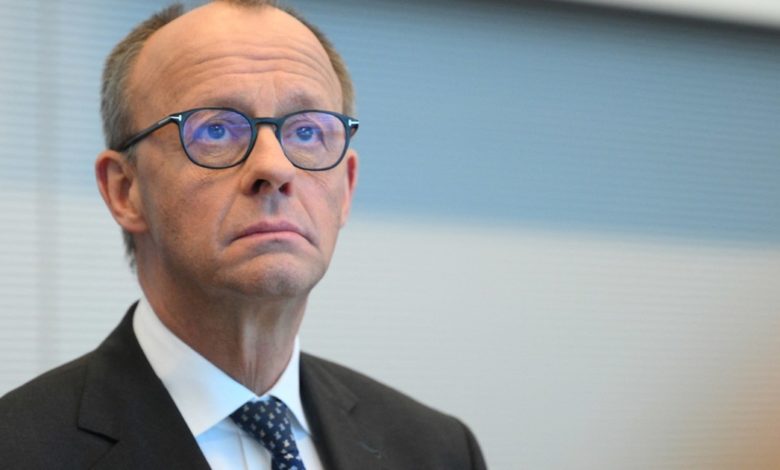
When Friedrich Merz took over as chancellor, he came onto the scene with big promises: relaunching the economy, repairing the crumbling infrastructure, and reclaiming Germany's role as a major player in global politics. Not even a year away, the initial euphoria has turned to skepticism, and some polls cited by Bloomberg are already talking about a “dark” outlook for his executive.
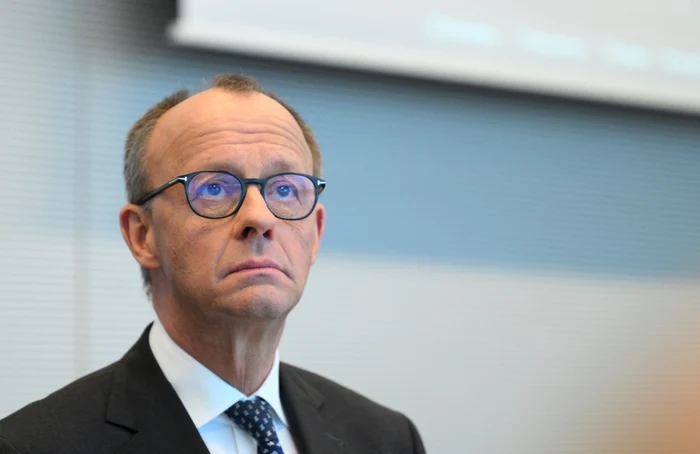
Friedrich Merz, Chancellor of Germany/PHOTO: AFP
An RTL/n-tv poll shows how quickly public trust is eroding: only 16% of Germans still see Merz as a credible candidate in the upcoming federal election. The coalition he leads — already fragile — is crippled by internal disputes and rivalries that block his agenda.
“There are people even in his own faction who challenge his every decision and wonder where the results are,” says Sudha David-Wilp, an expert at the German Marshall Fund. “But the outlook is not optimistic at all.”
A term that started in a storm
Merz inherited a Germany hit from all directions: the return of Donald Trump to the White House, incompatible with the European model; Russia's war against Ukraine, which destabilized energy supplies; increasingly strained relations with China; the pressure of migration, of which the far-right formations took full advantage.
In his first speech as chancellor, Merz promised to fix everything: control of migration flows, a revived Bundeswehr and Europe's strongest conventional army, but also an exit from the longest post-war economic decline. He even guaranteed that by summer, citizens will already feel the first effects of the recovery.
Six months later, the Germans are still waiting.
Instead of clear signs of recovery, the news is dominated by uncertainty, mass redundancies and a new set of pessimistic forecasts: the chancellor's advisers have cut their growth forecast for next year below 1%. Investors are sending the same signals: confidence in the German economic model is in free fall.
Not even the government's megaproject — the 500 billion euro modernization package — is convincing the electorate. Tracks remain broken, trains are delayed, bridges are still closed, and the merits of the reform are being undermined by internal criticism, including from his own party, which accuses Merz of breaking promises to limit borrowing.
A leader with a risky temperament
The explosive manner in which Merz communicates publicly is becoming increasingly problematic. If when he was leader of the opposition the abrupt style was seen as an asset, now it causes reactions of rejection. Especially when his remarks about migration are interpreted as racist and bring people to the streets.
Tensions escalated after Foreign Minister Johann Wadephul — a close ally of Merz — said in Damascus that Germany could not deport Syrian refugees to a war-torn country. The statement directly contradicts coalition policy, amplifying the perception of chaos within the government.
Externally, Merz impresses more than at home: he quickly established contacts with international leaders and was welcomed in Washington. But the relationship with Trump, German officials say, remains unpredictable. “It's too unstable to build something solid,” said a senior official on condition of anonymity.
The political confusion continued in Brussels, when Merz prematurely announced the signing of a trade agreement with MERCOSUR — information that was immediately denied. The chancellor played down the episode, but confidence in his ability to negotiate was shattered.
A decisive – and potentially devastating – 2025
Starting in January, many of the government's economic measures will take effect, and Berlin hopes that firms and consumers will finally feel something tangible. But the year also brings major electoral tests: elections in several Länder that could give a clear picture of Merz's political future.
And the biggest risk comes from the East. In Mecklenburg-Lower Pomerania and Saxony-Anhalt, the AfD has a real chance of obtaining absolute majorities — a historic first.
“The 2025 results will cause unease in the coalition. If the AfD continues to grow, the internal pressure on the Merz government will become huge”warns David-Wilp.
In addition, the chancellor recently entered into another controversy, asking Volodymyr Zelensky to limit the departure of young Ukrainians to Germany. There are fears within the coalition that their presence will be used as electoral ammunition by the far right, which exploits any issue related to refugees or support for Ukraine.