2025-11-16 18:15
publication
2025-11-16 18:15
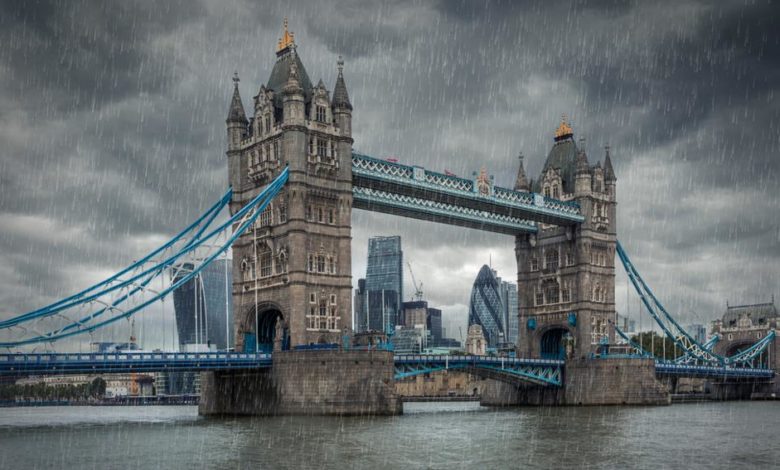
While Moscow is trying to build relations with the White House, Russian propaganda has identified Britain as the Kremlin's main opponent; previously, this role was reserved for the United States, the Guardian reported on Sunday.
– Russia believes that it is equal to the United States – said Captain John Foreman, former British defense attache in Moscow, in an interview with the daily. – (Russians) now cannot directly criticize (US President Donald) Trump, so who do they blame for their misfortunes, for the losses on the Ukrainian front, for the million deaths? They blame someone nearby, the British. It is easy to portray us as the source of all Russia's problems, he noted.
The Foreign Intelligence Service of the Russian Federation, quoted by the Guardian, stated that “London today, as on the eve of both world wars, acts as the main global warmonger.”
The daily recalled that the rivalry between London and Moscow dates back to the 19th century, when they fought for influence in Central Asia. “For a short period, the empires were allies, but after the October Revolt of 1917, Great Britain again became the main antagonist (…) However, a full-scale invasion of Ukraine caused relations between the countries to reach a new low,” we read.
The Guardian found that “the British have often been more willing than their American counterparts to take risks and push boundaries when it comes to military aid to Ukraine and sharing intelligence.” A Ukrainian intelligence source confirmed this, saying that “the British were one step ahead from the first days (of the war).”
Then-British Prime Minister Boris Johnson was one of the first Western leaders to visit Kiev shortly after the invasion began. The politician arrived in the Ukrainian capital on April 9, 2022, just 10 days after Russian troops withdrew from positions around the city. For comparison, US President Joe Biden visited only in February 2023.
“US representatives approved massive support for Ukraine, but feared an escalation of the conflict. Johnson, on the other hand, often used optimistic rhetoric about Russia's defeat, which did not go unnoticed in Moscow,” the British newspaper said. As an example, she gave the opinion, repeated many times by Russian television propagandists, that Britain could be “sunk” by a new Russian nuclear torpedo.
It also cited the results of a survey conducted in the summer by the Levada Center, an independent Russian sociological laboratory, which showed that 49 percent Russians consider Great Britain to be one of their country's main enemies; second only to Germany.
In Foreman's view, this Russian hatred goes unnoticed in Britain itself. – They care about us much more than we care about them. It is not a reciprocal relationship; the average Briton on the street has no idea this hatred exists, he added.
Prof. Pavel Baev, a political scientist at the Peace Research Institute in Oslo (PRIO), noted that military support for Ukraine enjoys wide support among the British public and all sides of the political scene, while in other European countries this issue is more controversial. – As a result, Moscow is focusing more on Germany and France as potential channels that could thwart European arms plans than on Great Britain – said the expert.
From London Marta Zabłocka (PAP)
mzb/ mal/