The inconvenient truth about peace at the price of chaos. Bosnian lesson for Ukraine


30 years ago, on December 14, 1995, the presidents of Bosnia, Croatia and Serbia gathered in Paris to sign the U.S.-negotiated the Dayton Peace Agreement, ending a war in which 100,000 died. people, and another 2 million were displaced. The agreement, reached over three weeks at an Air Force base in Ohio, stopped the bloodshed.
Now, as the Trump administration looks for ways to end the Russia-Ukraine war, Dayton continues to be held up as a model — proof that American power can end impossible conflicts. The comparison is tempting. Both wars are characterized by territorial conquest, ethnic grievances, great power politics, and a horrific number of civilian casualties.
But let's take a closer look. Dayton offers not so much a plan as a warning. Yes, it stopped the killing. It also legitimized ethnic cleansing, rewarded aggression and it has created a state widely considered dysfunctional because of the complex, ethnically divided political system it imposed. This is not an example for Ukraine.
American diplomats, led by Richard Holbrook, certainly made a difference, but the agreement worked because of what came before it: Operation Deliberate Force, NATO bombing campaign that destroyed Bosnian Serb positions for two weeks in 1995. Combined with the Croat-Bosnian land offensive, the bombings changed the balance of power. The Bosnian Serbs came to Dayton not out of good will, but out of weakness.
The negotiations took place in isolation at Wright-Patterson Air Force Base and were monitored by Holbrooke's team. For 21 days, the parties were kept away from the media, separated from advisers and subjected to constant American pressure.
The article continues below the video
As a result, Bosnia was divided into two entities: the Bosnian-Croat Federation and the Republika Srpska for Bosnian Serbs, with a weak central government exercising authority over both entities.
Bosnia – the victim – made the biggest concessions. Before the war, Bosnian Serbs controlled about one third of the country. Dayton gave them 49 percent. The agreement essentially ratified ethnic cleansing, creating an entity built on mass atrocities, including the Srebrenica genocide just months earlier.
President of Bosnia and Herzegovina Alija Izetbegović he signed under enormous pressure. His exhausted country could no longer fight, but he understood that he was legitimizing something deeply unjust.
The presence of 60,000 people was associated with Dayton. NATO peacekeepers and the High Representative with broad powers, and detailed annexes covering everything from military separation to refugee return.
The agreement stopped the war but froze Bosnia in a state of permanent chaos. Broader challenges affecting the region's prospects for peace after the breakup of Yugoslavia have also not been addressed. Dayton deliberately ignored the disputed province of Kosovo and left it inflamed. War broke out three years later, sparking a controversial NATO bombing campaign in 1999 that forced Serbia to make concessions. Partial solutions don't stay partial – they metastasize.
Why Dayton is failing Ukraine
Let's start with leadership. US President Bill Clinton was personally involved in Dayton, supported by skilled diplomats such as Holbrooke, and Washington was supported by a broad international coalition. Trump views foreign policy through a transactional lens and has demonstrated inconsistent commitment to Ukraine. His team lacks anyone with Holbrooke's diplomatic skills or persistence.
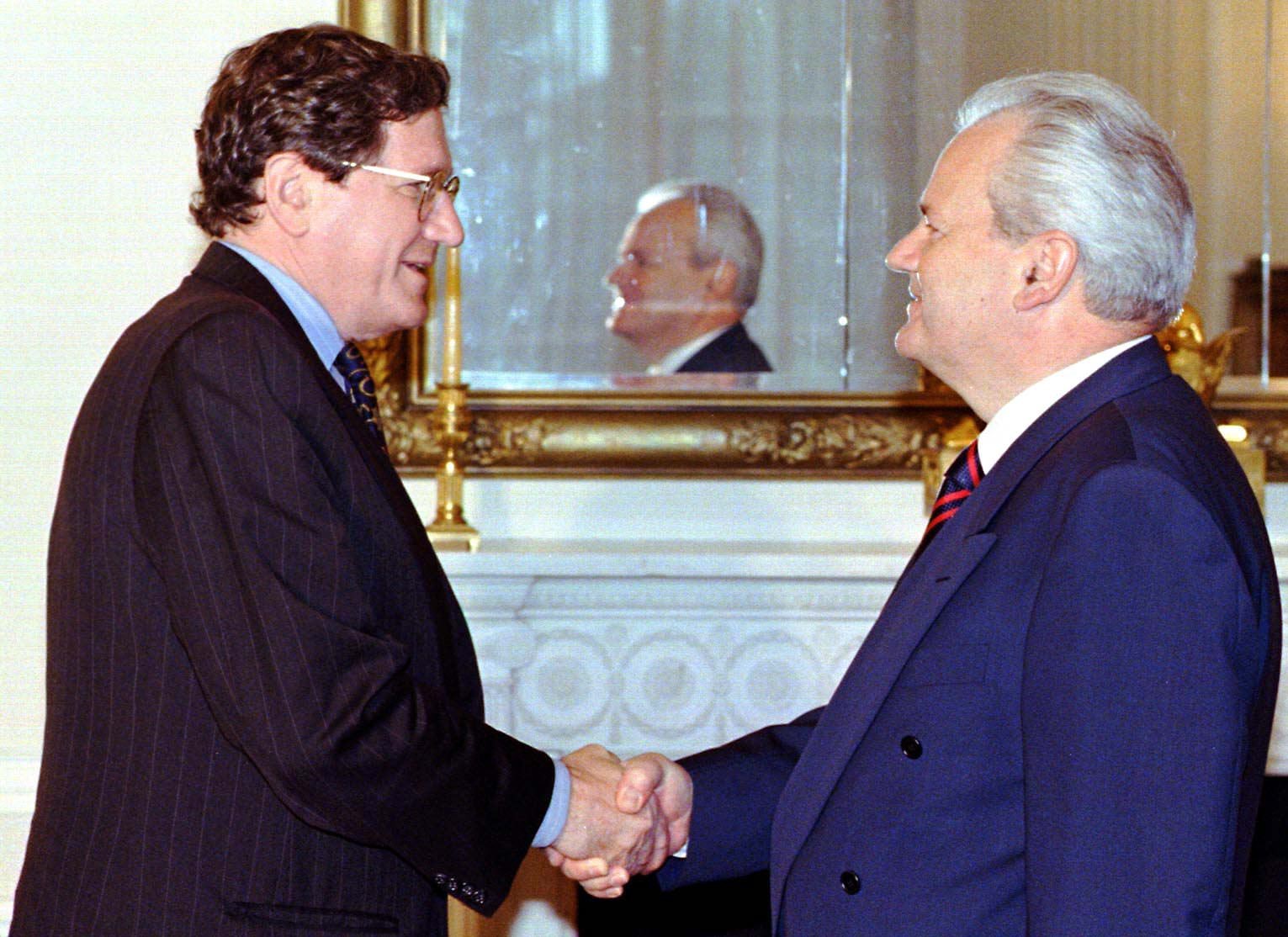
Richard Holbrooke, American special envoy to the Balkans, and Slobodan Milosevic, president of Serbia. Belgrade, June 23, 1996PAP/CAF-EPA / PAP
The president of Serbia, Slobodan Milosevic, was a regional autocrat who eventually ended up in The Hague. Russian President Vladimir Putin leads a nuclear power with a veto on the UN Security Council, global energy leverage and significant support from international allies and friends. The difference in the scale of power and immunity is enormous.
Serbia in 1995 was exhausted by war and sanctions, its economy was devastated and its military was overstretched. Russia in 2025 has huge resources, 144 million people, and despite sanctions, it maintains the war through partnership with China, Iran and North Korea.
There is also no decisive Western military intervention. Dayton worked because NATO bombing and ground offensives weakened the Bosnian Serbs. They lost territory and were exposed to greater losses. Today's Ukraine, despite its extraordinary resistance, does not yet have a comparable advantage.
Russia controls approximately 18 percent. territory of Ukraine. Ukraine may defend itself and conduct counteroffensives, but given the restraint and hesitation shown by its supporters, whether declared or actual, has no leverage to force Russia to accept unfavorable terms.
Although Ukrainian forces have recently engaged in defensive combat deep inside Russia, striking strategic targets, there has been no equivalent to Operation Deliberate Force — no sustained Western campaign degrading Russian capabilities to the point of inevitable defeat.
Dayton's lesson is not that negotiations alone end wars. Negotiations formalize military realities, when one side has been weakened enough, when the cost of continuing to fight becomes too great.
Scale also matters. Bosnia has less than 4 million inhabitants. In terms of area, Ukraine is the largest country located entirely in Europe, its pre-war population exceeded 40 million. A Dayton-style division would result in the displacement of millions more Ukrainians.
President Volodymyr Zelensky he cannot accept major territorial concessions without being branded a traitor. Ukrainian national identity has been reshaped by this war – giving up land and granting Russia elements of cultural and historical identity is anathema to most Ukrainians.
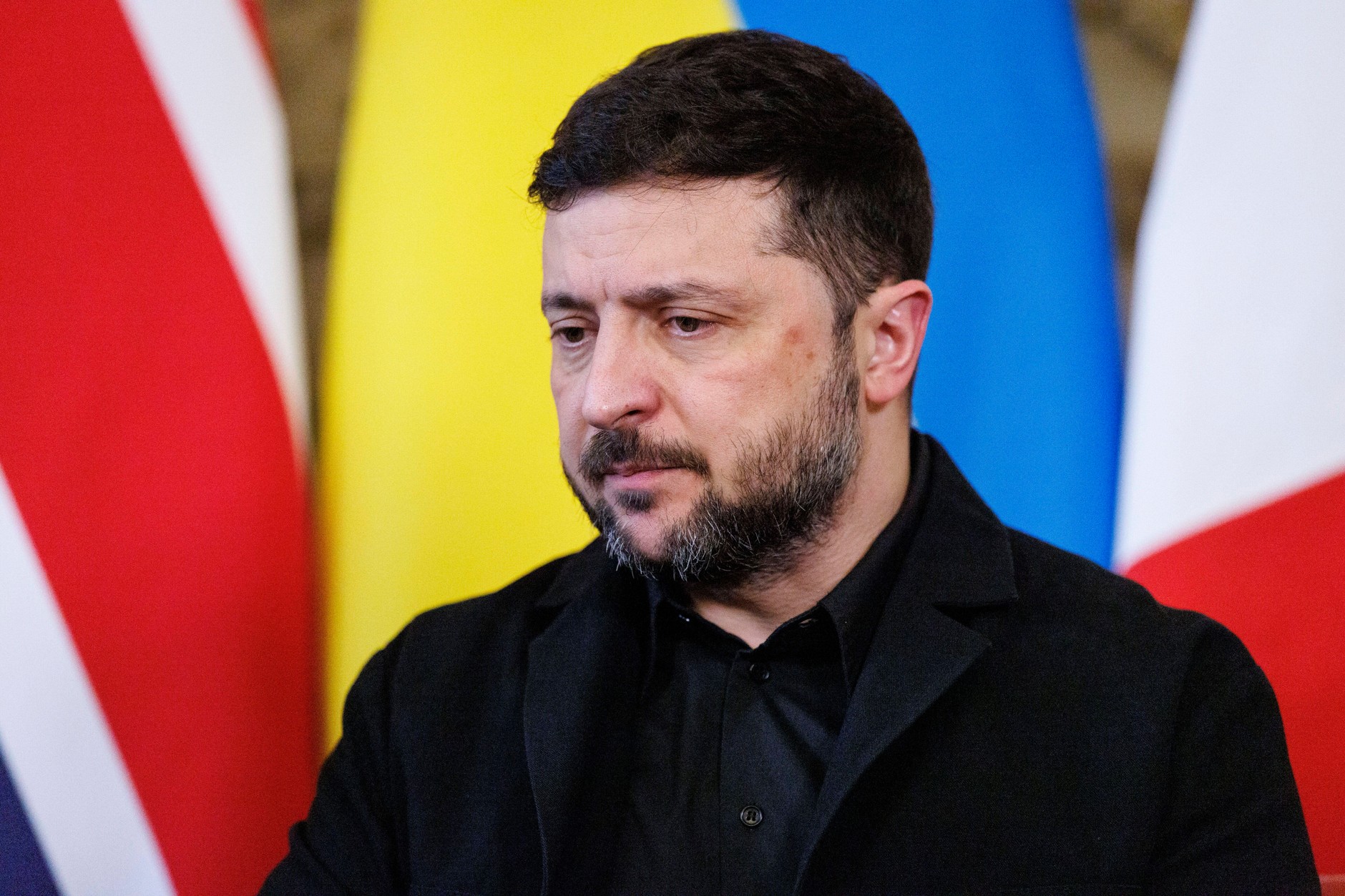
Volodymyr Zelensky, President of Ukraine, during a meeting with European leaders. London, December 8, 2025TOLGA AKMEN / POOL / PAP
International legitimacy is at stake. Accepting Russian annexations would constitute the greatest violation of the post-1945 international order since Iraq's invasion of Kuwait. This would mean that nuclear powers can forcibly take over their neighbors' territories and legitimize these conquests.
What message does this send to other authoritarian regimes looking to their neighbors? The principle that borders cannot be changed by force anchored the international order for 80 years. Dayton, no matter how well-intentioned its architects were, bent this rule—applying it to Ukraine would break it completely.
There is also the matter of implementation. Even with Dayton's robust mechanisms, international involvement waned as attention shifted elsewhere. Who would guarantee Ukraine's long-term security? The Western attention span is short. Domestic politics make long-term commitments difficult.
The inconvenient truth about a fragile peace
Three decades of peace in Bosnia. That's certainly significant, but let's look at how much it cost. Today's Bosnia is not a triumph of diplomacy. It is a monument to what happens when you choose temporary expediency and predetermined agreements over principles and justice. Ukraine deserved better. Its citizens did not ask for this war. They fought it at staggering costs. Now some, including those who claim to be friends, want to force them into a settlement that resembles surrender.
Ukraine needs support that will give it a military advantage at the negotiating table. Security guarantees that actually mean something. Long-term commitment. Support a united alliance of democratic states prepared to integrate it as a proven, valuable asset, not a problematic liability.
If the West does not help Ukraine negotiate by force – provide weapons, guarantees, commitment – then what is being offered is a deal that accepts Russian conquest. International law abandoned, the aggressor rewarded and supported.
What about the other countries that remain victims of Russian imperialist expansionism: Georgia, Moldova and Belarus? Doesn't the example of Dayton, which failed to address broader challenges, remind us of the need for a comprehensive approach to finding peace and calling a spade a spade? instead of turning a blind eye to manifestations of the same problem?
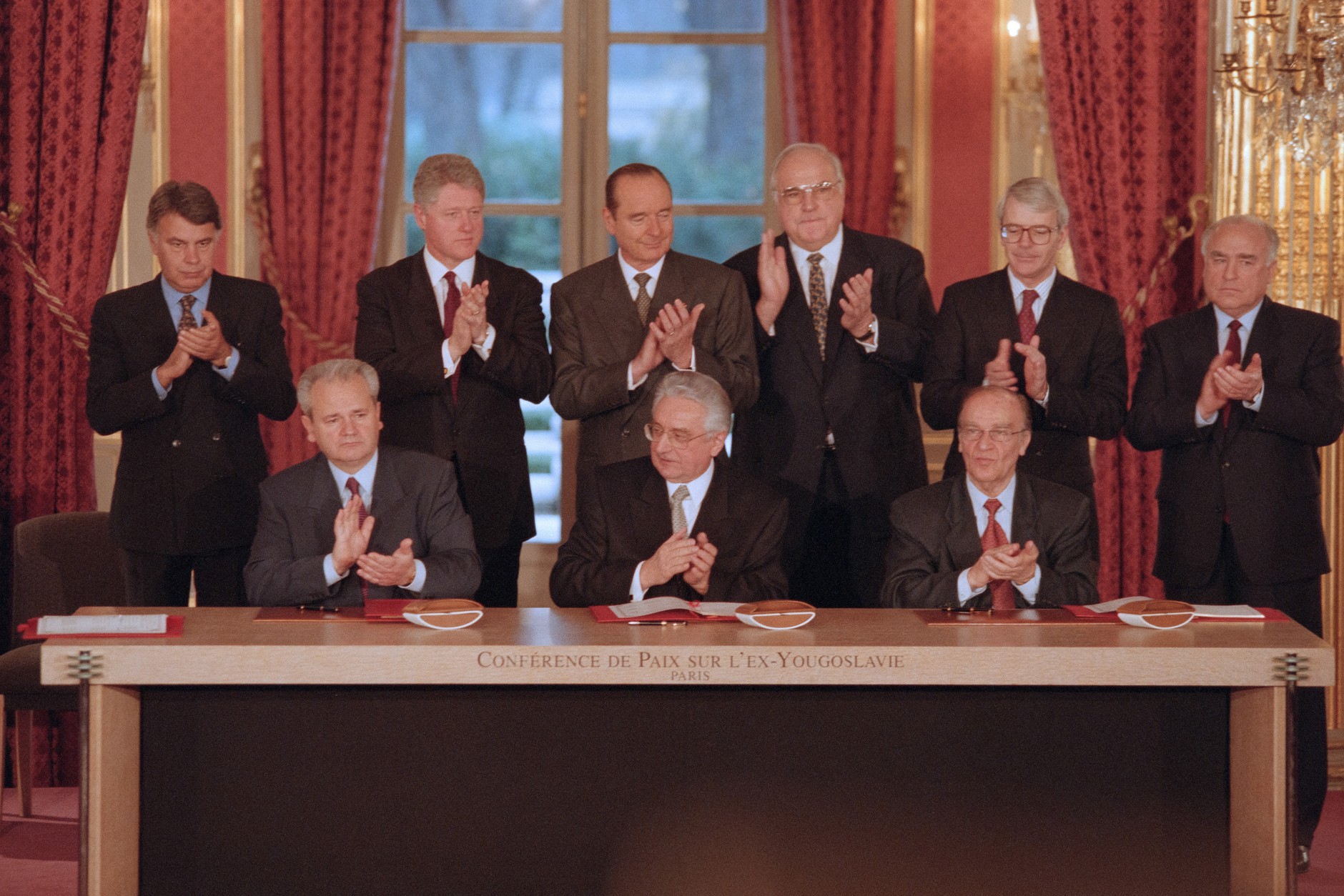
The presidents of Serbia, Croatia and Bosnia are preparing to sign a peace agreement. In the second row, the leaders of Spain, the USA, France, Germany, the UK and Russia. Paris, December 14, 1995GERARD JULIEN / AFP
In short, Bosnia achieved peace in 1995. And 30 years later it is still paralyzed by compromises made under duress. Let's apply this model to Ukraine and the result will be clear: not the end of the war, but the outline of the plan for the next one. Telling the world that the international order, all these principles of sovereignty and territorial integrity, have always been just empty talk.