The significance of the new Moldovan Prime Minister's visit to Bucharest. “It's the ideal place to calibrate their messaging, priorities and tone”

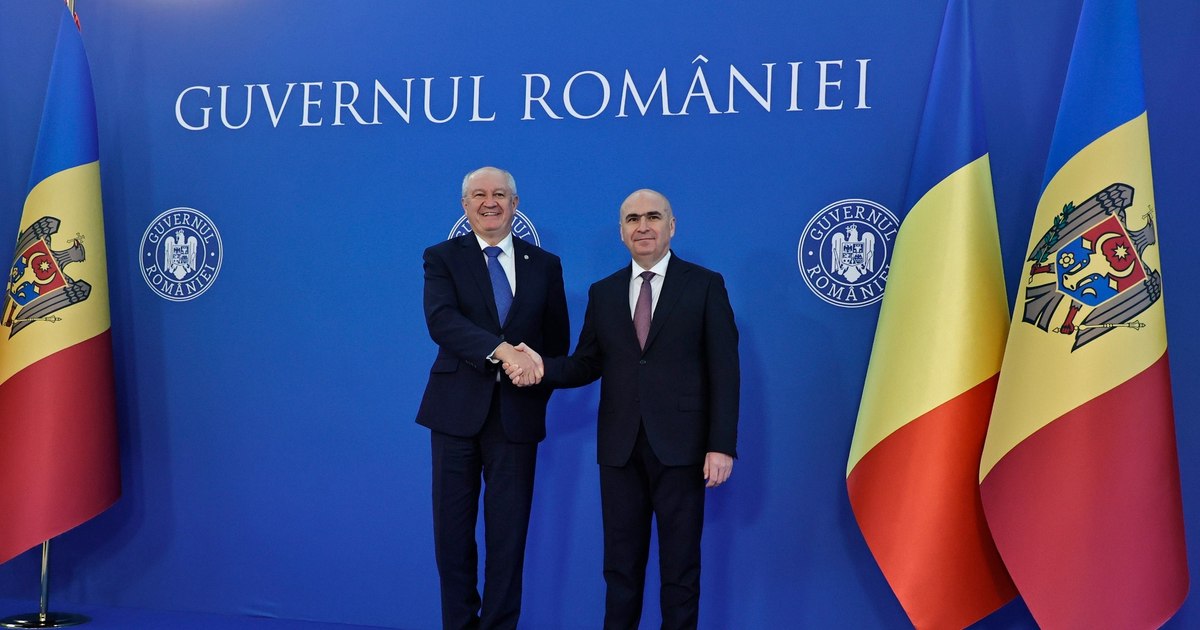
The visit of the Moldovan Prime Minister to Bucharest confirmed Chisinau's pro-European orientation. Romanian leaders reaffirmed their support for EU integration, energy and infrastructure, and expert Nicolae Tibrigan explains the political stakes, Russian pressures and Moldova's vulnerabilities.
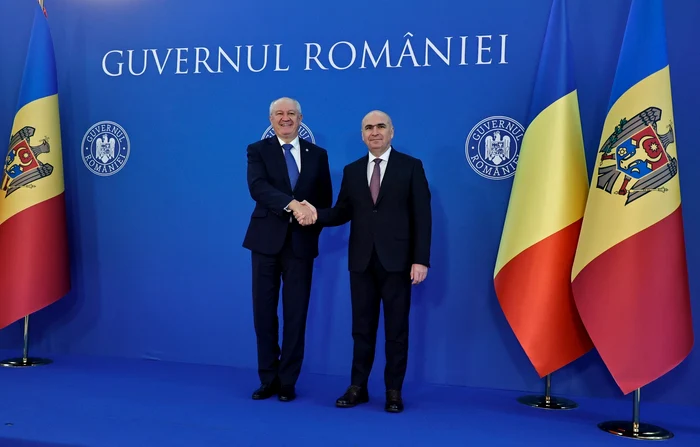
Alexandru Munteanu and Ilie Bolojan. Source: Government of the Republic of Moldova / Facebook
The first foreign visit of the Prime Minister of the Republic of Moldova, Alexandru Munteanu, took place in Bucharest, where he was received by the President of Romania, Nicușor Dan, by Prime Minister Ilie Bolojan, by the President of the Senate, Mircea Abrudean, and by the President of the Chamber of Deputies, Sorin Grindeanu. The visit came just before the moment when the Republic of Moldova takes over the presidency of the Committee of Ministers of the Council of Europe, a stage of increasing visibility at the European level.
The President of Romania, Nicușor Dan, stated that Bucharest remains “most sincere and staunch supporter” of Moldova's European path. He pointed out the importance of continuing reforms and cooperation in energy, infrastructure, education and culture.
Prime Minister Ilie Bolojan emphasized the concrete projects between the two governments. He listed the Ungheni bridge, energy interconnections, railway rehabilitation and the future connection of Chisinau to the Romanian highways. He emphasized that Romania is the most important trade partner of Moldova and announced an accelerated bilateral dialogue.
The President of the Senate, Mircea Abrudean, showed that the Republic of Moldova demonstrated resilience in a complicated context, marked by hybrid war risks. He conveyed his full support for the European integration of Chisinau and for the strengthening of democratic institutions.
The President of the Chamber of Deputies, Sorin Grindeanu, declared that Romania is “the main advocate of the accession of the Republic of Moldova to the European Union“. Grindeanu called for the rapid start of chapter negotiations, the intensification of joint projects financed by European funds and a close cooperation between the pro-European forces in Chisinau. He showed that the war in Ukraine emphasized the fragility of the region and the need to strengthen Moldova's administrative and defense capabilities.
Clarification of the controversial statement about pensions in Romania
Prime Minister Alexandru Munteanu used the visit to explain the controversial statement about pensions in Romania, when he said that in this chapter Bucharest is under the Republic of Moldova, which makes him happy. He specified that the statement had been taken out of context and reaffirmed that Romania remains a benchmark for the development of the Republic of Moldova. The clarification was necessary given that the message had already been exploited by the opposition in Chisinau and pro-Russian networks.
Energy and infrastructure, central priorities of cooperation
The Moldovan Prime Minister emphasized Romania's consistent support in the process of breaking away from energy dependence on Russia. He discussed new interconnection projects with Romania and Ukraine, the participation of Romanian companies in the development of green energy and Chisinau's intention to get involved in the construction of a future reactor at Cernavoda.
In terms of infrastructure, Munteanu spoke about the connection of Moldova to the Romanian railway and road network and about the first road bridge over the Prut built in the last six decades, presented as a project of strategic value.
The analysis of the expert Nicolae Tibrigan. Stakes, Risks and Directions
Former Soviet space expert and Russian propaganda specialist Nicolae Tibrigan believes that the choice of Bucharest as the first foreign destination is “natural” for a new prime minister in Chisinau. “Alexandru Munteanu came to Bucharest first because it is natural for him to anchor his mandate here. Romania is Moldova's closest partner, and for a new prime minister, the message is extremely important. We remain in the European direction, and Bucharest is our main support”explains Tibrigan.
It also emphasizes the signal sent to public opinion in the Republic of Moldova: “In Chisinau, the gesture conveys continuity and commitment, including the fact that the relationship between the Republic of Moldova and Romania is much more important than the relationship with Brussels”. Externally, the expert says, the visit shows that “the new government is not changing course, testing ambiguities and not engaging in unnecessary geopolitical games. Commendable fact”.
The timing of the visit is directly related to taking over the presidency of the Committee of Ministers of the Council of Europe. “The fact that the visit takes place right before taking over the presidency of the Committee of Ministers of the Council of Europe is no coincidence. Moldova is entering a period when it will be very visible at the European level, and Bucharest is the ideal place to calibrate its messages, priorities and tone”says Tibrigan. He describes the role of Bucharest as follows: “Moldova enters the spotlight of the European stage, and Bucharest becomes the launch stage. Issues of rule of law, human rights, resilience in the face of hybrid war are discussed, and Romania assumes the role of political guarantor and European mentor for Chisinau”.
Romania's support is, in Tibrigan's view, a concrete one, with a direct impact on the beginning of Munteanu's mandate. “Romania's support is not just rhetoric, it comes through concrete projects that are already changing things,” he says. For the new prime minister, this support translates into “energy stability, access to Romanian investments and a very important internal political message. We are not alone”. The expert draws attention that “in a time full of pressure, that weighs a lot, especially for a prime minister at the beginning”.
Nicolae Tibrigan also analyzes the episode of the controversial statement about pensions in Romania. “The controversial statement about pensions in Romania could have become a serious problem if it was not corrected immediately. In Chisinau, the opposition and pro-Russian propaganda have already used the episode to create tensions between the two countries because they do not know what else to do,” he explains. The fact that the prime minister “chose to clarify the subject right in Bucharest shows that he understood the stake: the relationship with Romania is not a detail, but a red line that you cannot afford to breakTibrigan also notes the implicit message sent by the prime minister: “I don't want conflict with Romania, it was an uninspired formulation, not a policy line”. In the absence of this correction, “the episode risked becoming a structural vulnerability, endlessly repeated in the information space”.
Regarding infrastructure and energy projects, the expert sees a clear change of direction in Chisinau. “The emphasis on bridges, power lines, railway routes and cooperation on Cernavoda shows a paradigm shift. Moldova no longer wants to be a vulnerable state, but one connected to the European infrastructure”says Tibrigan. He summarizes the stake of these projects as follows: “Each project like this breaks a little bit of historical dependencies and creates new certainties. In short, security is not done only by speeches, but by cables, roads and joint investments. The more cables, pipelines and bridges connected to the West, the harder it is to turn the country to the East through propaganda alone.”.
Regarding energy, the expert warns that Moldova's current position is progress, but not an absolute guarantee. “Independence from Russian gas is real, but not completely invulnerable. Moldova has alternatives, it can import from Romania and participate in the European energy market. However, risks remain related to prices, the still fragile domestic infrastructure and potential cyber attacks on energy networks”explains Tibrigan. His conclusion is straightforward: “Moldova got rid of its political dependence on Gazprom, but that does not mean that it no longer has energy vulnerabilities”.
Nicolae Tibrigan sees in this visit a clear political stake for Alexandru Munteanu. “For Alexandru Munteanu, the visit has a clear political stake. Internally, it strengthens his image. He is received with honors, has direct dialogue with the key institutions in Romania and proves that he can manage the most important strategic relationship for Moldova. Externally, it conveys stability and continuity”he says. At the same time, he warns that “it is also a preparatory movement: the more visible Moldova becomes on the European level, the more Moscow will intensify the pressure. And Munteanu needs strong partners before entering this phase.”
Regarding the future of the relationship between Bucharest and Chisinau, Tibrigan expects a very active period, but also an increase in the intensity of the information war. “In the coming months, I believe that the relationship between Bucharest and Chisinau will be very dynamic. I expect energy, infrastructure and security projects to move forward, and the two governments will work much more closely, including on the dimension of countering disinformation”he says. At the same time, “we should also expect the narrative war to intensify: pro-Russian networks in both states will try to present the relationship as vassalage, a sell-out to the West, or a forced unification project.”
Tibrigan also points out what now depends on Bucharest and Chisinau: “They no longer need to just announce projects, but to explain to people, very concretely, how each bridge, each power line and each step towards the EU translates into their daily lives. If both governments succeed in doing this, the bilateral relationship between the Republic of Moldova and Romania will enter a new phase, much more mature and harder to sabotage”.