Obesity becomes a reason for rejection of the immigration visa to the USA. The Trump administration is tightening the conditions even more

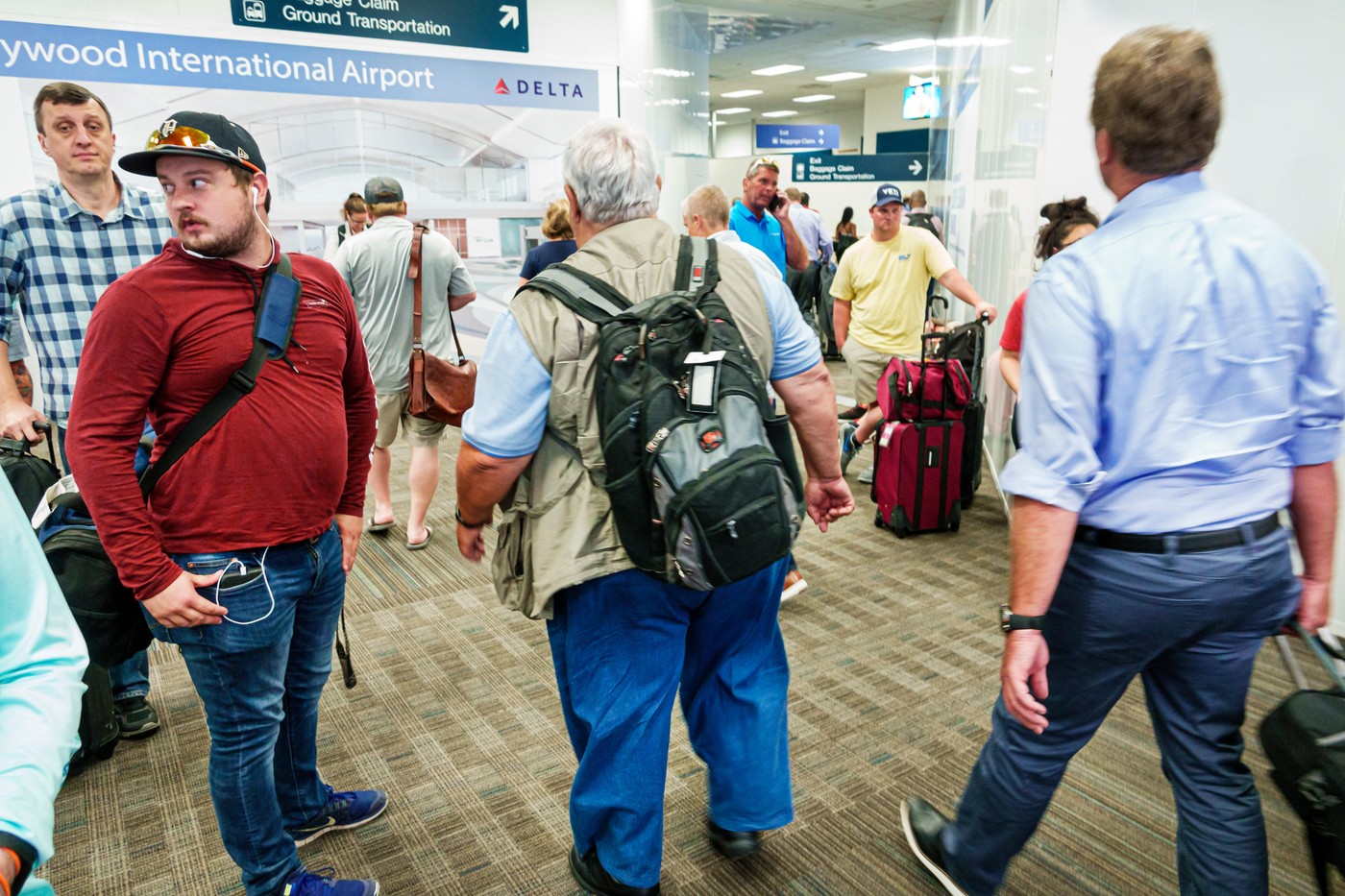
USA airport. Photo credit: Jeffrey Isaac Greenberg 11+ / Alamy / Profimedia
The Trump administration is tightening the tone even more on immigration. A US State Department directive now recommends that US embassies evaluate the physical condition and financial resources of immigrant visa applicants. Obesity, diabetes or cardiovascular disorders could now have a decisive influence.
According to a directive sent to American embassies and consulates around the world, consular agents will also have to take into account the health status of immigration visa applicants. The declared objective is to avoid that future American residents become a “public burden”, in other words, people likely to depend on social benefits financed by American taxpayers, writes Le Figaro, quoted by News.ro.
This internal document, seen by several international media institutions, states that certain ailments – cardiovascular diseases, respiratory disorders, cancer, diabetes, metabolic pathologies, mental or neurological disorders – can justify the refusal of a permanent visa. Obesity is also explicitly on the list.
Agents are invited to assess whether the applicant has sufficient means to finance his long-term care without resorting to public assistance. In case of a negative answer, the door of the United States could be closed to him.
“Economic self-sufficiency is a fundamental principle of the American immigration policy”, reminds the directive, which is part of the continuity of a presidential decree entitled “Let's put an end to the subsidy of open borders by taxpayers”. Already, in 2019, the White House tried to exclude from the green card foreigners who received public aid for more than a year. The measure was rescinded during the Joe Biden administration, but has now been reintroduced in a more selective form.
In sight, expensive diseases
The American authorities justify this filtering through an economic argument. According to the directive, certain chronic diseases can generate expenses of “hundreds of thousands of dollars” over a patient's lifetime.
Officials are invited to examine the assets, income and medical coverage of each applicant, including retirees, who are required to prove their ability to support themselves without a job.
The potential costs of long-term institutionalization, such as a stay in a nursing home, will also need to be considered.
However, the new directives only refer to immigrant visas, that is to applications for permanent residence, and not to temporary visas, such as those intended for tourists or students.
This initiative is part of a wider movement to prioritize immigration according to economic and health criteria. Since his return to the White House, Donald Trump has multiplied symbolic measures: the drastic increase in fees for H-1B visas intended for skilled foreign workers, which are now billed for up to $100,000 a year, the creation of a “golden card” reserved for investors and those able to make generous donations.
It is, therefore, an assumed philosophy: only candidates considered “autonomous” and “contributory” must be able to access American territory.
Risk of discrimination
Human rights defenders signal a risk of discrimination on the basis of health, or even weight. Instead, the president's supporters believe that the measure is common sense and would allow the maintenance of an already fragile social system.
With nearly 40% of adults obese, the United States is itself facing a major health crisis. Critics say that Donald Trump is instrumentalizing this reality to justify a selective migration policy, centered on economic performance and individual autonomy, especially since consular agents, who are not health professionals, will now have to evaluate complex medical files.
Officially, the directive has not yet entered into force. But several consulates have already started to apply it experimentally.