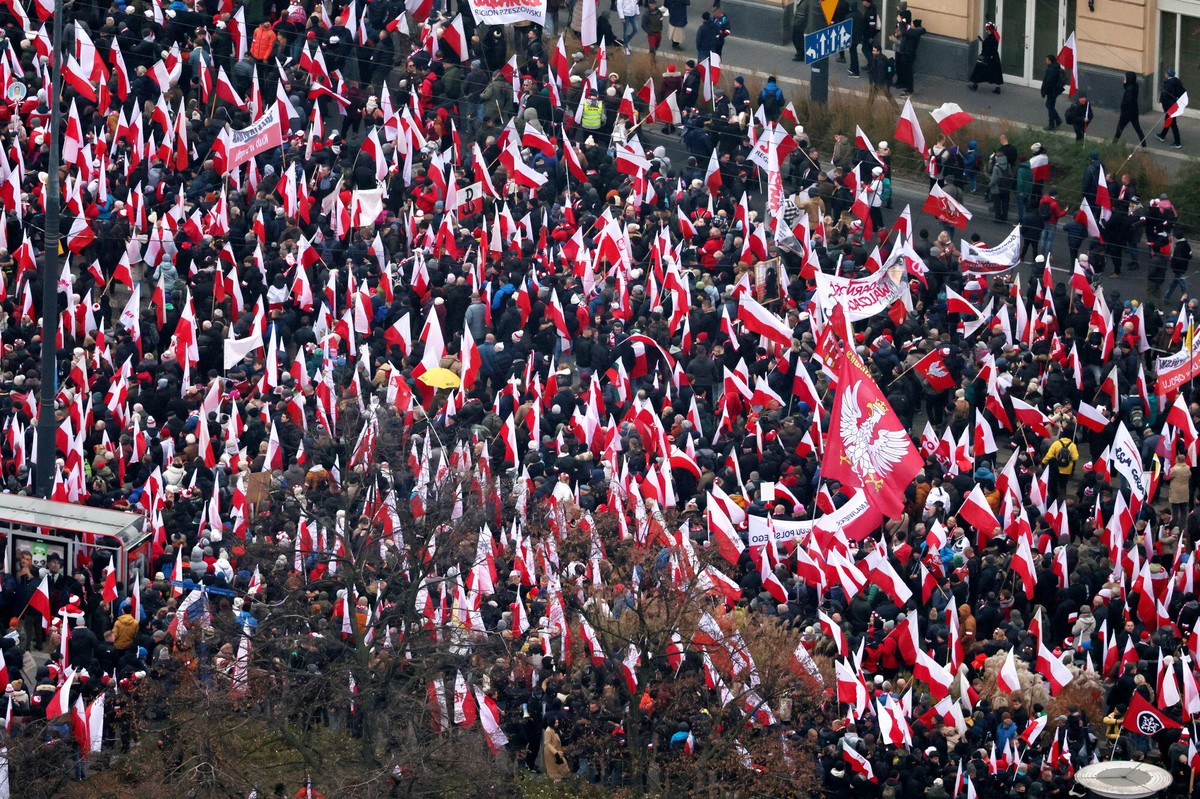
As he describes, the march organized on November 11, whose tradition comes from the times of the Polish People's Republic and the patriotic demonstrations of the 1980s, has changed its character since 2011 and “has undergone a change.” Then, extreme right-wing organizations such as Młodzież Wszechpolska and Obóz Narodowo-Radykalny (ONR) took control of the event.. As “FAZ” emphasizes, from that moment on, the demonstration became a platform for nationalist and anti-European slogans, also attracting nationalist circles from other European countries.
Currently, the march is organized by an association that declares the defense of Polish identity, sovereignty and Christian values. The German daily notes that although the event has been largely peaceful in recent years, it continues to raise controversy. The march attracts both people demonstrating patriotism and “right-wing radicals, abortion opponents, homophobes and anti-Semites who leave their mark on the image of the demonstration with their belligerent behavior and hateful slogans.”
The rest of the article below the video:
“FAZ” describes research conducted by the team of Dr. Piotr Kocyba from the Polish Academy of Sciences, analyzing the march participants since 2019, yielding interesting data. Surveys show that more than two-thirds of participants are men, with an average age of 45. Two thirds of them have higher education, and over 90 percent declares interest in politics. The vast majority – as much as 97 percent — supports right-wing parties such as Law and Justice (PiS) and Konfederacja.
“FAZ” emphasizes that the Independence March reflects the attitudes of the educated, nationally oriented middle class. Many people treat the event as an expression of opposition to authorities they perceive as foreign or hostile. The demonstration becomes a way for them to express their frustration with what they consider to be unfavorable political changes.