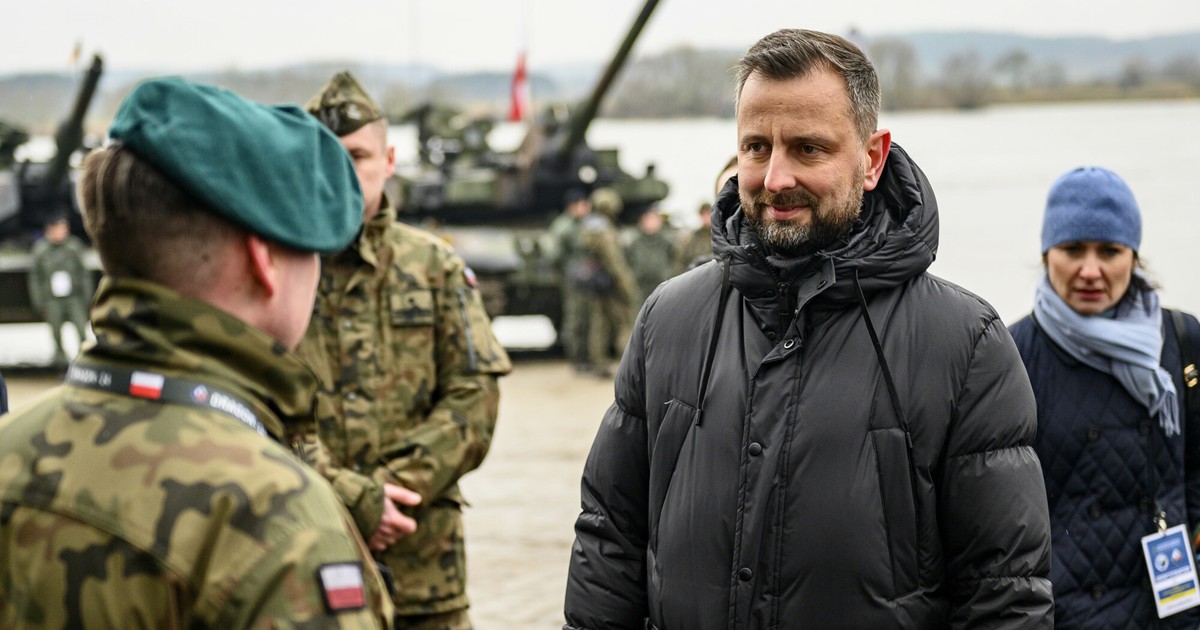
Poland, like other countries, must present the final list of projects by November 28. The committee informally suggested sending it earlier to initially verify the projects' compliance with the regulations.
According to “Rzeczpospolita”, this process is encountering difficulties – the list of projects is still not completed. The delay in preparations is particularly surprising considering that SAFE loans have higher interest rates than loans taken out by the Polish government.
See also: Ministry of National Defense in line for money. “Projects worth approx. EUR 45 billion”
Diverse priorities
Of the planned EUR 43.7 billion, approx EUR 10 billion is to be allocated to strengthening the border as part of the East Shield project. The remaining part is to support the purchase of weapons, such as Borsuk infantry fighting vehicles or Piorun anti-aircraft systems. The Armament Agency is responsible for preparing the list of projects, but only in recent weeks other ministries also joined the process. Deputy Minister of State Assets, Konrad Gołota, in an interview with “Rzeczpospolita” explained that work is underway to change the regulations that would allow part of the funds to be allocated to investments in industry, which is intended to prevent an investment gap.
The Ministry of Interior and Administration has also expressed interest in the program, but is still learning how to prepare appropriate applications. Additionally, changing European Commission guidelines complicate the documentation submission process. For example, in recent days the EC changed the rules regarding the payment schedule, which forced modifications to the applications already being prepared.
Problems with the project list
The SAFE instrument promotes joint arms purchases by at least two member countries. However, Poland was able to make purchases by one country in the first year of the program, provided it proved that it seeks cooperation with other countries. Nevertheless, independent purchases are not welcomed by the EC.
They are an additional challenge misunderstandings between the Ministry of National Defense and the Ministry of Finance. The Ministry of Finance wants some of the SAFE funds to refinance purchases from the budget, which would reduce the deficit, but such a solution would mean reducing the Ministry of National Defense budget. Another problem is the lack of regulations regarding the exemption of arms purchases from VAT, which is provided for in the SAFE regulation.
The final decision regarding the Polish list of projects must be made in the coming days. However, it is not clear which ministry will have the final say on this matter. Magdalena Sobkowiak-Czarnecka, representative for the SAFE Instrument, can play a key role in coordinating activities.