Putin calls on reservists to protect refineries from Ukrainian attacks. The recruitment campaign has started in 20 regions


Russia has begun mass recruitment of reservists who will be tasked with protecting the energy infrastructure in the face of the growing threat posed by Ukrainian drones, the Kyiv Post reports.
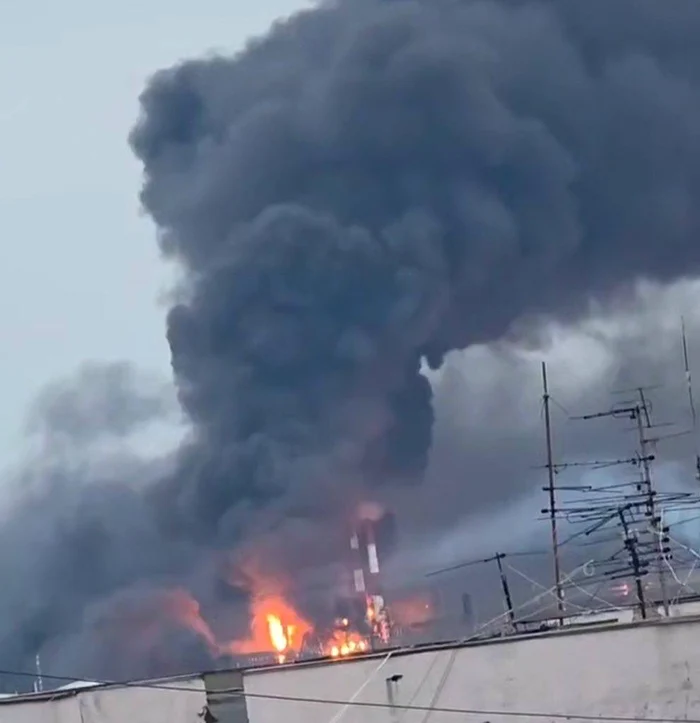
PHOTO X
The formation of units made up of reservists has begun in at least 20 regions, Russian media reported, stating that recruitment was launched after the entry, on November 4, of new legislation through which reservists can be mobilized to ensure the protection of vital oil installations.
Russian President Vladimir Putin signed the law after Ukrainian drone attacks escalated, causing fuel shortages in several regions.
The new law allows for the recruitment of two million reservists to protect critical infrastructure, including refineries.
The new units will strengthen security around the refineries, “mobile fire brigades” will be formed and counter-sabotage operations will be carried out.
Reservists will receive military status during service, receive pay, benefits and guarantees. Contracts will be for six months or one year, and reservists will serve only in their home regions.
The reservists' main duties will be protecting key infrastructure, intercepting drones, stopping sabotage groups, organizing evacuations and maintaining the so-called “anti-terrorism” regime.
Some areas began forming such units before the law came into effect. The Tatarstan region has deployed the first detachment of 21 reservists to provide security for oil installations. In the Nizhny Novgorod region, 15 reservists have already signed contracts.
Bashkortostan is creating “mobile fire brigades” to protect facilities belonging to Bashneft, Ufaneftekhim and Gazprom from drone attacks.
According to Russian media, there have been reports of new detachments being formed in St. Petersburg, Leningrad, Kaliningrad, Tver, Pskov, Rostov, Yaroslavl, Briansk, Kursk, Tula, Smolensk, Samara, Tyumen and Nizhny Novgorod, as well as in Perm, Krasnodar and Krasnoyarsk.
In the border regions of Belgorod, Bryansk and Kursk, the authorities plan to expand the existing BARS volunteer units with new formations of reservists.
Ukraine has stepped up long-range drone attacks on Russian energy infrastructure, hitting refineries and storage facilities deep inside Russian territory.
Kiev says these attacks are crippling Moscow's ability to finance its war.
President Volodymyr Zelensky said the attacks had cut Russia's refining output and fuel supply by 20-27 percent, forcing Moscow to shift production elsewhere. He added that 90-95% of attacks inside Russia use long-range weapons made in Ukraine.
According to the Institute for the Study of War (ISW), at the beginning of October, about 38% of Russia's refineries were offline, leading to fuel rationing in 57 regions, as well as a 2.6% increase in gasoline prices in September.