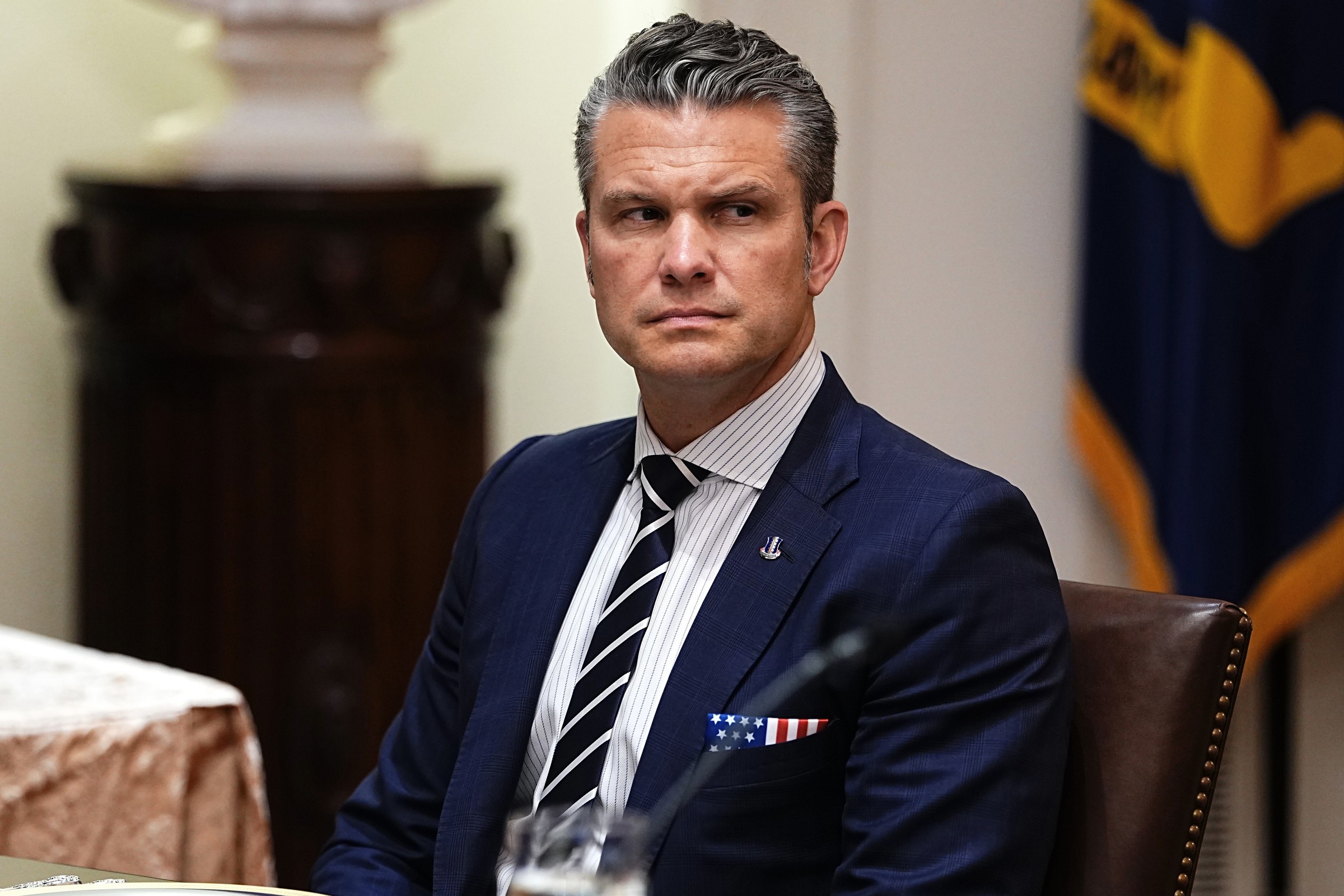
US Secretary of War Pete Hegseth delayed or canceled the promotions of at least four high-ranking officers because they previously worked for General Mark Milley, the former chairman of the Joint Chiefs of Staff whom President Donald Trump loathes and has repeatedly accused of disloyalty, reports the New York Times.
“The utter unpredictability of Pete Hegseth's actions, emerging from interviews with 20 current and former military personnel, created an atmosphere of anxiety and distrust that forced senior officers to take sides and at times pitted them against each other,” adds the NYT, calling the scale of the firings “unprecedented.”
The article continues below the video
How many generals did Pete Hegseth fire?
Why was General Work dismissed?
What were the reasons for dismissing commanders?
What concerns do politicians have about Hegseth's actions?
Secretary of War is purging the army? Generals lose their positions
According to the New York Times' interlocutors, one of the “victims” is General James Patrick Work, who was to become the deputy commander of the US Central Command, supervising troops in the Middle East.
James Patrick Work was to play a key role in the victory over the so-called Islamic State in Mosul during Donald Trump's first presidential term. In 2018, he also served as Gen. Mark Milley's deputy, which may have led Pete Hegseth to view him skeptically, according to senior officers. Despite strong support from top military leaders, General Work remains in limbo and his future is uncertain.
The reason for firing generals was to support inclusivity
Other commanders have lost Hegseth's favor after being attacked on social media platforms by right-wing influencers or because they lent support to programs promoting diversity, equity and inclusion (DEI) years ago. Navy SEAL commander Rear Adm. Milton Sands, who pushed for the hiring of women as special forces training instructors, was fired by Pete Hegseth in August.
Some commanders were removed from their positions for presenting honest assessments of the military situation, says “NYT”. Pete Hegseth allegedly alienated Admiral Alvin Holsey, head of the United States Southern Command, when he raised concerns about attacks on boats in the Caribbean Sea. Donald Trump's administration says the boats are used to smuggle drugs. Alvin Holsey unexpectedly announced in October that he was stepping down, less than a year after taking office.
Gen. Jeffrey Kruse, who has served in the Air Force for 35 years, was forced to resign as head of the Defense Department's Intelligence Agency in August when it questioned Donald Trump's claim that U.S. airstrikes in June had “destroyed” Iran's nuclear program.
The scale of resignations in the US army worries politicians
Pete Hegseth often emphasizes in public speeches that “unity” is a key element of an effective army. Defense specialist Kori Schake, who served on the National Security Council under President George Bush Jr., admitted that the new administration has the right to choose military commanders it trusts, but also expressed concern that Donald Trump's administration is “wasting enormous potential talent.”
The scale of the layoffs also alarmed some members of Congress, such as Democratic Sen. Elissa Slotkin, who previously served as a CIA officer analyzing foreign militaries. The politician recently described Pete Hegseth's actions as a “purge.”
Another cause for concern is the fact that Pete Hegseth's actions create the impression that there are generals supporting and opposing Donald Trump, which is “contrary to the traditional idea that the American army is apolitical,” summarizes “NYT.”