2025-11-16 12:00
publication
2025-11-16 12:00
The automotive industry is waiting for regulations on testing automated vehicles, and the lack of these solutions will result in companies moving abroad and losing know-how, said Tomasz Bęben, president of the association of parts manufacturers. A week ago, the president vetoed the bill containing these regulations.
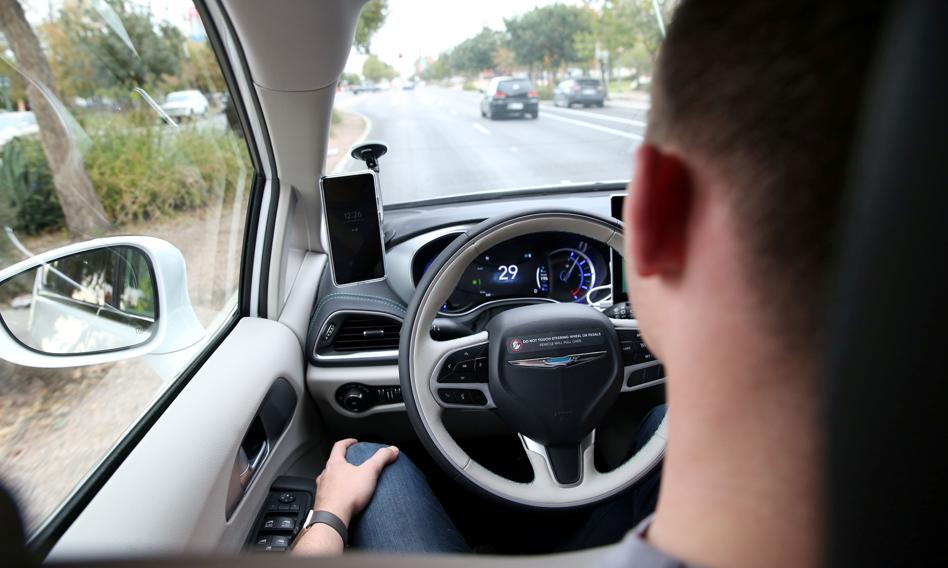
Last Friday, President Karol Nawrocki vetoed the amendment to the Road Traffic Law and the acts on compulsory insurance, the Insurance Guarantee Fund and the Polish Motor Insurers' Office. The act introduced, among others: the possibility of using public roads for tests of automated vehicles (capable of driving independently for a specified period of time, but requiring driver intervention) and fully automated vehicles (autonomous vehicles that do not require driver supervision).
These changes were assessed positively in the justification for the veto, but the president questioned the changes that were introduced in parliament after the first reading of the bill; they concerned the bus transport development fund. In the president's opinion, the changes were introduced in violation of the constitution because they were not subject to public consultations or regulatory impact assessment, and they could also cause unfavorable socio-economic effects in the future.
On the same day, the president's office announced that the presidential bill had been submitted to the Sejm, which differs from the vetoed amendment in that the challenged provisions were removed.
– We appeal to all political forces in parliament to adopt this law as soon as possible. Let's not let the solutions so long awaited by the industry become hostage to political disputes, Tomasz Bęben, president of the Association of Automotive Parts Distributors and Manufacturers (SDCM), told PAP.
Bęben emphasized that if the regulations do not come into force quickly, companies dealing with driving automation in Poland will not be able to implement new projects.
– We are talking about foreign tycoons who have invested in us. But they have contractors in Poland – usually smaller enterprises with Polish capital. They too may soon lose their jobs. This will mean layoffs that will affect Polish engineers and technicians. Highly qualified employees will start leaving Poland to work to countries where regulations are more favorable for the industry, said the president of SDCM.
The expert pointed out that possible consequences will affect not only enterprises, but also universities. – Specialists employed in automotive technology companies cooperate closely with, for example, the Kraków University of Technology and the AGH University of Science and Technology, and some of them even conduct classes there. In this way, the latest technical knowledge flows from industry to higher education, and graduates enter the labor market with competences sought by employers. The lack of an act will result in the escape of broadly understood know-how abroad, noted Bęben.
The President of SDCM recalled that work on creating new regulations began 5 years ago, during the rule of Law and Justice. At that time, the Ministry of Infrastructure compared the regulations governing the testing of automated cars in various European countries.
– It turned out that they are more favorable not only in Germany and the Czech Republic, but also in Slovakia and Hungary. We are already receiving information that companies in Poland are receiving proposals from these countries to relocate their centers, and all this is supported by promises of additional public aid. I am afraid that if automotive companies decide that Poland does not care about the development of the automotive industry, they will take advantage of these proposals, he noted.
In his opinion, how much the Polish automotive industry could lose from this is evidenced by the fact that one of the world's largest companies specializing in creating automated driving technologies has located its largest research and development center in Krakow.
– Do we really want to ask them to leave Poland? – asked the president of SDCM rhetorically. – Let's finally give the industry a reason to recognize that it is still worth developing technology in Poland. Let's introduce new regulations – added Bęben. (PAP)
gkc/malk/mhr/