What are the state funerals and why they are different from the national funerals of King Mihai I

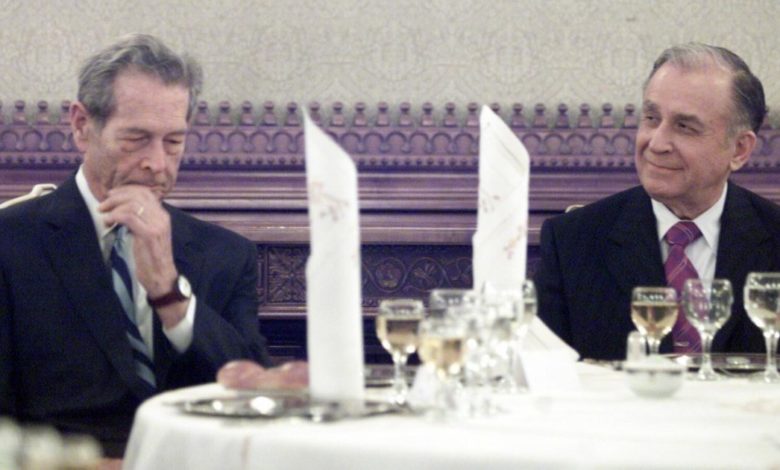
The organization of state funerals after the death of former President Ion Iliescu will be different from the national funerals organized in 2017, after the death of King Mihai I.
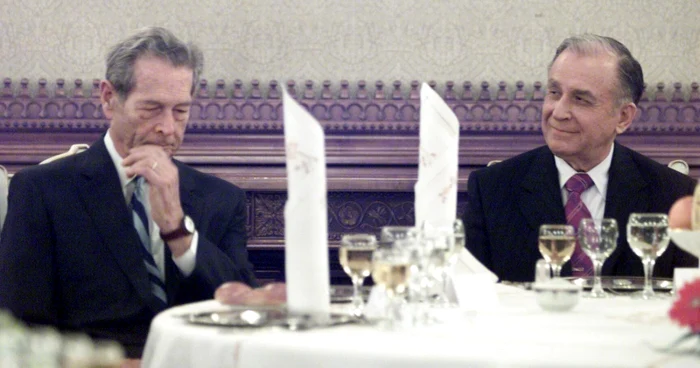
Photo Archive Adevărul
According to Law no. 215/2016, any former president of Romania benefits from state funerals, which include, and military honors, the settlement of the national flag, honor guard and cannon salve. At the same time, the event is broadcast in a live regime by TVR state television. At the same time, the tradition of state funerals also implies the exposure of the body in uninitiated body in emblematic buildings, such as the Cotroceni Palace or the Romanian Athenaeum, parades of the Guard of Honor, as well as cannon or weapon, as a tribute.
The law does not provide for the obligation to declare the national mourning, but it is expected that the Government led by Ilie Bolojan will decree national mourning in case of the death of former President Ion Iliescu.
It is important to note that state funerals are distinguished from funerals with military honors, the latter being reserved for other high-ranking dignitaries, such as the former presidents of the Houses of Parliament or the former prime ministers. Moreover, the differences of protocol against the national funerals organized in 2017, at the death of King Mihai, are significant.
How the national funerals of King Mihai I were organized
In the case of national funerals, things are different. These are not legally regulated and are marked by a wide participation of the population, including international leaders, therefore a consensus on the importance of the respective personality.
King Mihai I did not have the state funeral in 2017, but the national ceremony organized then was overwhelming by the extent of the popular presence. King Mihai I ceased life on December 5, 2017, at the age of 96, at the residence in Switzerland. Thus, the coffin with his inanimate body was brought to the country on December 13, 2017, on board a military plane, a ceremony, attended by members of the Royal Family, being organized at Otopeni Airport.
The coffin was then placed in the honorary lobby of the Peleş Castle, where, for several hours, many representatives of the state institutions and the diplomatic corps accredited in Bucharest transmitted condolences. On the evening of the same day, the coffin with the king's lifeless body was brought to the Capital and deposited at the Royal Palace, where he was watched by his daughters, but also by representatives of the European Royal Houses, and thousands of ordinary people paid him a last tribute.
The days of December 14, 15 and 16 were declared by the Government days of national mourning on the territory of Romania in the memory of King Mihai
On December 16, 2017, after a brief religious service officiated in the Throne Room at the Royal Palace, the coffin with the inanimate body of King Mihai I was placed on a catapult in the Royal Palace Square, then climbed a cannon, which was fired, as a tribute, by an operational military vehicle. The funeral cortege has traveled the route of the Royal Palace – Calea Victoriei – Splaiul Independence – Unirii Square – Entrance on Metropolie Hill.
At the Patriarchal Cathedral, the funeral service took place, the cortege, then, to Baneasa Royal Station, from where the royal train left for Curtea de Argeş. King Mihai I was buried at the Archbishop's and Royal Cathedral in Curtea de Argeş.
Ion Iliescu died at 95
Former President Ion Iliescu died on Tuesday, August 5, 2025, at 3:55 pm, at the age of 95, after two months in which he was admitted to serious condition at the Emergency Clinical Hospital “Prof. Dr. Agrippa Ionescu”.
Previously, during the day of Monday, August 4, after evaluating the health status of the former president Ion Iliescu by the SRI doctors, the Government convened the State Funeral Organization Committee.
According to the regulation, the committee is constituted under the coordination of the head of the Prime Minister. It includes many representatives of relevant public institutions such as: the Presidential Administration, the General Secretariat of the Government, the Prime Minister's Chancellery, the Ministry of Internal Affairs, the Ministry of Foreign Affairs, the Ministry of National Defense, the State Secretariat and the Protection and Guard Service.