The CCR explains why it declared the law on magistrates' pensions unconstitutional. Important criticisms of the Supreme Court were rejected: the law does not violate the principle of legal certainty

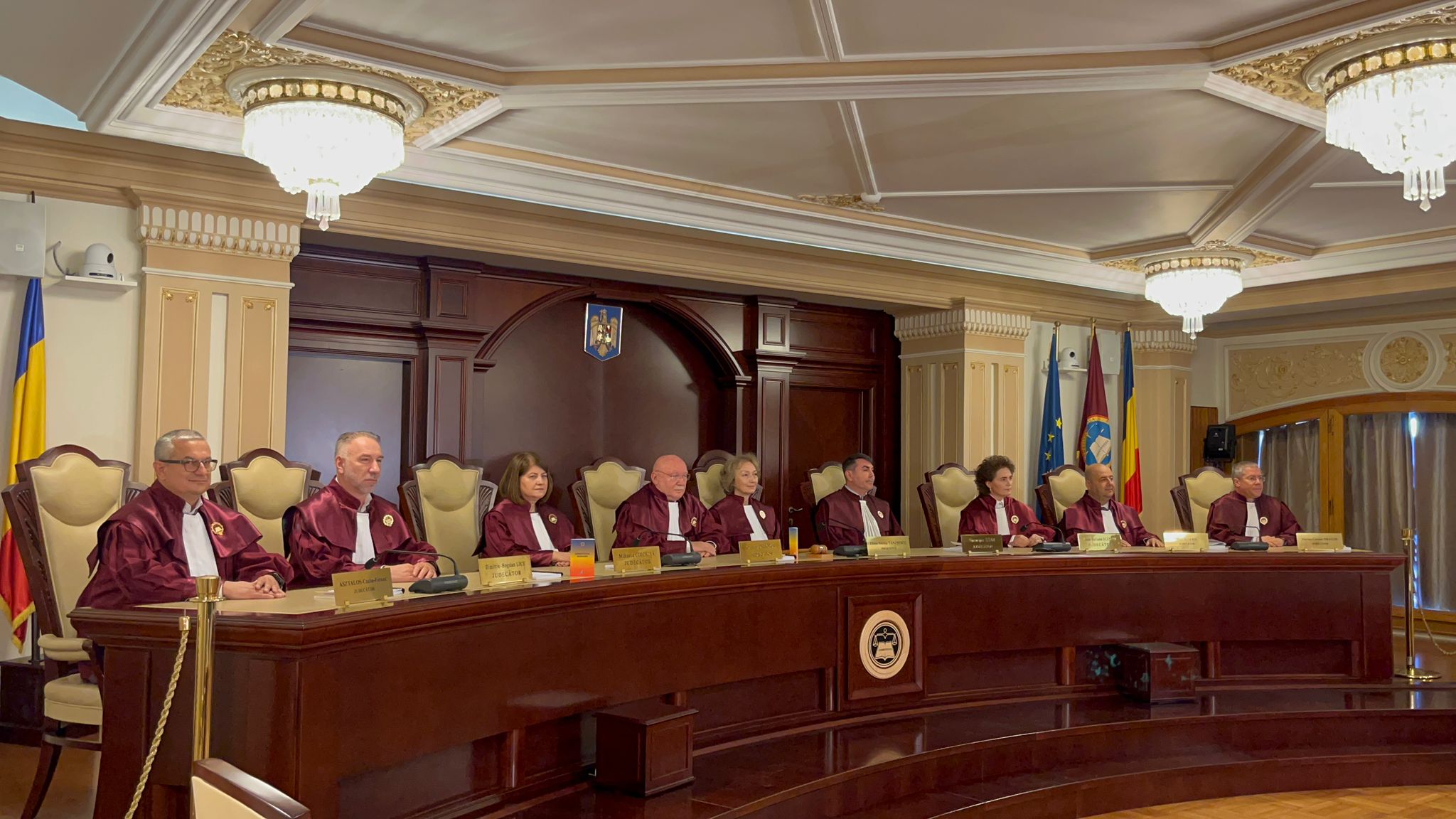
The Constitutional Court published on Friday the reasons for the decision of October 20, by which the law on the pensions of magistrates was declared unconstitutional. The decision was taken by majority vote, by five of the nine CCR judges. In the justification, the Court retained only one procedural deviation: the one regarding obtaining the opinion from the CSM.
The lack of the CSM's opinion, on the draft law on special pensions, “was due to the submission of a non-compliant approval request at a procedural stage that did not allow the request for an opinion and on an editorial version of the draft law that did not correspond to the aforementioned procedural stage”, it is stated in the reasoning of the Constitutional Court's decision on service pensions.
In the CCR ruling, which spans 54 pages, the judges argued every criticism raised by the High Court of Cassation and Justice.
Apart from the lack of the CSM's opinion, the other two unconstitutionality criticisms regarding the form of the law were rejected by the CCR.
What did the ÚCCJ criticize? and how CCR responds
ICCJ judges asked the CCR to declare the law on service pensions unconstitutional, citing both form and substance. The CCR judges analyzed the criticisms regarding the form of the law.
The first criticism of the Supreme Court: the Law violates the article of the Constitution with reference to the conditions under which the Government can engage its responsibility on a draft law.
But the CCR established that the successive engagement of the Government's responsibility on the same day, in different sessions of the Parliament, on 5 draft laws is neither expressly nor implicitly prohibited by the Constitution. “Such a situation does not have constitutional relevance through the prism of art. 114 of the Constitution, but reflects a technical aspect of the way of organizing the Parliament's activity, which relates to its regulatory autonomy”.
“The criticized law was adopted to correct inequities”
Second criticism of the Supreme Court: The law violates the provisions of the Constitution with reference to the rule of law, the principle of legal security and legitimate trust, as well as the prohibition of discrimination, correlated with the principle of judicial independence, in its institutional component
In this case, the Court observes that the new service pension reform does not bring into question a random element, but “promotes a more restrictive legislative solution in terms of the conditions that must be met in order to benefit from the service pension, such as Law no. 282/2023, which, in turn, promoted a more restrictive vision regarding access to the service pension”.
“Considering the above, it is found that the criticized law was adopted to correct existing inequities in the field of service pensions in the justice system, it does not promote random legislative solutions, but connected to the social and financial reality of the country, and the regulated legislative solutions have a consistent structure, conception and purpose. Therefore, the criticized law does not violate the principle of legal security.”
The Court specified that the new regulations may be advantageous or even disadvantageous to the pension beneficiaries, as they allow or impose, as the case may be, the economic-financial situation of the country and the available state social insurance funds. In addition, a measure to reduce the old-age pensions of judges may be justified by an objective of general interest, such as the imperative to eliminate an excessive public deficit.
At the same time, the CCR judges emphasize in their reasoning, the legislative authority has the right to develop the legislative policy in the field of pensions in accordance with the economic and social conditions existing at a given time.
If the legislative authority developed a pension system, based on certain age and contribution conditions, it does not mean that it could never be changed. In such a conception, it is possible to deny the evolution in the legal regulation of any field of activity, which cannot be admitted.
In conclusion, the CCR judges established that the law does not violate the provisions of the Constitution regarding the rule of law, the principle of legal security and legitimate trust, as well as the prohibition of discrimination, correlated with the principle of judicial independence, in its institutional component.
“The endorsement cannot be avoided/circumvented“
The only criticism of unconstitutionality raised by the Supreme Court, admitted by the CCR, was the one concerning the lack of the advisory opinion of the CSM.
The CCR judges believe that the Government has violated the Constitution, assuming its responsibility under the law without waiting for the opinion of the SCM.
The government, the Court points out, had the constitutional obligation to go through this stage “effectively and in compliance with constitutional loyalty”.
“The approval, as a stage in the legislative process, cannot be avoided/circumvented or converted into other methods of consultation and takes place in the time intervals established by the normative acts in force, which cannot be compressed or ignored by the initiator of the legislative act. It follows that the lack of approval is not only analyzed from the formal legalistic perspective of its request, but it is necessary that this request be made in the procedural stage established by the normative acts for its formulation, on an editorial version of to the draft law that corresponds to the aforementioned procedural stage, as well as to the observance of the deadlines established by law for obtaining them. These aspects represent constitutional requirements”, the reasoning of the CCR states.
The request for the CSM's opinion was made within the public consultation procedure and the preliminary inter-institutional consultation, the CCR judges observed, emphasizing that the CSM's opinion should be requested only after the completion of the interministerial approval procedure.
“The request for approval addressed to the CSM on August 22, 2025 cannot be considered as having been carried out under regular and legal conditions, the approval deadline could not start until August 28, 2025, after the interministerial consultation procedure had ended, and the draft law had acquired a consolidated form. The government, through the initiating ministry, or the CSM could not enter into such a dialogue before the reference moment, since this aspect would be equated with the possibility of the SCM taking over some powers that belong to the executive power in the elaboration of the draft law, the two authorities being able to enter into constitutional law relations only after the draft law has acquired a normative consistency both formal and substantial by assuming the editorial version consolidated by the initiating ministry”, the CCR judges explain in the motivation.
Related to these aspects, the Court established that the request for the CSM's opinion was not carried out under legal conditions, the request submitted by the initiating ministry being premature and, possibly, the result of an error of judgment.
Related to the term that the Government had to wait for receiving the opinion, the CCR invokes Law no. 305/2022 establishes that the SCM Plenary issues an advisory opinion on draft normative acts that concern the activity of the judicial authority within 30 days of notification.
“The relativization of this term in relation to one of the situations in which the CSM issues an opinion would be equivalent to the relativization of the above-mentioned temporary interval regarding the entire activity carried out by the CSM, which is inadmissible in a state of law based on constitutional rules, requirements, principles and values”, concluded the judges of the Court, in their reasoning.