
The European Commission is investigating information that Viktor Orban's spies concerned EU officials


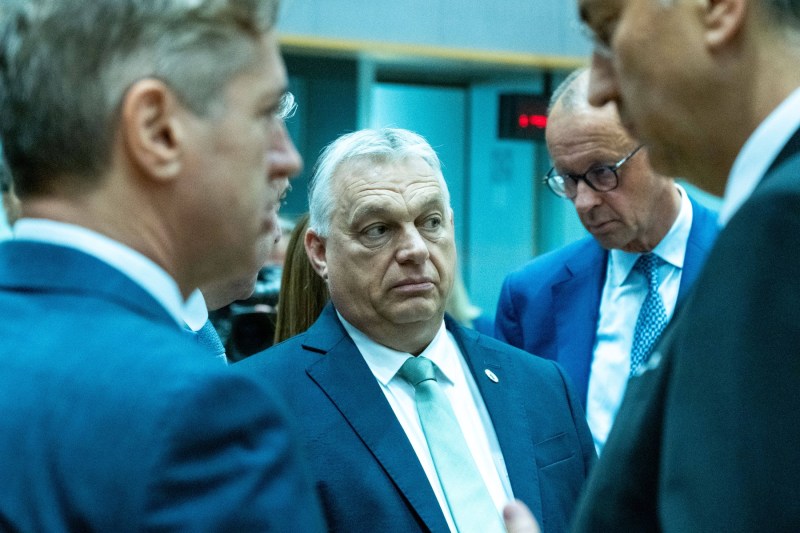
The Prime Minister of Hungary, Viktor Orban, Slovenia Prime Minister Robert Golob, and German Chancellor Friedrich Merz, during the EU-state-of-the-art head and government summit in Brussels, Belgium, on July 26, 2025.
The European Commission said on Thursday that it will investigate the information that the government of Hungarian Prime Minister Viktor Orbán has sent spies to Brussels to collect information about EU institutions and to recruit a European civil servant, according to News.ro.
A common investigation by the German publication Der Spiegel, the Belgian TiJD daily, the Hungarian publication Direkt36 and other Media institutions revealed that agents of the Hungarian secret services tried, under diplomatic cover, to infiltrate the EU institutions during the time when Olivér Várhelyi, current European Commissioner.
An agent, which was not identified by the press, was sent to Brussels between 2015 and 2017 as a diplomat who worked in the Department for the Cohesion Policy of the Hungarian Embassy, according to the documents analyzed by the media. According to the press investigation, the agent actually worked for the Hungarian external intelligence service, establishing contacts within the European Commission and other EU organizations.
“The Commission, as usual, takes such accusations very seriously and remain employed to protect the officials and networks of the Illicit Slandent Commission,” the European Commission, spokesman Balazs Ujvari said on Thursday.
The EU executive “will set up an internal group to examine these accusations,” said Ujvari, adding that, for reasons of operational security, he will not disclose more information.
The main spokesman for the European Commission, Paula Pino, added that President Ursula von der Leyen was informed about these reports.
Neither the representatives of Várhelyi nor the Hungarian government responded immediately to the comments sent by Politico.
He was looking for “any kind of gossip” about the commission
The espionage activities would be in accordance with the practices carried out by Moscow and Beijing, than to those of an EU member state. This could feed the distrust of Hungary in Brussels, Polito comments.
The press reported that a high-ranking official from Brussels said he was meeting the agent every few months for friendly conversations, but soon realized that the Hungarian was a spy looking for “any kind of gossip” about the commission.
The meetings, which usually took place in a park in Brussels, eventually led to the operative agent of a document that formalized the commission official as the “secret agent” of the Hungarian external intelligence service (IH)-even if he continued to work within the Commission.
The official told the press that he did not sign the document and that the agent offered him even money for information, but he refused. The press reported that sources in the field of security confirmed the official's statement.
At that time, the agent's superior at the Embassy was the Hungarian ambassador to the EU, Várhelyi, who currently holds the portfolio of Commissioner for Health and Welfare of Animals.


