In the summer of 2021, Vladimir Putin published an essay of almost 5,000 words in which he tried to prove that Russians and Ukrainians are “one people”, artificially divided by Russia's enemies. The text, a mixture of imperial nostalgia and selective rewriting of the past, soon became his manifesto for the invasion that was to follow.
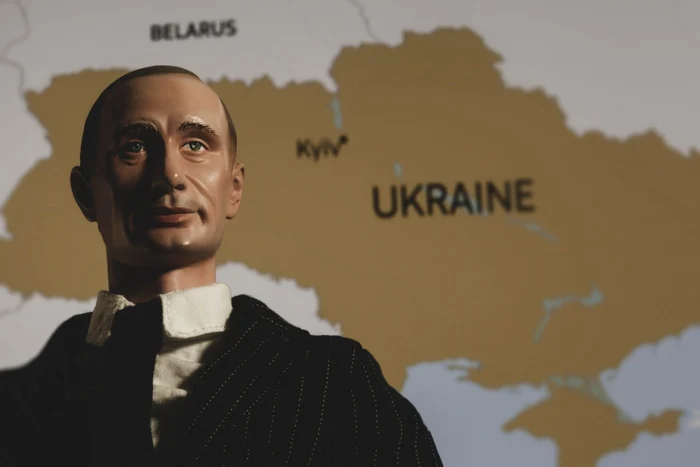
Putin's obsession with Ukraine exceeds any precedent/PHOTO: shutterstock
Seven months later, Russia was bombing Ukrainian cities, illegally annexing territories and killing tens of thousands of civilians – all in the name of a reinterpreted history, Kyiv Independent writes.
Since then, Putin has turned his historic speech into a political weapon. He did it again in February 2024 in a marathon interview with Tucker Carlson, where he gave a real made-up history lesson: from the founding of the medieval state of Kievan Rus in the 9th century to the collapse of the Soviet Union. He repeated the same tirade, diplomatic sources say, in front of Donald Trump at the summit in Alaska in August.
“For Putin, history is an arsenal from which he chooses the right weapons to hit his enemies”explains French historian Françoise Thom.
“A country with an unpredictable past”
Reinterpreting the past is nothing new in Russia. For centuries, each new tsar, general secretary or president rewrote the history textbooks. “Russia is a country with an unpredictable past,” joked comedians in the early 2000s.
But Putin took this habit to the extreme. He made historical mythology a tool to legitimize war. He chose only those episodes from the past that served his narrative of the “historical unity” of Russians and Ukrainians.
“To justify the aggression, he must prove that it is not a war against Ukraine, but a reunification”explains historian Serhii Khromenko, who serves today in the Ukrainian armed forces.
Putin often cites Kievan Rus — a medieval formation that existed centuries before the Russian state — as proof that Ukrainians and Russians are “the same people.” Historian Iaroslav Hrițak, a professor at the Catholic University of Lviv, categorically rejects this interpretation: “It's absurd. Nations evolve. Ukraine and Russia have had completely different trajectories since the 14th century.”
After the breakup of Kievan Rus', the territories of present-day Ukraine became part of Poland and Lithuania, and Muscovy developed separately, with a different political and cultural identity.
The revolt of the Cossacks led by Bohdan Khmelnytsky, who in 1654 signed the Treaty of Pereiaslav with Tsarist Russia, is one of Putin's favorite moments — an episode presented as a “voluntary union” with Russia. In reality, historians say, it was an alliance of opportunity, later betrayed by Moscow.
Also completely ignored are historical figures who contradict the myth of unity, such as Ivan Mazepa, the Cossack leader who rose up against Tsar Peter the Great.
Putin also omits key moments in Ukraine's modern history: the revolution of 1917, which gave birth to the first independent Ukrainian state, or the fact that some Ukrainian regions were annexed by the USSR only in 1940 and were under Soviet control for less than 50 years.
“His goal is clear: to erase the history of Ukraine as a nation”says Hrițsak. “If you take away a people's collective memory, you make them vulnerable, you can absorb them.”
Obsession with Ukraine
For Putin, history is not just propaganda – it's an obsession. It feeds the idea that Russia is a permanent victim of the West.
“In his view, history is an endless collection of humiliations imposed on the Western Russian people since the time of Byzantium”explains Françoise Thom.
This view has also been taken up by state propaganda, which repeats daily that Russia is “defending” itself from a hostile world.
But Putin's fascination with Ukraine goes beyond any precedent, says historian Sergei Radchenko. “All Soviet leaders manipulated the past, but none made it a personal delusion. Putin lives in a parallel world, one that exists only in his head.”
Ukrainian historians see this obsession as a direct explanation for the invasion. “Russian-Ukrainian relations would have been complicated no matter who was in the Kremlin. But with Putin, war became inevitable”says Hrițak. “For him, Ukraine is not a foreign country, but a part of his own identity. And its loss is a personal wound.”
Today, after years of war and hundreds of thousands of dead, Putin continues to talk about the “great common history” and about “returning Ukraine home.” But that “house” exists only in the textbooks he rewrote himself — and in a past that, for the rest of the world, has long since become history, Kyiv Independent concludes.