The Romanian commune that “moved” to Austria. “Where could women work here? That's how they go there, babes”

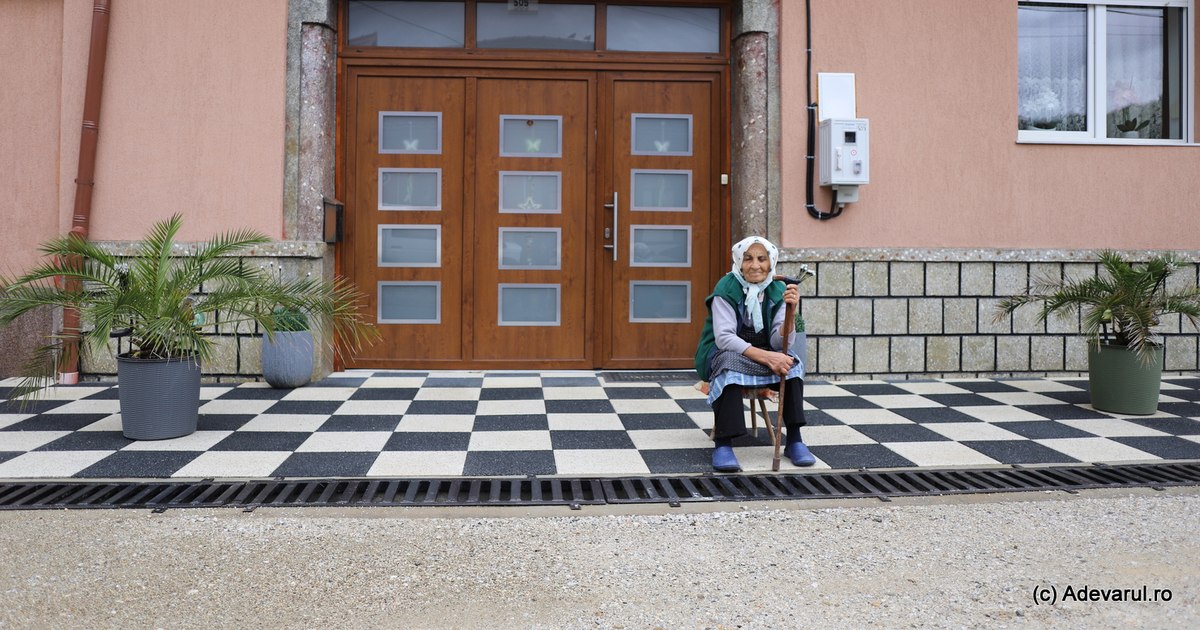
The elderly remained the majority population in a commune in the Banatul Montan, with a special characteristic. Many families have left the settlement and settled in Austria, while other locals, especially women, work part-time jobs also in Austria, caring for the elderly.
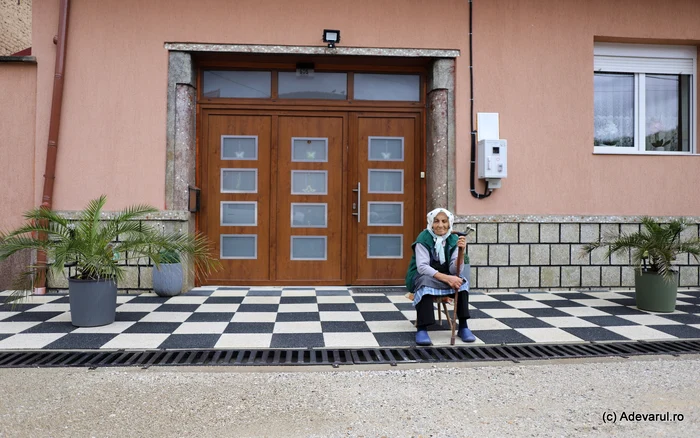
Marta, a local from Carașova who is waiting for her grandchildren at home, for the holidays. Photo: Daniel Guță.
A little over 2,500 people live in the villages of Carașova commune (Carașova, Nermed and Iabalcea) located in the vicinity of Reșita municipality.
The Carașovs migrated to the West
Most of the locals speak Croatian, and the settlement was founded in the Middle Ages by a population known as Carašoveni (Crašoveni), a Croatian-speaking Catholic community historically and culturally related to the Croatian people. Their exact origin is still debated by historians, but the Croatian state officially recognizes them as a national minority in Romania.
The Carașov community also includes the villages of the Lupac commune, with approximately 2,500 inhabitants (Lupac, Clocotici, Rafnic and Vodnic), also located a few kilometers from Reșita.
At the end of the 80s, Carașova had almost 4,000 inhabitants, and almost every family from Carașova had at least one employee in the plants and factories of Reșita municipality.
“Carașova is a commune with almost 4,000 inhabitants, and its hearth is in a valley towards which the old road, detached from the national road, descends in tight serpentines. From Carașova to Reșita, it is only 15 kilometers and 1,200 men from the commune climb this road every day. Almost all of them work at the steel plant. The labor of the land remains, of course, in the first in turn in the care of the women of the village. In this respect, Carașova is no different from other municipalities close to Reșita”, wrote Flacăra magazine in 1986.
Other locals of the commune worked in the coal mines of Anina, the other town neighboring Carașova, or further, in Oravița. The steel plant, Uzina Constructoare de Mașini Reșita (UCMR) and the mining complexes near the city employed, in the 1980s, almost 20,000 people, many of them from the communes neighboring the former large industrial center.
The massive restructuring and redundancies in the local industry after 1990 contributed to the depopulation of the area, and, along with Reșita, the communes around the former large industrial center also suffered.
Many families preferred Austria
The villages of Carașov were affected not only by the industrial decline, which reduced the number of jobs, but also by the exodus of the locals to the West.
Although it is among the communes with visible investments in infrastructure and with most of the households maintained and cared for, Carașova remains a place surrounded by silence most of the time. Its modernized streets are often deserted, and most of the locals who can still be seen at the gates are elderly.
“Many families originally from Carașova have settled in Austria, but this has happened for several years. More recently, they have not left, and some families have expressed their desire to return, although we do not have this guarantee that they will. There are women who go to Austria not to live there, but to work in the care of the elderly.” says mayor Ivan Hațegan.
Those who left Carașova kept their homes and invested in their restoration, so most of the houses have a pleasant appearance and are often adorned with flowers and decorations, even if they seem frozen in time. The locals who in the past “commuted” in Reșița, now do it, less often, between the localities with Croats in Austria and the villages around Reșiţa, especially during vacations and holidays.
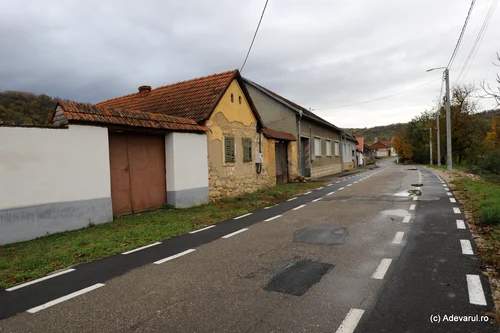
Image 1/22:
Carașova Village Photo Daniel Guță THE TRUTH (20) JPG
Their exodus began in the 1990s, when they were able to obtain Croatian passports, which provided them with facilities to work in the West. They initially went to Croatia, but many later migrated to Austria, which offered them more opportunities. And in Austria, says the mayor of Carașova, there are villages inhabited by Croats, and it was easy for the locals of Carașova to integrate there.
“Among those who remain, some still do agriculture, but there are few of them. Many locals have gone to the West, most of them to Austria, especially the women. Other people from Carașov have gone to Germany or Italy. There is a close connection between the people from Carașov here and the Croatians”says Maria Franț, a local from the village of Clocotici (Lupac commune).
However, some elderly people regret the departure of their relatives to Austria and Germany and say that even here they would have good living conditions, but lower incomes.
“My children and my niece bought houses in Austria. They also have houses here. They will come for the holiday, on St. Martin (November 11). Then they will leave again and come back before Christmas. They will stay until Epiphany and then they will leave again”, says Marta, an 87-year-old local woman, left alone in her household in Carașova.
Other locals explain the exodus of Carașov residents to Austria also by the fact that the towns are not exactly far apart. A journey from Reșita to the region with Croats takes 7-8 hours by car. Regarding the women who work in Austria, for fixed periods, Nicolae, another local, explains their situation.
“The men worked in Reșita, in Anina. The women here had a different kind of occupation. They took care of the household, raised children, kept a cow – two, three pigs. They had neither work nor school, there wasn't much going on since the 60s. Now what should they do, hire a maid here? Better earn in Austria, taking care of babies”says Nicolae.
The population of Caraș-Severin, hit by the industrial decline
The population of Caraș-Severin county lost almost 50,000 people in a decade, according to the results of the 2021 Census. But the demographic decline continued in the following years, in this area of southwestern Romania, between the Banatul Montan and the Poiana Ruscă Mountains.
Caraș-Severin officially has less than 250,000 inhabitants, and the population of Reșita municipality, the capital of the county and of Banatul Montan, has decreased to approximately 58,000 people, almost 20 percent less than a decade ago.
The demographic decline of Reșița and the other localities in Caraș-Severin has complex causes, one of them being closely related to the industrial profile of the region.
The modern era of mining began in Banatul Montan in the 18th century, with the opening of coal mines (anthracite) from Anina, iron mines from Ocna de Fier, Rusca Montană and Dognecea, and non-ferrous metal mines from Cozla, Sasca Montană and Ciclova. It was also then that the smelters at Reșita, Oțelu Roșu and Bocșa were established, and Oravița became an industrial center of the region, being connected to the mining areas by the first mountain railway in Romania, the Oravița-Anina line, used since the mid-19th century for the transport of ore and coal.
During the decades of communism, other important mining settlements emerged, such as Moldova Nouă in the Danube Gorge, with valuable copper resources, or Ciudanovița and Jitin in the Banat Mountains, with uranium deposits. It was also then that Rusca Montană and Ruschița, from the Poiana Ruscă Mountains, became workers' colonies” developed around iron and marble mining.
Starting from the 90s, almost three centuries after the establishment of the first modern mines in the Banatul Montan, most of the mining operations were closed. The big factories in Reșita and Oțelu Roșu drastically reduced their activity, and the industrial decline meant tens of thousands of jobs disappeared and, with them, the departure of thousands of families from the area.
Even cities that did not base their economy on heavy industry were not spared the demographic decline. Caransebeș, the old administrative and military center of Banat, and the Băile Herculane resort, in the past one of the most famous in Europe, have also felt the effects of migration and the aging of the population. The mountainous relief of the county has contributed to the isolation of many localities, which are among the most affected by the demographic decline.