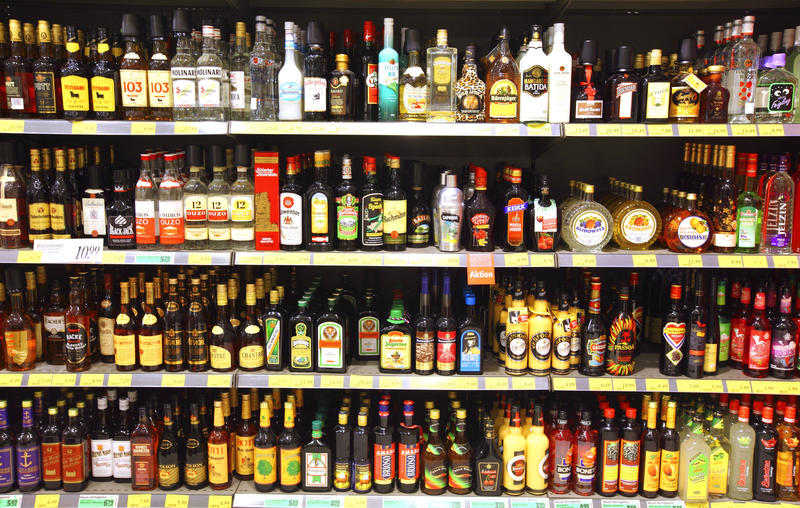
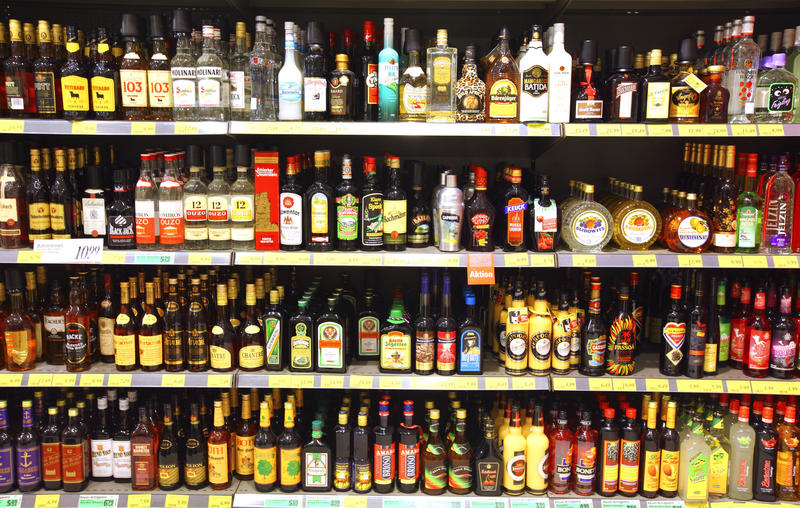
Alcoholic drinks on the shelf, Photo: Jochen Tack / imageBROKER / Profimedia
The revenues collected by the state from the excise duties applied to spirits registered a decrease of 53.87 million lei in the first nine months of 2025 compared to the similar period of 2024, despite the increase in the excise duty level by over 14.4%.
“The authorities' data confirm a phenomenon that we have repeatedly warned about: increasing the excise duty on spirits is not a solution for increasing budget revenues. A higher excise duty means a higher price for consumers, which determines the orientation towards illicit products which, although they are cheaper because they do not include taxes, are dangerous,” said Florin Rădulescu, president of Spirits Romania.
According to the official data sent at the request of Spirits Romania, in the first 9 months of 2025, the National Agency for Tax Administration (ANAF) collected excise duties in a total amount of 826.75 million lei, compared to 880.62 million lei in the same period of 2024 – a decrease of approximately 6%. During this period, the excise duty on spirits was increased twice – once by 4.4% starting from January 1, 2025 and the second time by 10% starting from August 1, 2025.
A new increase of 10% is foreseen in HG 141/2025 for January 1, 2026. Industry representatives say that keeping this calendar of excise duty increases will lead to the proliferation of drinks on the untaxed market.
About 30–40% of spirits consumption remains untaxed, being linked to smuggling or counterfeit products
This situation leads to significant revenue losses – estimated at 45-65 million euros annually.
“The orientation of consumption towards counterfeit products is a phenomenon that will be amplified if excise duty increases continue. But, beyond the problem related to the reduction of state revenues, the greatest danger is related to public health, because counterfeit drinks do not benefit from quality control and guarantees. These risks affect important sectors such as HORECA or tourism,” added Florin Rădulescu, president of Spirits Romania.
Excise duties and VAT represent approximately 60% of the final price of spirits. Although all alcoholic beverages contain the same active ingredient — ethanol — and a standard unit of beer, wine or spirits has the same effect on the human body, the tax is disproportionate. Consumers pay nearly four times more excise duty on a standard unit of spirits than beer and up to 64 times more than wine.
In this context, the spirits industry has called for the adoption of a more balanced tax framework for different categories of drinks, based on pure alcohol content.