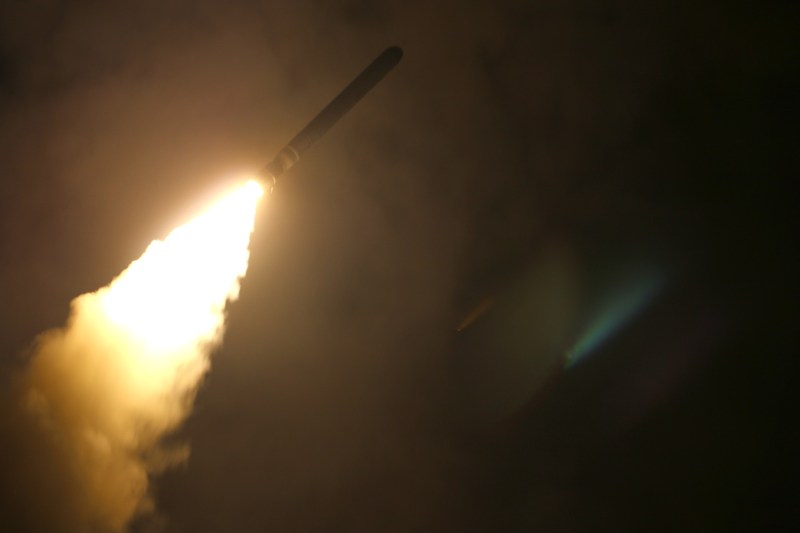
The guided-missile cruiser USS Monterey (CG 61) fires a Tomahawk missile at Syria as part of an Allied strike on April 13, 2018. Illustrative image. PHOTO: US NAVY / Getty images / Profimedia
Russia's response to any potential Tomahawk missile attack on its territory would be “serious, if not overwhelming,” Russian President Vladimir Putin said Thursday night, according to CNN and Reuters.
Although the United States has so far not agreed to allow Ukraine to use these long-range missiles, the fact that Kiev is trying to get permission to use them is “an attempt at escalation,” Putin told reporters.
Asked about The Wall Street Journal (WSJ) article that the Trump administration lifted a key restriction on Ukraine's use of long-range missiles supplied by Western allies, as well as Zelenskiy's remark about domestic missiles with a range of 3,000 km (1,900 miles), Putin said: “This is an attempt at escalation.”
“But if such weapons are used to strike Russian territory, the response will be very serious, if not overwhelming,” he said.
“Let them think about it,” the Kremlin leader warned.
Putin's remarks came after the United States imposed sanctions on Rosneft, Lukoil and dozens of their subsidiaries on Wednesday night because of “the lack of a serious commitment by Russia to a peace process to end the war in Ukraine.”
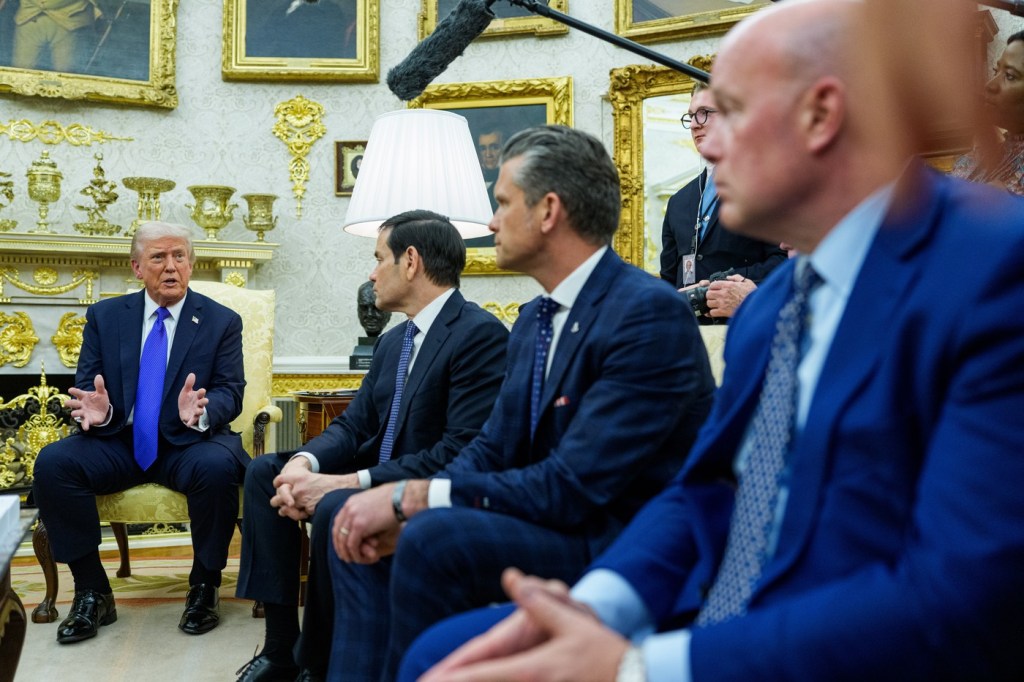 Donald Trump slaps sanctions on Russia's two biggest oil companies and cancels summit with Vladimir Putin in sudden change of direction
The new sanctions were announced a day after plans for a summit between US President Donald Trump and his Russian counterpart Vladimir Putin fell through. Trump told reporters at the White House that he had a “very good relationship” with his Russian counterpart, but felt he had to cancel the planned meeting in Budapest because “it didn't feel right.”
On Wednesday, Donald Trump said that news that the United States had approved Ukraine's use of long-range missiles for attacks deep into Russian territory was false, adding that the United States “has nothing to do with these missiles.” The WSJ reported earlier in the day, citing an unnamed Washington administration official, that the Trump administration had lifted the ban on Ukraine's use of such missiles, supplied by Western allies.
Zelenskiy's appeal to European allies
Ukrainian President Volodymyr Zelensky has repeatedly requested Tomahawk missiles from the United States. Trump did not rule out providing such long-range missiles to Kiev during talks in Washington with Zelenskiy last week, but as late as Wednesday appeared reserved about the prospect.
On Thursday, Zelensky urged European allies to supply Ukraine with long-range weapons.
The Ukrainian president, who addressed European Union leaders at the Brussels summit, also urged them to agree as soon as possible on a plan to use frozen Russian assets and said Ukraine would use a “significant part” of the funds made available to buy weapons made in Europe.
“When we talk about long-range weapons for Ukraine, we mean that the Putin regime should feel the real consequences of this war. I urge you to support anything that helps Ukraine get such capabilities, because this really makes a difference for Russia,” he said.
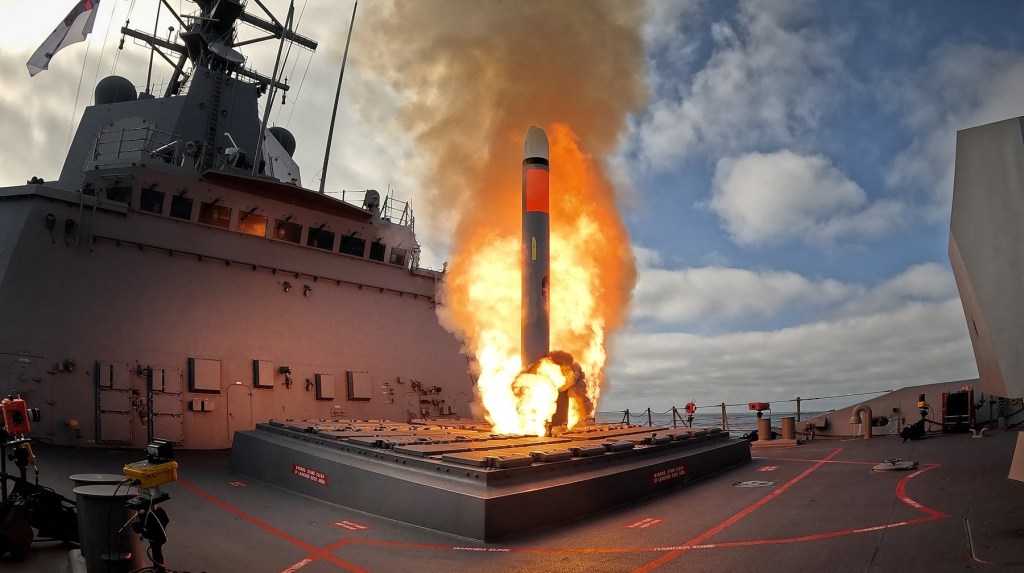 Who is Zelenski asking now for Tomahawk missiles: “Just look how nervous Putin has become”
“Just look at how nervous (Russian President Vladimir) Putin became when this topic was brought up. He understands that long-range weapons can really change the course of war,” the Kiev leader added.
“These long-range weapons are not only in the US – some European countries have them, including Tomahawk missiles. We are already in talks with countries that can help us,” Zelenskiy said on Thursday. The Ukrainian president also asked European countries to send additional Patriot anti-aircraft defense systems, also of American production.
EU leaders are meeting in Brussels on Thursday to discuss a plan to use frozen Russian assets as the basis for a 140 billion euro ($163 billion) “repair loan” to Ukraine. Moscow has repeatedly contested the legality of this idea.