Poland's birth rate is collapsing despite state financial support. The loneliness epidemic that money can't cure


In 2015, Poland was already facing an acute demographic problem: the fertility rate had stagnated at 1.3 children per woman, one of the lowest in Europe. The authorities hoped that financial support and expanded childcare services would encourage young couples to have more children. A decade later, although the economy has strengthened significantly, the population continues to decline — and the explanation seems to lie less with money and more with social isolation, writes The Guardian.
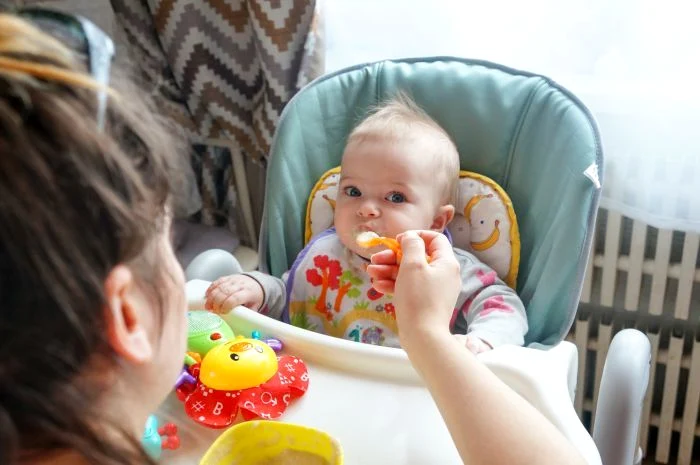
The forecasted fertility rate in Poland for 2025 is 1.05/PHOTO: Archive
Economic prosperity, but fewer and fewer children
Since the early 2010s, Poland has experienced spectacular economic growth. Unemployment fell to one of the lowest levels in the European Union and incomes doubled. The government's “800 Plus” program provides families with a monthly allowance of 800 zlotys for each dependent child — a hefty sum that consumes nearly 8 percent of the national budget.
However, between 2015 and 2024, the country's population decreased by about 1.5 million people. At the same time, the number of one-person households increased by over a million.
In 2024, the fertility rate had collapsed to 1.1, and estimates for 2025 put it at 1.05 – one of the lowest in the world, comparable to Ukraine's.
A crisis of relationships, not just birth
The data suggest that the problem is not the lack of desire to have children, but the absence of partners. More and more young Poles do not enter into stable relationships at all. Almost half of under-30s are single, and another 20% are in long-distance relationships.
Research shows that the younger generation — especially those aged 18 to 24 — feel lonelier than any other, including the over-75s. In 2024, two out of five young men said they had not had sex for at least a year.
Although 70% of young Poles use dating apps, only 9% of couples have actually formed online. For many, the “infinite possibilities” promised by the digital world have turned into infinite hesitation.
A profound cultural change
The phenomenon is part of a broad social transformation, marked by gender tensions, political polarization and the redefinition of privacy. Since the fall of communism, Poland has changed radically: GDP per capita has increased eightfold, and unemployment has fallen from 20% in 2002 to below 3% today.
These rapid changes rewrote the dynamics between generations. The values and life models passed on by parents no longer correspond to contemporary reality. The family, once the central pillar of Polish society, began to fragment.
If in 1989 less than 6% of Polish children were born out of wedlock, today the proportion is almost five times higher. Up to a quarter of Poles under the age of 45 no longer have contact with their father, and one in 13 have lost their relationship with their mother.
The therapist, the new priest
In a society where the family and the church have lost their authority, psychotherapy has become the new form of moral support. In the last decade, the demand for psychological counseling has increased by 145%, according to public health services data.
The phenomenon also has a cultural dimension: young Poles now speak in the language of “self-knowledge”, “personal limitations” and “self-care”, while more traditional men invoke “duty” and “norms”. The result is often a growing emotional distance between the sexes.
An incomplete equality
The communist legacy leaves Poland with a contradiction: the society is at the same time more equal and more unequal than those in the West. The communist regime promoted women in education and the labor market, reducing the gender wage gap. But traditional family norms and domestic roles survived.
Today, Polish women earn two-thirds of university degrees, but continue to seek partners of similar or higher status – an increasingly difficult social equation to solve.
Internal migration deepens the gap: in big cities like Warsaw, Łódź or Krakow, there are at least 110 women for every 100 men, while many men remain in small towns, outside the modern economy.
A crisis of human connections
Experts say Poland's declining birthrate cannot be stopped with money, soft loans or subsidized nurseries. The problems are deeper — a crisis of relationships and mutual trust, a world where young people have learned to live alone but not together.
Beneath the glow of the economic boom lies a silent crisis—not of war or poverty, but of loneliness: a modern question of how to find, understand, and support one another in a society that has become adept at independence.