Eva Sagemo, financial director of the Tomra group, said on Thursday, during the opening of the Polish office of Tomra Collection, that the company has started cooperation with the Dino store chain, which will install Tomra recyclists in its branches.
Previously, the Biedronka chain of stores established cooperation with Tomra. Tomra devices are designed in cooperation with networks. The machines are adapted to operate outdoors.
Read also: The deposit system will actually come into effect in January. Experts warn against a repeat of Hungary
Biedronka, announcing its cooperation with RVM Systems, indicated that “the agreement between the entities is the largest agreement of this type in Poland, both in terms of the scale and scope of the project.” In total, Biedronka's goal is to install 3,000. recyclers by the end of the year.
Another manufacturer offers recycling machines for small shops
In turn, Envipco offers recycling machines for small stores. As he argues, his smallest, compact return machine is designed specifically for establishments that want to join the deposit system without having to rebuild the store. As he points out, “the device is so small that it easily fits under a shelf, and its upper surface can be used to display products.” Envipco also offers technologically advanced machines with crushing and sorting functions intended for high-traffic locations.
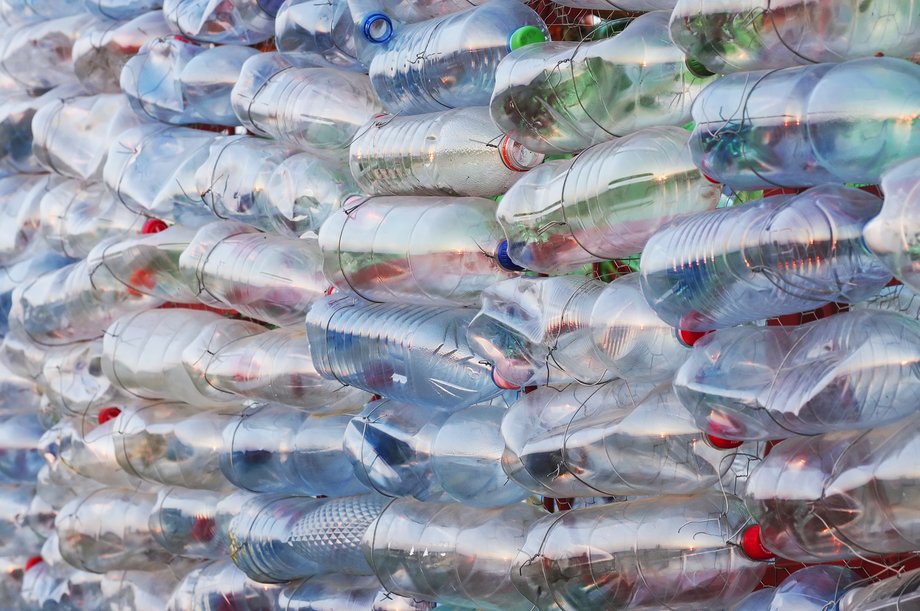
Plastic drink bottles covered by the deposit system
|
Mikadun / Shutterstock
The Biedronka chain of stores announces cooperation with the Kaucja.pl operator
Biedronka also announces cooperation with an operator created by leading beverage producers in Poland – Kaucja.pl. The operator, informs the chain, is to jointly develop and implement solutions that make it easier for customers to return beverage packaging in thousands of stores across the country.
“As part of this cooperation, Kaucja.pl will be responsible for collecting collected packaging from Biedronka branches, transporting it to recycling plants and financial settlement of the entire deposit process. – describes Biedronka.
The network also reminds the basic principles of the deposit system. It emphasizes that the refund applies to beverage packaging in plastic bottles (PET), reusable glass bottles and aluminum cans marked with the deposit symbol (and only with this symbol) for which a deposit was charged.
He instructs customers not to crumple or tear off labels – for the machine to recognize the packaging, it must be in good condition – with a visible barcode. “Throw the packaging into the recycler: The device will automatically read the code and calculate the value of the returned deposit. Receive confirmation: After completing the return, the recycler will print a voucher with the amount of the deposit. Make a refund at the cash register: The value of the deposit can be deducted from purchases,” Biedronka specifies.
The deposit system is an important element of the circular economy
Norway is one of the pioneers of deposit systems in Europe. The system has been operating there since 1999. On the occasion of the opening of the Tomra Collection office, recommendations regarding the circular economy were presented by the Norwegian ambassador to Poland, Oeystein Boe.
As he points out, when you start as a child or teenager, returning packaging becomes a daily routine, almost a chore. So we are all capable of putting it into practice and getting used to it. It also gives us a sense of satisfaction knowing that every returned bottle or can contributes to protecting the environment and our planet.
The ambassador emphasizes that humanity has no time to waste. We currently use as many resources as if we had three planets. He cites forecasts according to which by 2050 the amount of waste generated will increase by 70%. While almost 50 percent greenhouse gas emissions and 90 percent biodiversity loss is directly related to the way we extract and process our resources. In his opinion, this is not appropriate and that is why it is so important to implement the principles of the circular economy.