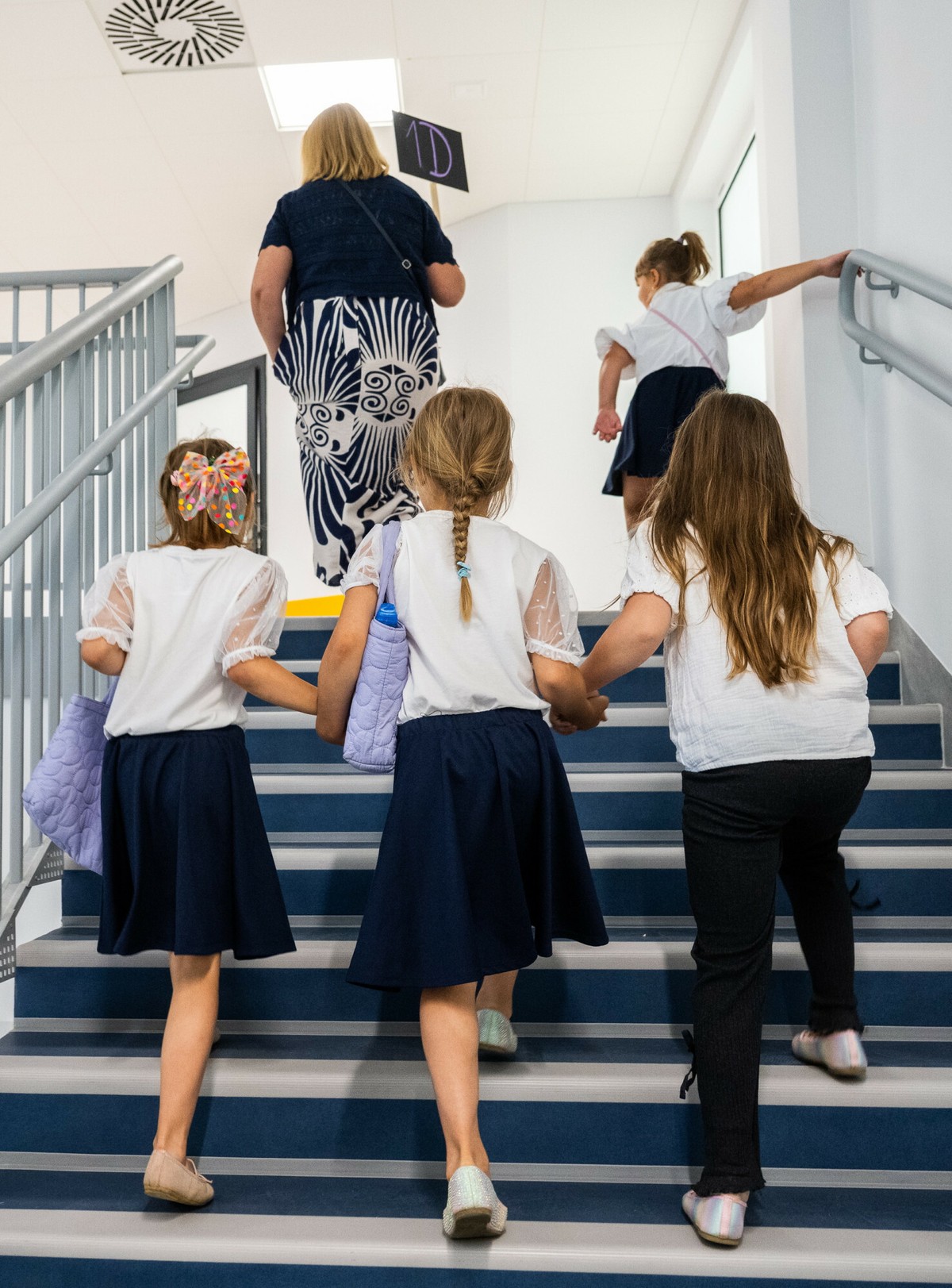
The Polish education system is facing a serious staffing crisis. The average age of teachers is still rising, and young teachers are almost invisible in schools.
“Now a 40-year-old teacher is a young teacher,” notes Grzegorz Lech, director of the 3rd Secondary School. Union of Lublin in Lublin in an interview with Radio ZET. His words reflect the reality of many Polish schools, where the number of teachers under 30 is negligible.
Polish education without young teachers
There are only two people of this age working at the Communications School Complex in Krakow. The rest of the staff are mainly people over fifty, and there are also many retirees.
Data from the International Teaching and Learning Survey TALIS 2024 show that Poland has one of the oldest teaching staff in the European Union. Only 4 percent teachers are less than 30 years old, and as many as 45 percent over fifty. For comparison, the average age of a teacher in Poland is 48 years, while in the EU it is 46 years.
Teachers' earnings
The main reason for the lack of young teachers is low salaries. “Our students who earn extra money on weekends earn more than their teachers,” says Paweł Kucharczyk, director of the Communications School Complex in Krakow. Another problem is the ossified remuneration system, which hinders rapid financial development. Agnieszka Kopacz, Teacher of the Year 2025, points out that teachers have to wait up to seven years for a raise because their earnings depend on the level of professional advancement.
The problem is deepened by changes at universities. Many of them limit the number of places in pedagogical specializations or close them completely.
The situation is particularly difficult in technical and vocational schools. “In 5-8 years, there will be no one to teach professions,” warns Paweł Kucharczyk. Many schools are already limiting the number of admissions because there is a shortage of teachers in technical subjects such as electronics or ICT.
The lack of young staff is not only an organizational problem, but also a qualitative one. Young educators bring a fresh perspective to schools and better understand the needs of modern students.
Source: Radio ZET