October 22, 2007

Day in the history of the Jewish Autonomous Region. Photo: Photo: Regional Library
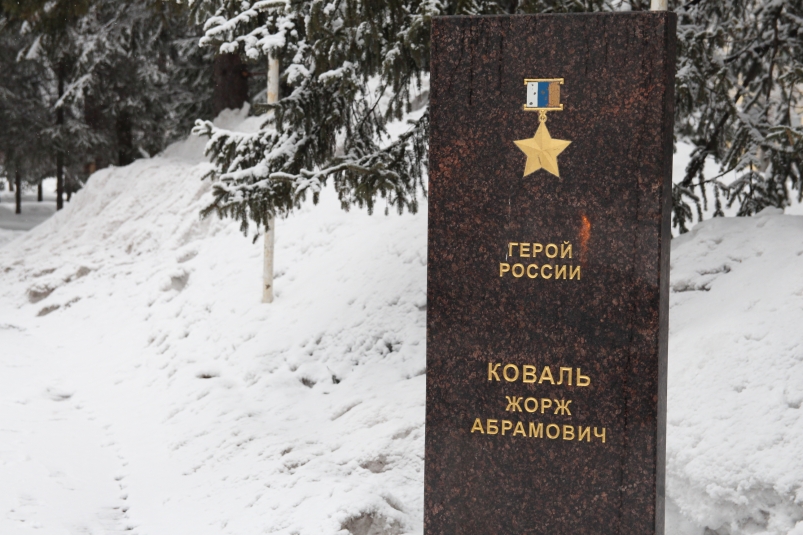
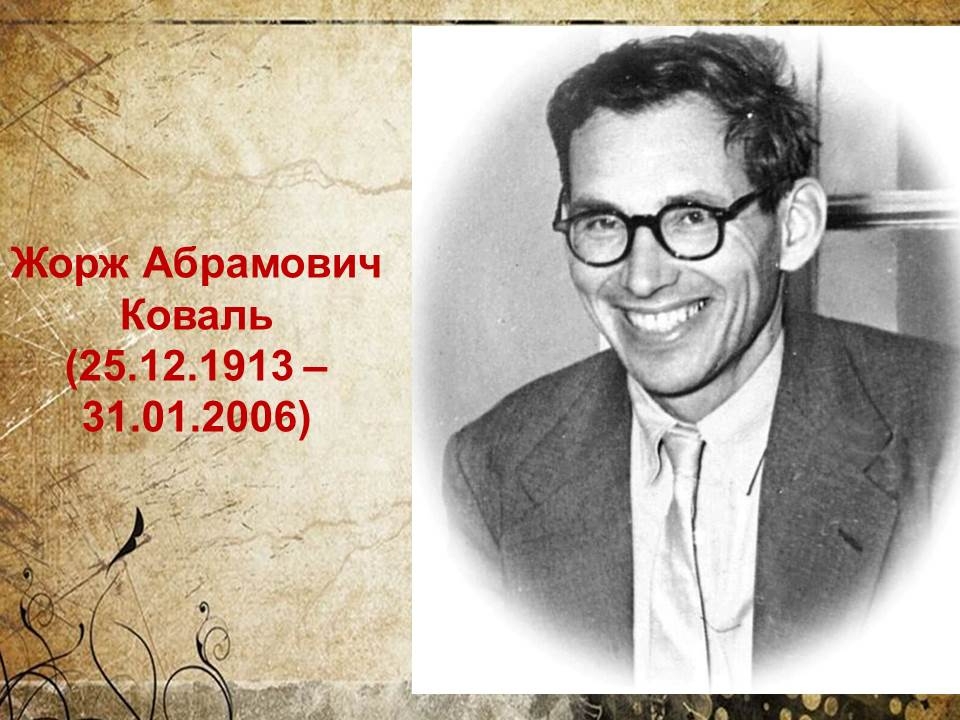
On this day – October 22, 2007 – the title of Hero of the Russian Federation for courage and heroism shown during the performance of a special task was awarded to a former resident of the Jewish Autonomous Region, an illegal Soviet intelligence officer, Georges Abramovich Koval.
Let us recall that Georges Koval, born in 1913 in the USA into a family of Jewish immigrants from Russia, moved in 1932 with his parents to live in the Jewish Autonomous Region. Here he lived until 1934, then studied at one of the Moscow universities. After studying, in 1939 he was accepted into army intelligence and a year later went to work illegally in the United States.
During the time when the Manhattan Project (a project to create an atomic bomb) was being implemented in the United States, Koval worked in a secret atomic center in the city of Oak Ridge and passed on to Soviet intelligence the most important information that allowed Kurchatov’s group to create a neutron fuse for the first atomic bomb of the USSR.
Soon Koval was exposed. It is believed that one of the reasons for the failure was a youthful photograph of a scout taken by a correspondent of one of the regional newspapers of the Jewish Autonomous Region in the early 30s and published at the same time. Using it, the Americans managed to identify Koval.
In 1948, Soviet intelligence managed to return its agent to the USSR. Here, living in Moscow, he was engaged in scientific activities and taught for many years. Georges Koval died in early 2006, just short of receiving the highest state award.
October 22, 1934

Day in the history of the Jewish Autonomous Region. Photo: Photo: Regional Library
The newspaper “Birobidzhan Star” (12+) On October 22, 1934, publishes a resolution of the Council of People's Commissars of the USSR on measures for the economic and cultural development of the Jewish Autonomous Region. Part of the document is devoted to the benefits that will be provided to collective farms of the Jewish Autonomous Region, as well as to their employees. As we can see, even then, state support measures were used to support resettlement programs and production development in the Far East and the Jewish Autonomous Region, in particular.
For example, the resolution stipulates the need to finance collective farms for the purchase of working livestock in the amount of 50% from the state budget and 50% from long-term agricultural loans. Also, collective farmers are completely exempt for one year from the moment of moving in from the mandatory delivery of meat and milk to the state. And when moving in for personal use, each resettled family must receive a cow or heifer.
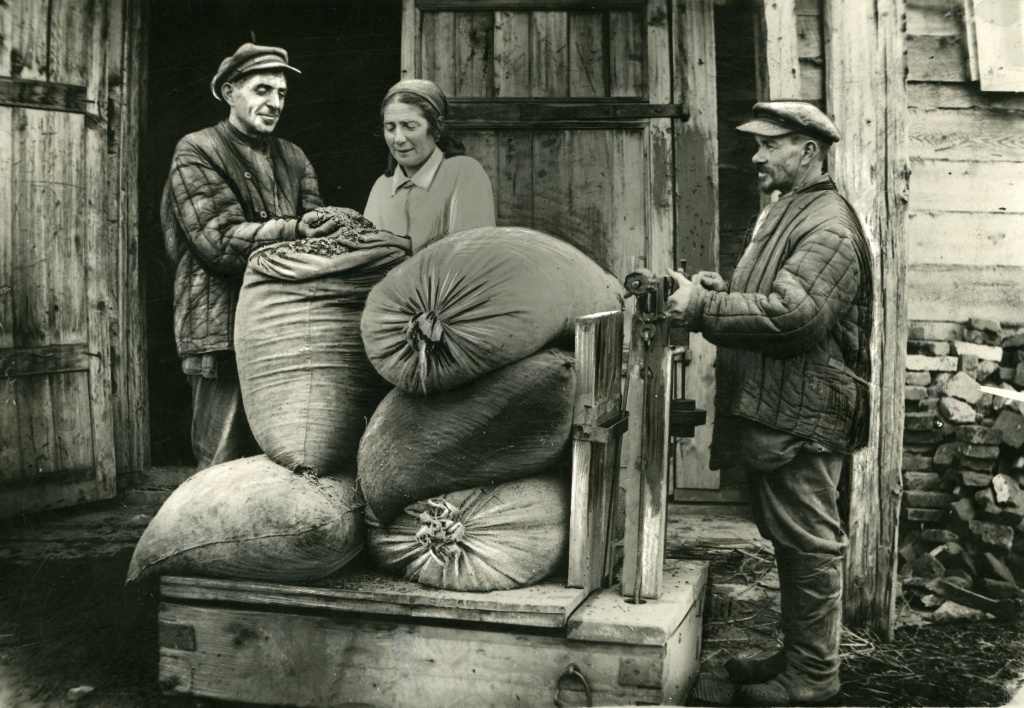
Collective farmers receive bread as an advance payment for their workdays. Collective farm “Nai Lebn”. 1936. Photo: Heritage of the Jewish Autonomous Region
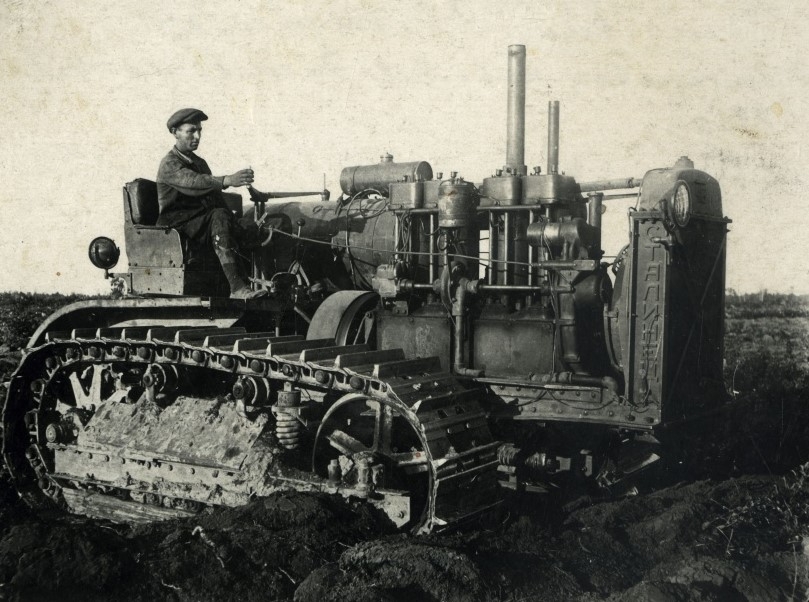
Stakhanovite Elya Eigel at the Waldheim collective farm. 1930 Photo: Heritage JAO
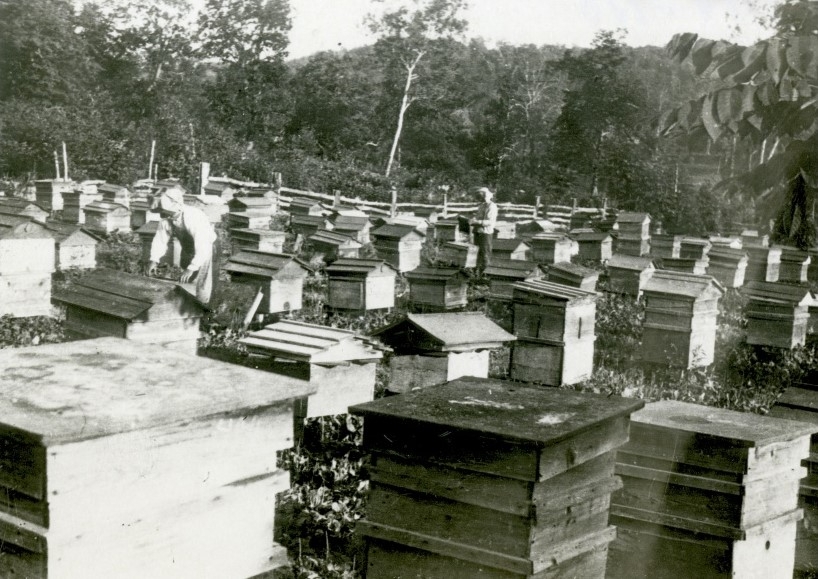
Collective farm apiary. 1937 Photo: Heritage JAO
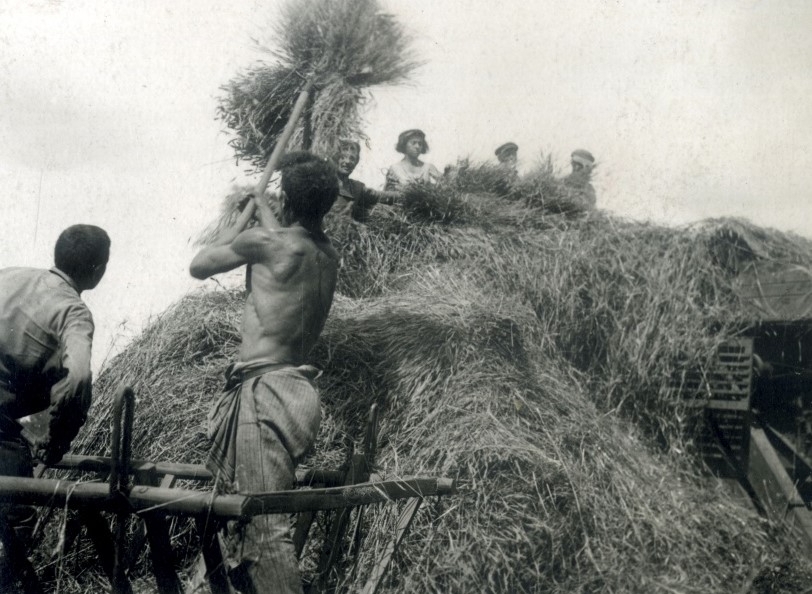
Threshing on the collective farm “Valdheim”. 1935 Photo: Heritage JAO
The document also sets clear tasks for the various People's Commissariats. In particular, in 1935, the People's Commissariat of Local Industry was supposed to carry out design and survey work for the construction of a mechanized shoe factory in the Jewish Autonomous Region, build a regional printing house, and begin construction of a knitting factory; commission a garment factory and a number of other enterprises.
I would like to cite one of the points of this resolution in full: “To oblige Tsudortrans of the USSR (comrade Serebryakov) to complete the construction of the Birakan-Kuldur road no later than January 1, 1935. To oblige the Dalkrayispolkom to provide financing for the construction of this road from the local budget.”
The thirteenth paragraph of this resolution is devoted to education, it deals with the construction of kindergartens, primary and secondary schools and the construction of a technical station for extracurricular activities. “To oblige the People's Commissariat of Heavy Industry to open a mining and metallurgical technical school in the village of Birakan, Jewish Autonomous Region, from January 1, 1935, with its inclusion in the title lists of educational institutions of the NKTP for a contingent of 300 people.”
October 22, 1941
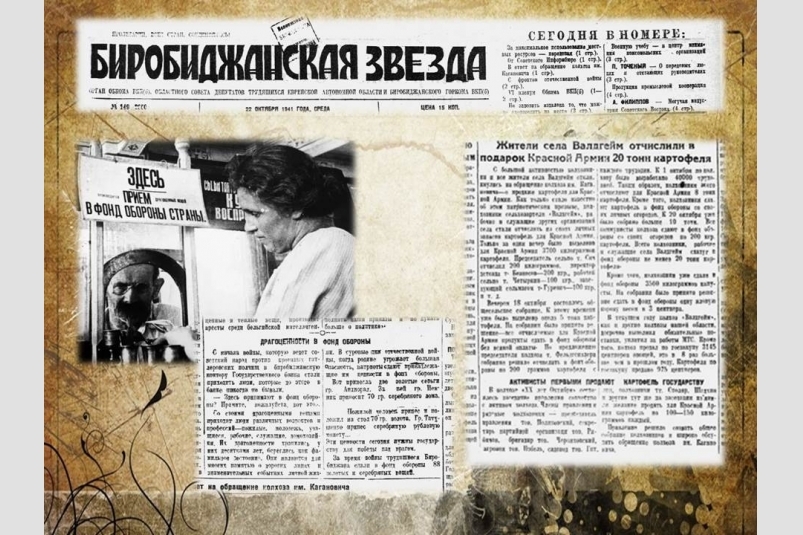
Day in the history of the Jewish Autonomous Region. Photo: Photo: Regional Library
“Birobidzhan Star” on October 22, 1941 publishes the material “Jewelry for the Defense Fund”, which talks about how residents of the region are donating their belongings to the office of the State Bank to help the front.
“People of various ages and professions come with their precious things – the elderly, youth, students, housewives. Their jewelry was kept with them for decades, cherished as a family treasure. For many they are a memory of dear people and significant events in their personal lives. In the harsh days of the Patriotic War, when the Motherland is in great danger, patriots donate their valuables to the fund defense
During the war, the workers of Birobidzhan donated 88 gold and silver items to the defense fund.”
October 22, 1996
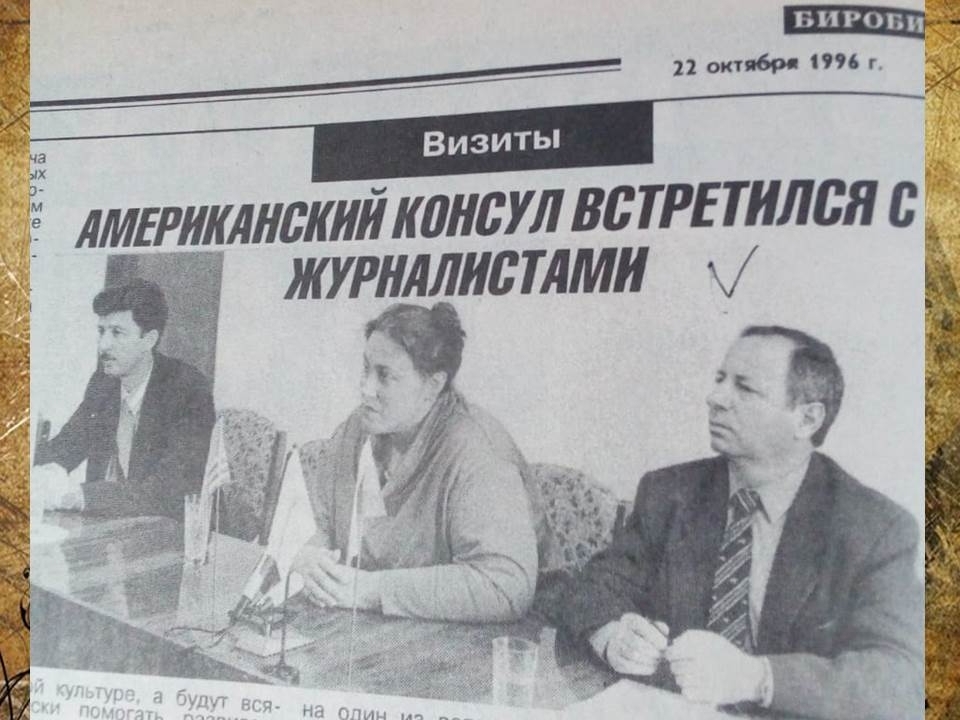
American Consul in Birobidzhan. Photo: Photo: Regional Library
On the same day in 1996, the Birobidzhan Star reports a meeting of representatives of the regional media with the American consul in Vladivostok, Jane Miller Floyd.
As the article says, Mrs. Jane Miller Floyd has only been in the Far East for two months and is trying to travel to all its cities. It was her first time in Birobidzhan. The consul had a favorable impression of the city, its residents, entrepreneurs and administration representatives with whom she was able to meet.
The American consul answered all questions of interest to regional media journalists. For example, to the question: “How do you assess the level of education of our people? Can you compare Russian education with American education?”, Floyd answered that in America education depends on the state in which it was received. In Russia, the level of teaching, in her opinion, of natural sciences is higher than in the United States. In Russian universities, students receive a comprehensive education, unlike US students, who are trained in a narrower, specific specialization. If we compare education in secondary schools, Russian students learn more by heart, while American students study more independently.