The new obsession on TikTok: the toys that eclipsed Labubu and cost as much as an all-inclusive vacation


A seemingly mundane stuffed toy managed to conquer TikTok and turn a British company into an empire of hundreds of millions. Paradoxically, the target customers are not children, but young adults, nostalgic for childhood, the so-called Kidults.
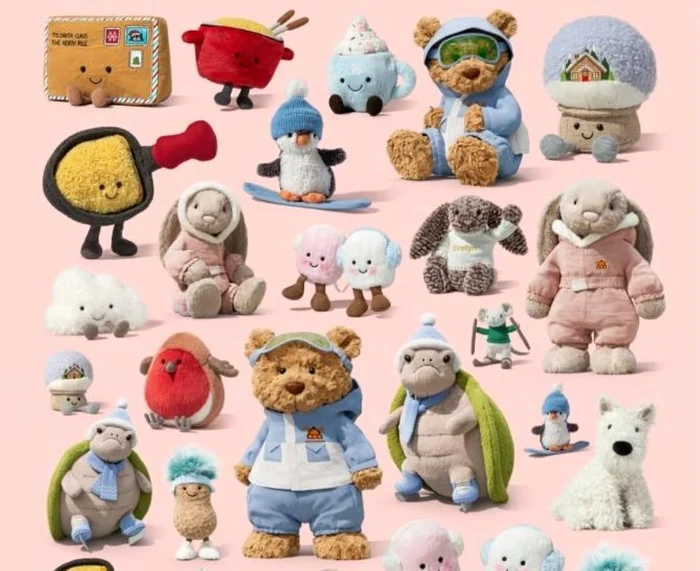
Young people present their collections on TikTok. PHOTO: Instagram/Jellycat
In a world where trends change overnight, a toy managed to become, in just a few months, a global phenomenon. After the success of the Labubu character, the internet now has a new obsession: plush toys produced by a British company, Jelly Holdings, which seems to have perfectly combined childhood nostalgia with the collecting spirit of the digital generation. On TikTok, videos in which young people present their collections with such plushies have gathered millions of views.
Starting in 2024, the British company Jelly Holdings, which owns the plush brand that has gone viral, has reported spectacular financial results. According to the Financial Times, profits rose to 139 million pounds (approximately 161 million euros), double the previous year, with turnover exceeding 333 million pounds (the equivalent of 386 million euros), an increase of 66% compared to 2023. And the upward trend continues in 2025, notes corriere.it.
Prices between 20 to 1,400 euros
This explosion in sales was fueled by the TikTok phenomenon and the desire of the adult generation to rediscover the joy of childhood. “Kidults”, as sociologists call them, i.e. young adults who cannot break away from childhood, no longer buy toys for children, but for their own emotional comfort. In this context, Jellycat, the brand founded in 1999 in London by Thomas Gatacre, has become a symbol of “refined childhood”.
Currently, its products are available in more than 80 countries, in approximately 8,000 independent stores and in exclusive retail spaces such as Selfridges in London or Galeries Lafayette in Paris.
The most affordable product, the Smudge teddy bear, costs £18 (about €20), but Jelly Holdings has created numerous themed collections, plush toys in the shape of fruit, food or fantasy animals, some of which sell for up to £1,200 (nearly €1,400).
The experience of buying such plushies makes, in turn, that they are sold in increasing numbers.
Thus, in certain stores, shoppers can “order” their favorite toy from a restaurant-themed menu. In Paris, the toys are presented in the form of pastries, in New York as waffles and pancakes, and in London in the form of the classic fish and chips. The staff “packages” the toy just like a freshly prepared meal, adding an extra spectacle to shopping.
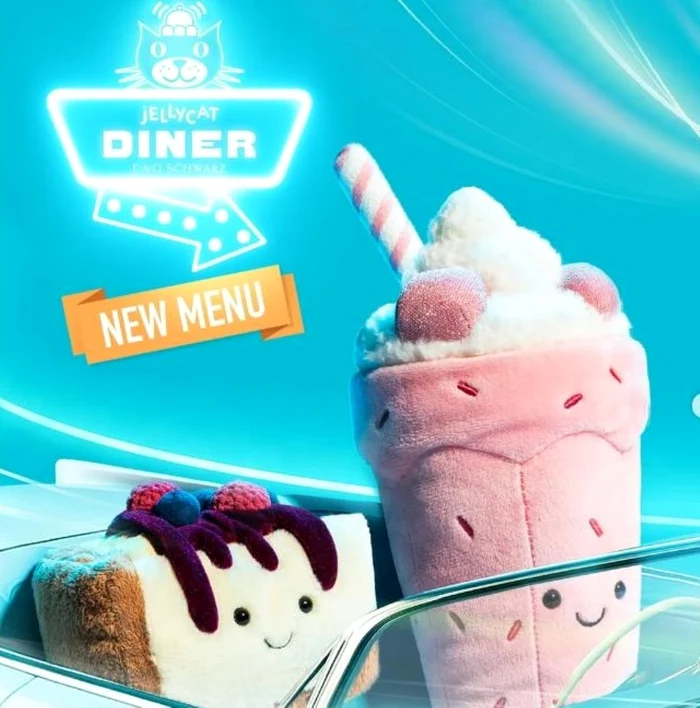
Extra menu, from Jelly. PHOTO: Instagram/Jellycat
In addition to traditional sales, the brand cultivates an active online community through its content platform, 'Jelly Journal', where it publishes stories, interviews, behind-the-scenes photos and videos where the toys become living characters of their own.