Russia continues to hit Ukraine's training centers. Why doesn't Kiev have an effective response

A Russian missile attack on a training center in Ukraine this week is the latest in a series of deadly strikes targeting military training facilities across the country. The incident reignited criticism of the Ukrainian command's ability to protect recruits.
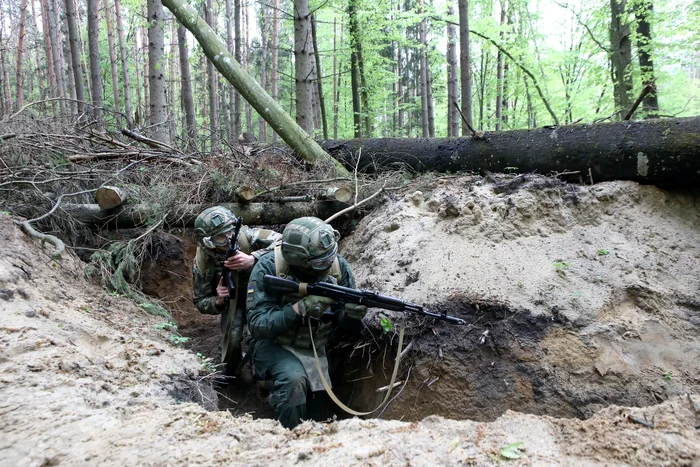
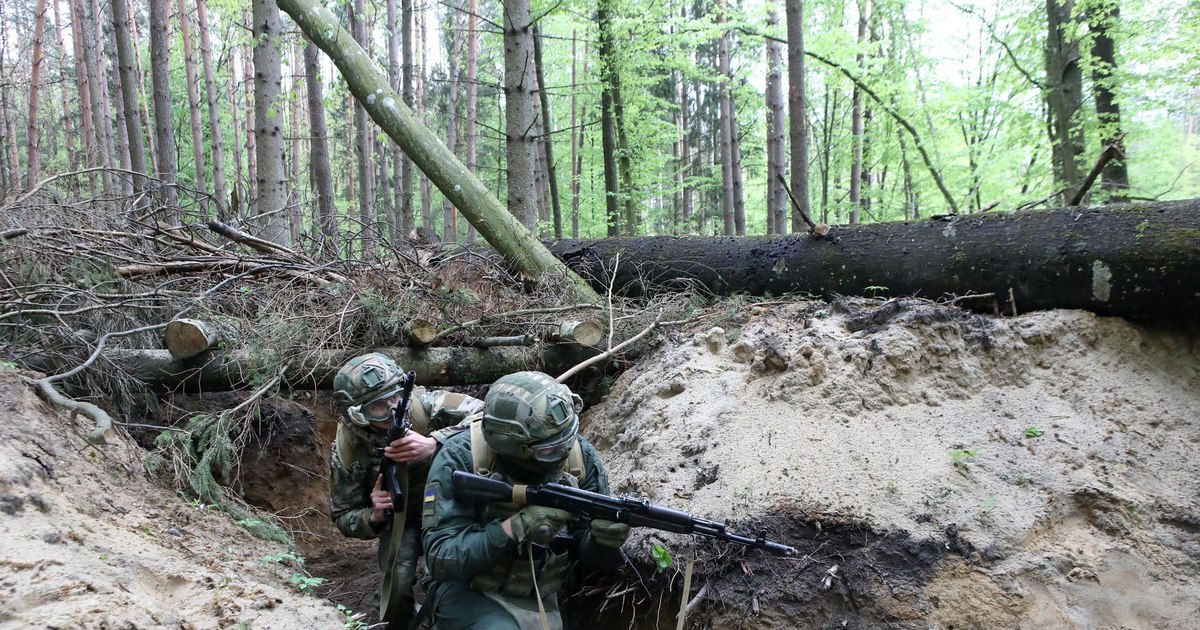
Ukrainian soldiers in training/ PHOTO: Profimedia
Training centers, especially those close to the front line or the border, often have limited anti-aircraft protection, making them vulnerable to repeated Russian attacks.
The Ukrainian military says it reviews its safety procedures after each incident, but former instructors and commanders interviewed by the Kyiv Independent say a command culture inherited from the Soviet era prevents accountability for avoidable losses.
The series of attacks in recent months
On October 16, a Russian missile struck a training center in an undisclosed location, causing casualties, according to the Ground Forces of Ukraine. The authorities did not specify the number of dead, but they sent their condolences to the families.
The strike in October followed a similar attack in September on a training center in the Chernihiv region, also with casualties. In July, another attack on a center in the central Ukrainian city of Kropivnytskyi killed at least 12 foreign volunteers, according to the New York Times.
The worst such attack occurred in March 2022, when a Russian missile destroyed a major training center in the Lviv region, killing more than 60 people.
“Training centers are military objectives that should be protected by anti-aircraft forces,” said lieutenant colonel Bohdan Krotevici, former chief of staff of the Azov Brigade. “Currently, there is no such coherent system in the Armed Forces of Ukraine”he added, criticizing the military leadership for its lack of efficiency.
Ukraine's General Staff said the safety of personnel is an “absolute priority” and that each attack is being analyzed to identify “cause-and-effect relationships.”
Vulnerable centers, close to the front
A former instructor, identified only as Oleksandr, said the center where he worked near the Russian border saw weekly attacks until June. He said instructors halt training when they detect Russian reconnaissance drones and that recruits take refuge in shelters dug into the ground.
“A missile can arrive in less than a minute”Oleksandr explained, stressing that the warnings come too late to avoid the impact.
In his view, the military is trying to reduce risks by dispersing recruits and camouflaging training centers, but the inexperience of new soldiers and the absence of effective anti-aircraft alerts leave them vulnerable.
Some Ukrainian officials are proposing that all training centers be located at least 300 kilometers from the front line. Others, like Kyrylo Berkal, deputy commander of the Army's 3rd Corps, believe a long-term strategy would be needed to build underground facilities.
Systemic problems and lack of resources
Military experts say that as Russia steps up its ballistic missile attacks, even well-defended cities like Kiev are not fully protected. Ukraine faces a shortage of modern Western anti-aircraft systems such as the US Patriot.
Glen Grant, a retired British lieutenant colonel and former adviser to the Ukrainian Ministry of Defense, said that “attributing blame is more complex than it seems.” In his view, if Russia targets a training area, it is almost inevitable that there will be casualties, “just as it would be impossible to completely protect a full stadium.”