The organization of the North Atlantic Treaty was created in 1949 by the USA, Canada and European allies to stop Moscow. But if the Trump administration now tries to force Ukraine to accept a partial defeat in the war with Russia, America will be widely seen in Europe as rewarding Russian aggression. If allies in NATO are no longer able to agree on the threat they face – and how to deal with it – all their alliance will be threatened.
Over decades The alliance survived many deep misunderstandings – From Suez in 1956 to the Vietnam and Iraq war – because there was always an understanding that ultimately the United States and their European allies are on the same side.
The American-European partnership was based on common interests and values. Throughout the Cold War, it was a common interest to stop the Soviet threat. The defense of democracy was a common value. Even after the end of this war, the fight against terrorism and the protection of new democracy in Europe gave NATO a common goal. But this common understanding is now fragile. The catastrophic end of the war in Ukraine can stop it completely.
Over the past week, the US and Europe forced Various peace plans for Ukraine. Europeans reject the key elements of Trump's plan – primarily legal recognition of the annexation of Crimea by Russia.
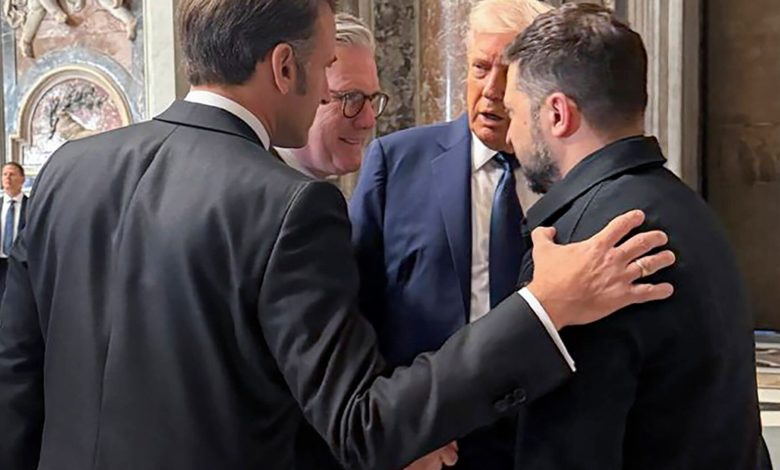
Donald Trump seemed to conduct a friendly conversation with the Ukrainian leader Volodymyr Zelnski in Rome at the weekend – and the US leader also dared to have an extraordinary criticism of Vladimir Putin. But America has not withdrawn any of the elements of its peace planwhich Europeans and Ukrainians consider such arousing reservations.
Continuation of the material under the video
At the basis of this difference of sentences are deeply different visions of international security – and where the threat can come from the next war. Europeans believe that rewarding Russian aggression in Ukraine significantly would increase the probability that Putin will attack the rest of Europe – Starting from the Baltic countries.
Trump's administration sees it completely differently. He is afraid that the United States may ultimately be drawn into a direct conflict with Russia. Trump himself has repeatedly warned against the risk of the outbreak of the Third World War. The Biden administration was also concerned about the risk of escalating the conflict with Russia. But unlike Trump, she shared Europe's deep suspicion towards Putin and the determination that Russian aggression should not be rewarded.
Both sides believe that they defend democracy
The divergence of a security vision goes Far away beyond the end of the war in Ukraine. American allies must face the reality in which Trump directly threatens the territory of two NATO members.
Trump has repeatedly promised to include Greenland – which is the autonomous part of Denmark – to the United States. In a recent interview with Time magazine, he also repeated his desire to transform Canada into the 51st US state. Trump did not perform public military threats against Canada, but clearly wants to undermine its existence as an independent country.
If we combine authoritarian instincts, threats to allies in NATO and his obvious sympathy for Putinit is difficult to argue that NATO is still an alliance based on common values. Now the conflict of values is actually open. Both the United States and their greatest European allies still say that they defend democracy. But both sides believe (or claim that they believe) that on the other side of the Atlantic democracy is threatened.
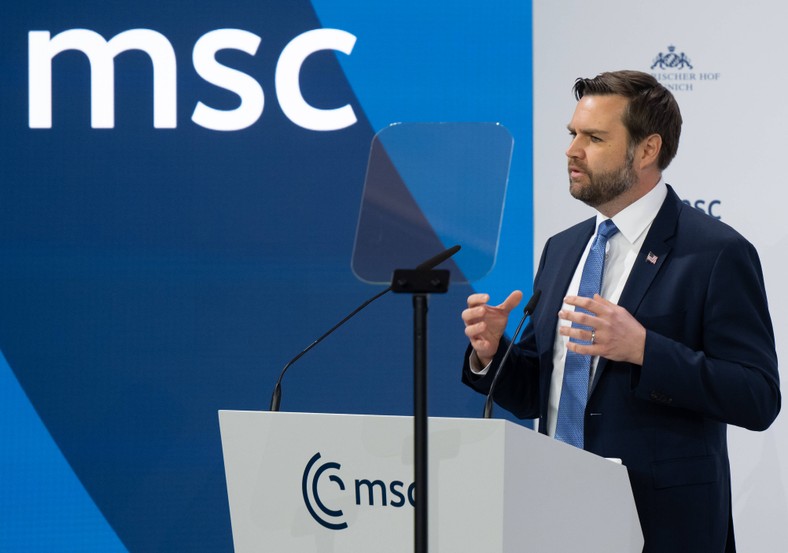
In the already famous speech at the Munich Safety Conference, JD Vance accused the European allies of America about suppression of freedom of speech and fear of your own nations. The accusations of the vice president met with fury in most Europe – where Trump's efforts did not escape to the annulment of the presidential election in the US in 2020 and his attacks on the American judiciary, media and universities.
Sven Hoppe / DPA / PAP
Speech by JD Vance, US Vice President, during the 61st Munich Munich Safety Conference, February 14, 2025.
Trump's administration and its European allies are currently preaching two contradictory visions of Western values. The vision of Vance and Trump is ethnic-nationalist, culturally conservative and unreliable. The European vision is internationalist and based on law and liberal institutions.
The division is all the more bitter because both sides believe that it is an existential struggle for political survival – and They are looking for allies on the other side of the Atlantic. The Trump administration wants to cooperate with nationalist populists, such as Viktor Orban in Hungary, Robert Fico in Slovakia and Nigel Farage in Great Britain. The main European governments hoped that Kamala Harris would win the presidential election in the USA, and now desperately counting days to the Congress elections in the middle of Trump's term.
The transatlantic alliance was once a supreme commitmentwhich could easily survive the changes in government. Now it can only work if the liberals – or unlices – are in power on both sides of the Atlantic at the same time.
Even then there are grounds for doubt. In addition to common values and interests, the Western alliance depends on trust. All parties must know that he will survive regardless of what will happen in the next election. But Europeans and Canadians already know that the US is able to choose Trump twice. They can no longer take American steadfastness for granted.
I’m Ashley Davis as an editor, I’m committed to upholding the highest standards of integrity and accuracy in every piece we publish. My work is driven by curiosity, a passion for truth, and a belief that journalism plays a crucial role in shaping public discourse. I strive to tell stories that not only inform but also inspire action and conversation.