What is happening with “Rabla Auto” and “Batteries for photovoltaics”. Diana Buzoianu: “We want to launch a program that also includes new elements”

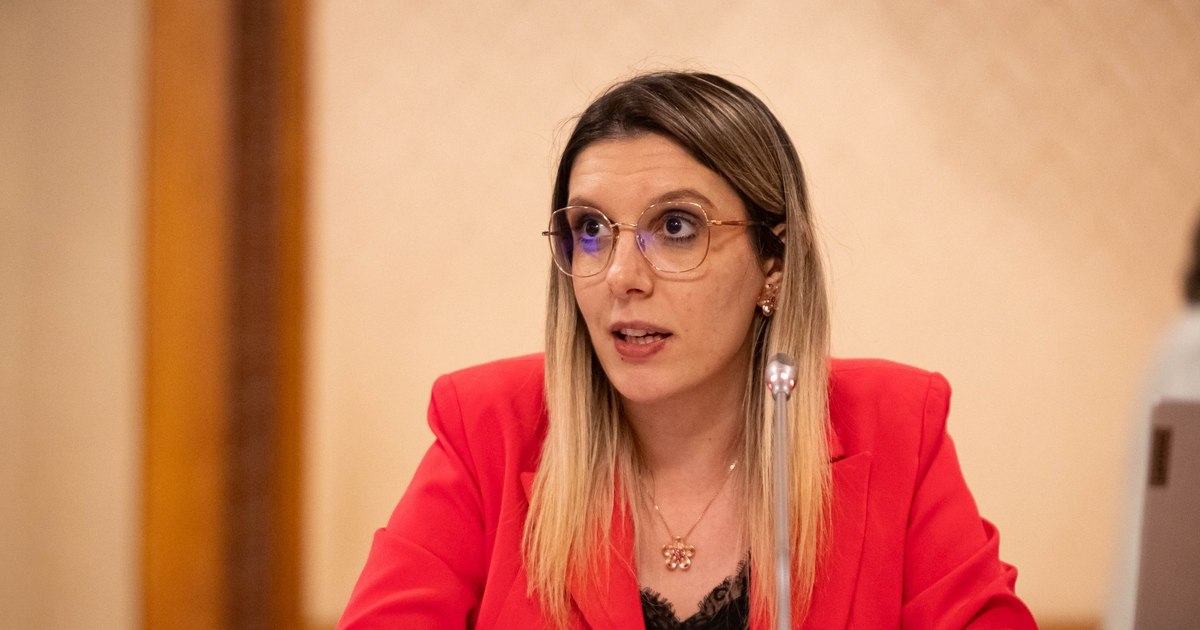
The Minister of the Environment, Diana Buzoianu, announced, in an interview granted to “Adevărul”, what are the plans of the Ministry of the Environment for the “Rabla Auto” and “Batteries for photovoltaics” programs, but also spoke about the “octopus of ballasts” with political iz and the solutions for decongesting traffic in the Greenfield area of Bucharest.
Diana Buzoianu announced the ministry's plans for “Rabla Auto”. Facebook photo
Reporter: You recently talked about the budget of the Ministry of the Environment and you said you can't determine what programs you will release without his approval. Now that the budget has been approved, what's next?
Diana Buzoianu: Yes, I was specifically referring to the Environmental Fund Administration budget. The route is as follows: first the national budget must be approved, which has already happened. After that, the AFM budget must be approved, which could not be set before. Since the approval of the national budget, we have been in discussions with the Ministry of Finance to be able to approve the AFM budget as quickly as possible and to introduce as many projects as possible to launch this year.
What programs are you specifically thinking of? Can people still hope for Rabla or Casa Verde?
Diana Buzoianu: Depending on the maximum amount that the Ministry of Finance can allocate to the AFM this year, we will know how many projects we can introduce. In an optimistic scenario, in which we obtain the amount we requested, we have budgeted including for the Rabla program and for a program dedicated to storage batteries.
Rabla in what form?
Rabla for individuals, which we want to improve. If we have the necessary budget, we want to launch a program that also includes new elements, for example criteria related to producers, so that they are from Europe.
You also mentioned storage batteries.
The Casa Verde program oriented Romania a lot towards photovoltaic panels. We have a lot of consumers who have installed panels but don't have storage batteries. That puts a lot of pressure on the energy system. We want to help consumers — whether they benefited from AFM financing or invested from their own funds — to be able to purchase storage batteries as well. Thus, energy produced during the day, when consumption is lower, can be stored and used in the evening, during peak periods, when prices are higher. This will help balance the energy system and, over time, reduce costs for consumers.
What will the program be called and when will it be launched?
At the moment we do not have a final name. In the government decision, it will probably appear in a technical form, of the “national program for storage batteries” type, but we will also find a version more accessible to the public. Importantly, if the budget is approved, the funding guide and program should be released this year. It may be a multi-year program.
Will you keep the sign-up system you've used so far?
We want to use the mechanisms that have already worked well. We don't want to reinvent the process every time. If there are platforms that people know and have tested, it's easier to keep using them.
You said that the energy grid can no longer cope with the large number of prosumers. What other measures do you have in mind?
Diana Buzoianu: At this moment we have not proposed a new budget for photovoltaic panels. The priority is to see if we can launch the battery storage program, which I believe will greatly help both the energy system and lower bills. We try to use limited resources as efficiently as possible, on projects that have maximum impact.
At what stage is the digitization of the Ministry of the Environment?
Diana Buzoianu: We have several ongoing projects. An important one is financed by European funds and aims at the complete digitization of environmental impact assessment procedures — the most complex authorization processes. The implementation period is two years, and we are currently very close to signing the contracts.
In parallel, we are working with ADR and UiPath, through the PNRR, to digitize approximately 30 processes in the ministry by the middle of this year. There are other digitization projects at the level of subordinate institutions.
The problem is that when I arrived at the ministry, there were already dozens of projects started, but they were not correlated with each other. Each institution operated separately, without interoperability. Now we are trying to coordinate these efforts so that the systems communicate with each other and there is a unified approach.
The ballast octopus with connections in the political area
You also talked about the problem of illegal ballasts. How serious is the situation?
The situation of illegal ballast is extremely serious. We are talking about a real “octopus”, built over time, with connections in multiple areas of influence, including the political area.
When we arrived at the Ministry of the Environment and started to analyze how many controls are being carried out, we discovered absolutely shocking figures: at the national level there were only a few dozen controls per month. This in the conditions where, in reality, you cannot go to a county without coming across illegal mining or problems related to ballasting.
We decided to exponentially increase the number of controls and introduced performance indicators for inspectors. For example, we have set a target of about 20 checks per month for the inspectors in the territory.
The results appeared quickly: in just a few days, more fines were issued than in previous years on this segment.
We also launched the “Ballast Inspector” platform, through which any citizen can check if a ballast is legal or not. In the first seven days, the platform was accessed approximately 30,000 times. People have started checking the situation in their areas, and complaints have already been filed.
Diana Buzoianu does not trust the new director of Romsilva. “He blocked every time any more serious measure”
Based on this data, we will continue the thematic controls, including using maps that clearly show where the exploitation perimeters have been exceeded. We no longer accept the situation where the authorities “turn a blind eye” and act as if everything is fine.
The costs of this octopus are huge and are borne by the citizens. There were entire communities that were left without water due to illegal mining. Other areas have become more vulnerable to flooding because riverbeds have been altered.
We have cases where infrastructure has been affected — bridges destroyed due to uncontrolled encroachments on watercourses. Unfortunately, there were also tragedies: children who lost their lives in pits or lakes left after illegal mining.
In a normal state, with such consequences, this topic would have long been a national priority. At the time I took office, there was hardly any talk about it.
In recent months we have tried to bring the problem to public attention: more controls, transparency through the platform and concrete actions. We will continue in this direction, even if there are pressures.
There have been many reactions and pressures related to the fact that we have focused on this area, but the reality is that we are talking about a sector strongly connected to economic and political interests.
The fundamental question is what kind of country do we want to leave behind: one where a few groups make money by ignoring the law, or one where the safety of communities comes first.
For us, the answer is clear: these practices must be stopped and the law must be applied.
Greenfield problems
Regarding the plight of Greenfield residents, I have seen pictures, videos, petitions and complaints. There are difficulties related to the access of the emergency services, because queues are formed for kilometers. In addition, it appears that some people are able to move freely to the terraces of the ZOO, while other areas are blocked.
For access to the Greenfield community there are two very important aspects.
On the one hand, we have a developer who has made a lot of money building homes. All of them had the necessary approvals, but this developer also assumed the obligation to create the access infrastructure, namely at least two roads that would allow residents to quickly reach the Bucharest belt and further into the city.
This hasn't happened in years. The homes were sold, the profit was made, but the obligations were not met. In my view, the developer is still in huge arrears with the residents of Greenfield today. And this obligation will not disappear, because the need does not disappear either.
The second aspect concerns Romsilva. We are talking about an extremely important forest, practically a “green lung” for Bucharest and Ilfov. In this sensitive context, Romsilva decided, overnight, to open a forest road without transparency and without a real public debate.
The control body of the Ministry of the Environment showed that not all procedures were followed according to the law. Even after these findings, there was a lack of openness and communication. For this reason, I consider the situation to be a clear example of the need for reform in Romsilva.
The Minister of the Environment reacts after the reorganization of Romsilva was challenged in court: “We do not give in to despair”
For the Greenfield community, I fully understand that there is a real need for access. But this access should not be done through the forest. There is already an obligation on the developer to build the necessary roads, and this must be respected.
We cannot create roads through forests every time an economic operator fails to comply with its obligations.
But in emergency situations? How do the ambulances or the fire department get there?
For emergency vehicles – fire brigade, ambulance, police – obviously there must be access via the shortest route. This is natural.
But that doesn't mean that road has to be opened to the general public.
So, the problem there cannot be solved any time soon. Can the builder or Romsilva be held responsible for all the discomfort?
Certainly the builder can be held liable and in my view should be held liable. The authority at that level should answer, yes, because they obtained their approvals for all those blocks, assuming that they will also do all the access roads for the residents. The blocks complied with all agreements, were received and quickly created a huge profit for this builder. Instead, the builder no longer respected the obligations it had.
I mean, he didn't travel anymore.
We have the District Town Hall and the Bucharest City Hall. Together, they must notify the criminal authorities. But, I repeat, we have no attributions, that is, there are no attributions from the Ministry of the Environment, I wouldn't know exactly what all the responsibilities are at the local level.
What we all need to understand is that we can no longer be at the mercy of people who want to create profit for themselves at the expense of the discomfort of an entire community. So, we have to reach a point where developers, economic operators, those who can exploit the resources – we were talking earlier about ballasts – can all do it legitimately, in compliance with the legislation.
The moment these people decide that for their own profit, to increase their profit, for their own comfort, to save something – an effort that they no longer want to do – they simply create a huge discomfort for the local communities. The line must be drawn there, because they are not above the law.