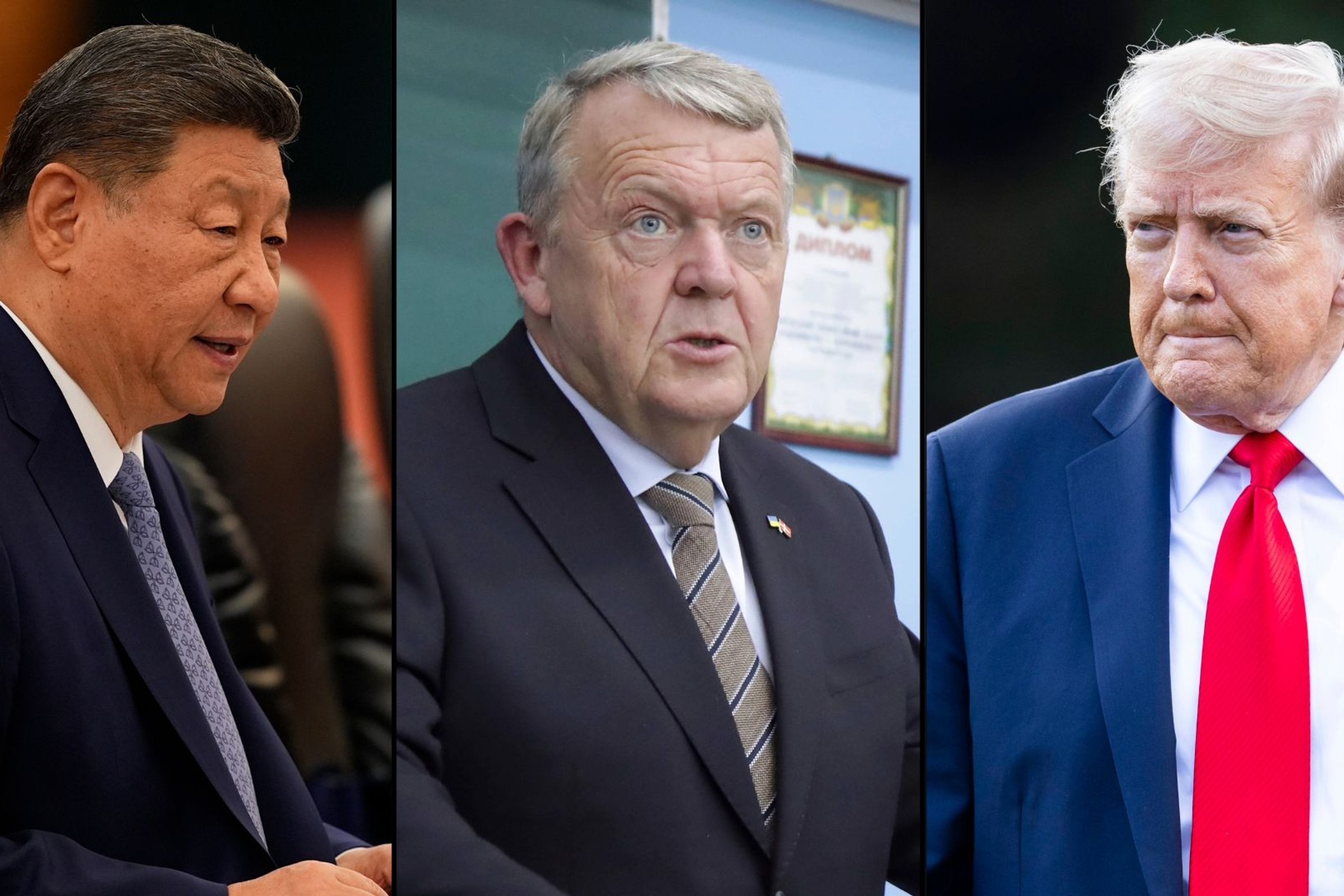
-It's like a Kinder egg. It has more than one function, Rasmussen says in an exclusive interview with POLITICO. The head of the Danish Ministry of Foreign Affairs argues that Brussels can and must firmly oppose the pressure and anger from Washington, while using the opportunity to accelerate its own reforms.
— We should pursue this path in our own interest. But at the same time, it also serves the interests of others, he says.
Rasmussen's statement comes ahead of a key meeting of EU leaders next week, during which the EU's push for deregulation will be the main topic. Leaders are to urge the EU's executive to step up efforts to cut red tape – a Danish minister says is essential for Europe to remain internationally competitive.
— If our investors encounter a red carpet in the United States and bureaucracy in Europe, they will ultimately choose the United States, he emphasizes.
For more than a year, Brussels has been eliminating a series of bureaucratic environmental restrictions in a bid to make Europe's struggling industries competitive against their US and Chinese rivals.. Brussels is currently working on nine simplification packages covering the defence, environment and digital sectors.
EU regulations have drawn the ire of President Donald Trump, who has threatened to raise tariffs over rules that he says discriminate and even censor American companies.
France and Germany, the EU's two largest economies, are pressing Brussels to take similar action on deregulating environmental laws.
To maintain Washington's support, the European Commission is preparing plans to address the problems raised by Trump, presenting these actions as part of a stand-alone policy reform. Politically, the move allows the European Union to reconcile its own domestic agenda without appearing to bow to Trump's pressure.
Rasmussen made the comments on the sidelines of a meeting of EU trade ministers in Denmark, which currently holds the presidency of the EU Council, the bloc's intergovernmental body. The meeting was overshadowed by China's decision to drastically restrict rare earth exports, further weakening the EU's position in the context of the conflict between the United States and China.
Brussels has called on the G7 group of industrialized countries to coordinate their response to China's export restrictions.
The article continues below the video
Internal pressure
Rasmussen cools down his enthusiasm for the idea of the so-called a sunset clause under which the EU could reconsider the terms of a trade deal with the United States after Trump leaves office.
Under the agreement, reached in July by European Commission President Ursula von der Leyen at Trump's golf resort in Turnberry, Scotland, Washington imposed a basic 15 percent tariff on all European Union goods, while the EU pledged to cut tariffs on U.S. imports of cars and industrial goods to zero.
“Imposing a sunset clause will not change reality,” says Rasmussen. “I live in the real world and we have to deal with the current US administration,” he adds. The same opinion was repeated during the meeting of trade ministers by Thomas Byrne, Irish Minister for European Affairs.
“If we start analyzing it, making changes or adding review clauses, I don't think it's in the interest of European citizens,” Byrne said on the way to Tuesday's meeting.
In particular, the European Parliament called for consideration of a possible review of the terms the EU agreed to against the Trump administration, amid criticism that the transatlantic trade deal was seriously skewed in favor of the United States.
Rasmussen does not rule out renegotiating these terms in the future, but only when the political and economic costs of Trump's trade protectionism begin to take their toll on the United States.
— I am convinced that in the medium term the effects of this strategy will be visible in American society. Then we will have to be ready to renegotiate the conditions, says the former Prime Minister of Denmark.
I’m Ashley Davis as an editor, I’m committed to upholding the highest standards of integrity and accuracy in every piece we publish. My work is driven by curiosity, a passion for truth, and a belief that journalism plays a crucial role in shaping public discourse. I strive to tell stories that not only inform but also inspire action and conversation.