Romanians are accustomed and frequently use electronic payments, but when shopping online with refund, on delivery, the most widespread option remains the cash, according to the latest market study.
6 out of 10 Romanians are still afraid to make card payments when shopping online
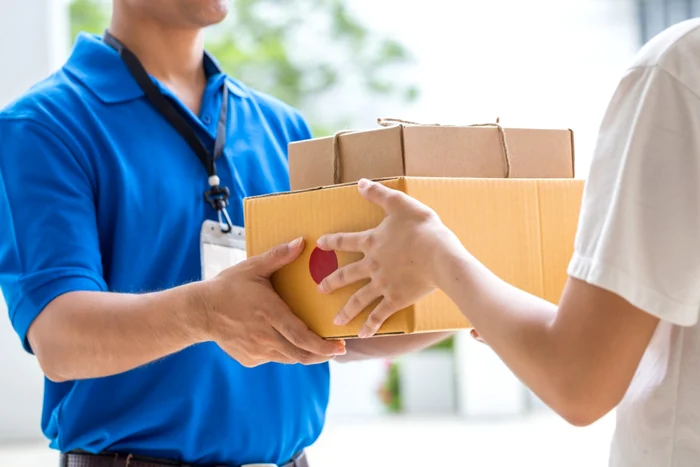
According to him, 6 out of 10 prefers cash when making reimbursement purchases, although they have multiple electronic payment options at delivery, such as card payment, payment through courier application or payment link.
On the other hand, only a quarter use the payment with the card on delivery, by POS, while the completely digital methods are used by only 12% of the respondents.
The contradiction is even more visible in relation to the behaviors of use of digital payment methods. 35% of respondents say they use daily card, either for POS payments, contactless, applications or online, and another 40.5% do this at least a few times a week.
At online shopping, 7 out of 10 Romanians pay by card directly on the trader's website, while the cash is constantly chosen by only 19%. The young generations lead the transition to digital – 73% of those in the Millennials generation and 70% of GEN Z prefer online with card, but even they sometimes choose cash on delivery, seen as a safety and control refuge.
The motivations that keep the payment with the cash at delivery are more about psychology than technology. Four out of ten Romanians (42%) are afraid of online fraud, and over one third (37%) do not have full confidence in traders. Paradoxically, suspicion is even higher among young people: 52% of GEN Z say they do not trust online stores, and 43% are afraid of fraud. In addition, 38% of respondents prefer to pay only after checking the product, and a quarter choose the cash for freedom to refuse the order without complications.
Prefer the refund payment but they don't have the money when the courier comes
The cash is perceived as the safest solution, but the reality shows the opposite. Nearly 60% of Romanians admit that they woke up at least once without prepared money when the courier came, a percentage that increases to almost 2 out of 3 young people (66%) if we include occasional situations. The data clearly show that, although the cash provides the illusion of control, digital payments respond better to a practical and immediate need, especially for young generations.
“Over 75% of Romanians say that they make card payments at least a few times a week, if not even daily, and at the opposite pole, only 3% declare that I almost never use this payment method. This change to accelerate, Romanians want simplicity, safety and clear benefits.”Says Belgin Bactali, CEO Cargus.
The perception of Romanians about couriers confirms this trend. Two thirds believe that the possibility of paying with the card on delivery transmits seriousness and respect for the client, and for 39% it is even a clear sign of professionalism. At the same time, 42% of respondents would move to digital payments if they had more safety against fraud, 39% if the process were easier and faster, and 29% if they received concrete benefits, such as reductions or loyalty points.
Generation differences are obvious: young and millennial young people react more easily to benefits and simplicity, while for over 45 years the main criterion remains safety. At the same time, the role of refund remains critical for the local market, because if this option disappeared, only almost half of Romanians would continue to buy the same, while 36% say they would order less and 13% even that they would completely give up online purchases.
BM: Romanians are fine in terms of financial services
In the summer of this year, a study of the World Bank highlighted that Romanians are well in terms of financial services, 68% of adults in rural areas having a bank account, while at the country level the percentage of such accounts exceeds 71%.
More and more adults from low and medium -income countries are now holding bank accounts or other financial accounts, which indicates an increase in the degree of formal saving, according to the Global Findex 2025 report of the World Bank Group. This advance in financial inclusion creates new economic opportunities. The technology of mobile phones has played an essential role in this evolution: 10% of adults from developing economies use a financial account on the mobile phone to save – an increase of 5 percentage than 2021.
In 2024, 40% of adults in developing economies saved through a financial account – an increase of 16 percentage points compared to 2021, the fastest in the last decade. Increasing the degree of personal saving – through banks or other formal institutions – feed national financial systems, providing more investment funds, innovation and economic growth, the World Bank (BM) shows. In sub -Saharan Africa, formal saving increased by 12 percentage points, reaching 35% of adults.