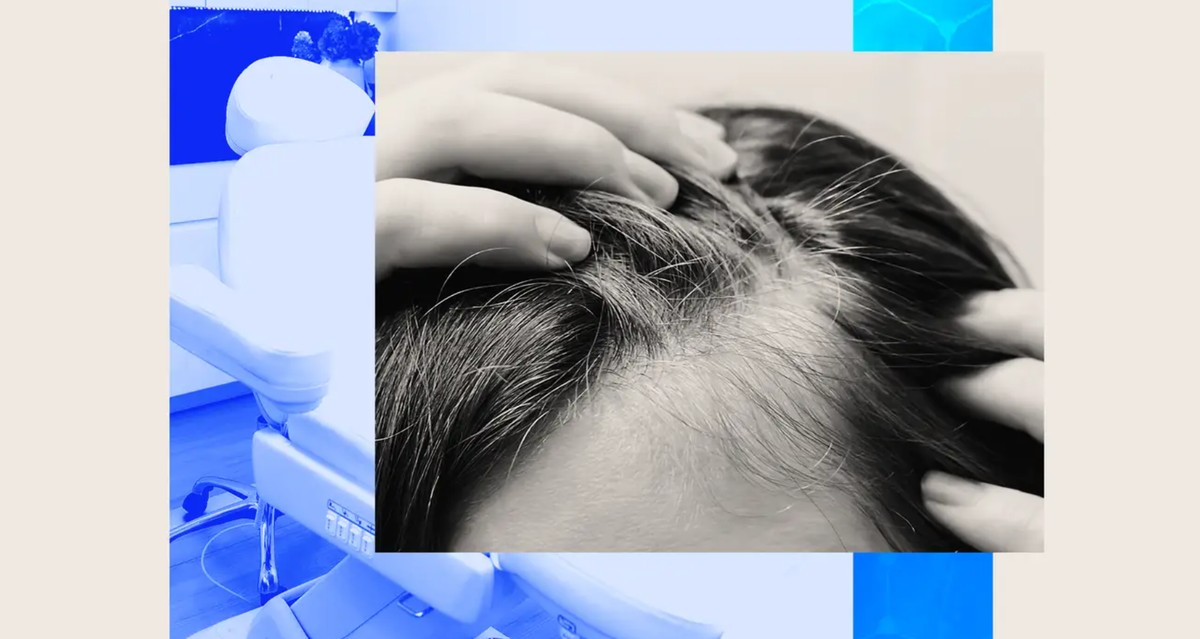
Hair transplantation has become increasingly popular lately – so much so that flights back from Turkey full of people with newly transplanted hair have become a meme. And the procedure, which was once a taboo among men, is no longer surprising today. In August, American wrestler John Cena said that his recent hair transplant had completely changed the course of his life.
Meanwhile, FoLix, the first fractional laser of this type approved by the US Food and Drug Administration (FDA), used in the office by a specialist, offers men and women a non-surgical way to fight hair loss (although still quite expensive). Dermatologists say a new method that has appeared in clinics over the past year could be a breakthrough for patients who don't like taking pills every day or the invasiveness of a hair transplant.
Read also in BUSINESS INSIDER
FoLix is a non-invasive (no surgery) fractional laser treatment that stimulates hair growth in women and men through existing hair follicles.
Lasers are not entirely new in the treatment of hair loss. Dr. Dendy Engelman, a board-certified dermatologist in New York who does not offer FoLix, said it differs from other treatments such as red light caps. This is because FoLix creates microscopic channels in the scalp that stimulate a controlled healing response, stimulate circulation and deliver growth signals to hair follicles to promote natural hair growth.
In comparison, red light caps passively stimulate hair follicles, while FoLix takes advantage of the body's wound healing response, resulting in stronger, more visible hair growth, Engelman explains.
Each FoLix session lasts approximately 20 to 30 minutes in the office, does not require anesthesia and does not require any recovery time. Dr. Marc Avram, a board-certified dermatologist and hair loss specialist in New York who offers FoLix to patients, assures that after the procedure, they can immediately return to work without anyone noticing.
There are also no special aftercare recommendations for FoLix like there are with some other dermatology lasers – that means normal exposure to sunlight is allowed and patients can shower or wash their hair within 24 hours. You can also continue using topicals after this time, such as minoxidil, which are widely used to stimulate hair growth, if you want to enhance the effect.
Like other hair treatments, FoLix is not a one-time treatment. It must be performed regularly – three to six times in the first year (at intervals of several weeks to a month), and then up to twice a year to maintain the effect.
The cost of a FoLix session in the US ranges from $750 to $1,250. (from approx. PLN 2.7 thousand to approx. PLN 4.6 thousand) For example, Avram's office charges USD 1,000. per session.
See also: Survival bunkers, orgies and life upheavals. Meet the preppers of the AI era
Who is a candidate for FoLix?
Both Engelman and Avram claim that FoLix works best for patients who are in the early or moderate stages of hair loss.
“The ideal candidate is someone with intact but poorly functioning hair follicles,” explains Dendy Engelman. — This treatment is not intended for people with complete baldness or extensive scarring because involves reactivating existing hair follicles, not replacing them – he adds.
Marc Avram suggested looking out for a subtle decrease in hair density, a wider part in women or a receding hairline in men. Just seeing a clump of hair on your scalp in unfavorable lighting isn't a consideration, Avram said (though yes, seeing the back of your head can sometimes be unsettling).
Avram also added that FoLix may be more attractive to people who do not want to take daily oral hair loss medicationssuch as finasteride or minoxidil, for personal reasons such as side effects or lifestyle. People who travel a lot for work, go away on weekends, or simply forget to take their daily medications may find that regular in-office FoLix use is easier – more like twice-yearly dental cleanings than ongoing treatments.
Another treatment performed in a doctor's office to treat hair loss is PRP therapy, i.e. platelet-rich plasma. However, it requires blood sampling, while FoLix does not.
Disadvantages and other comments
FoLix does not give an immediate effect. It requires several sessions and 1-2 maintenance treatments per year after the first year of use.
Although FoLix has few side effects, be prepared to experience mild and transient symptoms such as redness, tightness or slight sensitivity of the scalp.
Temporary hair loss may also occur after the treatment. Don't worry, Avram said, this happens with other treatments like minoxidil, PRP, and even Rogaine. This will pass and there is no reason to worry.
Even though the FoLix procedure is not cheap, Engelman says it is still a less expensive option compared to surgical alternatives.
Summary
If you suffer from hair loss, please consult your doctor first before deciding on any treatment.
— Hair can be lost for many reasons. For example, due to skin diseases. Not everyone's hair loss is genetic Dr. Avram said.
While for many, hair loss may just be a sign of aging, for others it may be more significant. — For almost any problem, if it is caught early, treatment is more likely to be successful Avram said.
The above text is a translation from American edition of Business Insider