Europe, alert. Why the great powers prepare the population for a possible confrontation: “It is not alarmism, it is strategic realism”


The European Commissioner for Defense, Andrius Kubilius, recently warned that Moscow would analyze possible attack scenarios on some NATO states. The truth discussed with Romanian security experts to evaluate the risks and reaction of the Alliance.
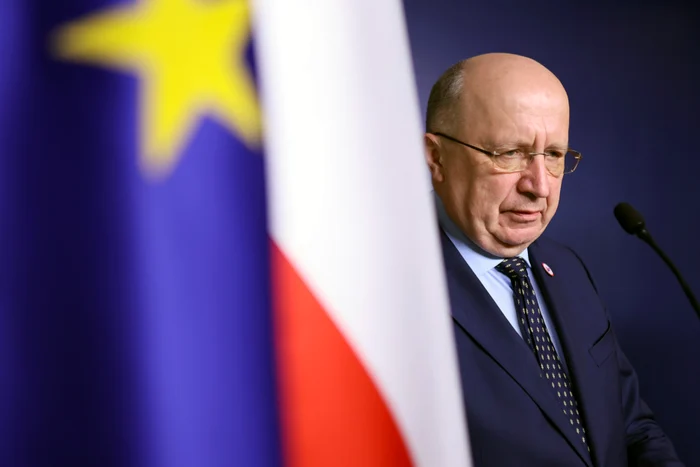
EU Commissioner for Defense Andrius Kubilius.Foto: EPA EFE
The statements of the European Commissioner for Defense, Andrius Kubilius, about possible Russia's attack plans on NATO states have aroused concern in the European capitals. The official said that there is “Clear indices” coming from multiple sources of Western information on military confrontation scenarios analyzed in Moscow.
Andrius Kubilius told Gazeta Wyborcza that Russia accelerates its re -monitoring program, estimated at over 1.2 trillion dollars, and diversifies its hybrid war methods, including cyber attacks and misinformation campaigns.
The Commissioner claims that Europe must learn quickly from the lessons of Ukraine, where technological innovation and cooperation between the state and the private sector have changed how to make war.
Russia is preparing an army for 2037. NATO reacts
The warnings of the European Commissioner come against the backdrop of repeated statements of American and European generals who estimate a 2-3 year risk horizon for a possible global escalation. General Alexus Grynkewich, NATO commander in Europe, said, according to the German Bild publication, since July that the West has “At most a year and a half” to prepare for a direct confrontation with Russia and China.
At the same time, states such as Poland, Denmark and Norway have accelerated anti -aircraft investments and coordinate common programs with Ukraine.
ISW: Moscow Psychologically NATO
The Institute for War Study (ISW) claims that Russia has entered a “Zero phase” of an extended confrontation with NATO, through operations of misinformation and psychological pressure. Attacks with drones, sabotages and misinformation campaigns would aim to create a state of fatigue and distrust among the Allies.
Romania, on the eastern flank: between alert and preparation
For Romania, Kubilius' statements bring back into discussion the role of the army and the national defense industry. Our country has started several modernization programs, but the public's perception is that many of them are slowly moving.
Experts point out that, although we are militarily covered by the NATO umbrella, the capacity for rapid reaction and interoperability remain essential aspects that must be considered with all attention.
Col. (r) Avram-Florian Iancu, former deputy of the Defense Section from the Romanian delegation to NATO and former head of the Defense Political Section of the Ministry of National Defense, and currently, Secretary General of the Association of Reserve Officers in Romania explained for Adevarul.ro that the message from the European Commission is part of the Community Strategy is part of the Community Strategy. defense.
“Such statements do not occur by chance. They are part of a strategic strategic communication line through which the European institutions simultaneously transmit a political signal and a preventive warning. The purpose is for the company to understand that the defense effort must be supported, and the allocation of resources becomes a priority ”explained Colonel Iancu.
NATO and the European Union: Two tools of the same strategy
He shows that, although the European Union does not have its own military structure comparable to that of NATO, both works in a strategic complementarity system. NATO is the military reaction instrument, while the European Union manages economic, industrial and social resilience.
“The NATO -EU relationship has evolved significantly. In recent years, cooperation has been based on permanent information, common planning and synchronization of exercises. Each covers part of the general picture of security: NATO, Military component, and EU through economic, industrial and financial”colonel Iancu said.
He added that many of the separation lines between the two institutions faded, the cooperation relationship being constantly strengthening, especially after 2022 and the European Union became a real security actor, especially through investments in ammunition production, support for Ukraine and sanction policy.
Eastern flank, the pivot of collective defense
Colonel Iancu states that Romania plays an active role in NATO's defense plans.
“We are a border, but not a vulnerable state. Romania is part of the fast reaction plans, the control structures and hosts multinational units. We are on the map, not on its edge.”
He explains that NATO planning is based on multiple scenarios, including the worst (Worst Case Scenario). The implementation of the strategic concept of discouragement and defense of the Euro -Atlantic area adopted in 2020 generated a robust and credible defense position of NATO.
Advanced defense, that is, a combination of military presence, reaction capacity and political credibility.
“Discipulating does not only mean tanks and planes. It means predictability, interoperability and confidence between allies. Russia rely on lack of coherence. NATO responds through unity.” explains the military expert.
From reactive defense to active discouragement
Regarding the criticisms that NATO would have remained in a very defensive posture, Colonel Iancu is sharp:
“NATO is a defensive alliance by its nature. But not inactive or reactive. Discourage the form of action. By the constant military presence and through the common exercises, the alliance transmits to the opponent that any attack will receive an automatic and proportionate answer. This is, if you want, an active discouragement.”
He reiterated that the defense plans are designed for the most pessimistic scenario – “Worst Case Scenario” and revised whenever needed. “All Member States contribute to their update, including Romania, through its experts integrated into the Allied command structures.”
Russia's re -monitoring and European Safe program
Referring to Kubilius' statements regarding the Russian re-armament program, Colonel Iancu confirms that Russia follows a strategy to restore military capacity, aiming at the horizon of 2027-2029. “The Kremlin has learned from the logistical mistakes of the first months in Ukraine and restructures its defense industry. In parallel, Europe understood that it can no longer depend on imports and intend to recover the gap, tell it, industrially through the Safe program. ”
Romania, he says, is part of this European mechanism for the restoration of ammunition and equipment production. “It is an opportunity for our defense industry. Participation in Safe means direct investments, partnerships and funding for modernizing production lines. In a world where ammunition becomes strategic, production capacity is a form of power. It depends on how well we manage to put things in their place.”
Ukraine's lessons applied in NATO doctrine
Colonel Iancu believes that the lessons in Ukraine are already part of the doctrinal transformation of the Alliance.
“NATO has passed from theory to practice. It created a mechanism dedicated to identified lessons and their rapid transformation into applied lessons. I have seen in Ukraine how drones, artificial intelligence and civil-military cooperation can change the relationship of forces. These lessons are already integrated into allied planning.”
It draws attention to the fact that the modern army is not based only on number, but on the ability to adapt. “Those who learn faster have a strategic advantage. Ukraine has demonstrated this. NATO has understood and adapts accordingly and in the doctrinal and action plan.”
Strategic communication and public trust
In front “The conflict of narratives” And the answer to the Russian discourse, Colonel Iancu believes that transparency, coherence and calm are the most effective tools.
“An alliance of 32 states cannot react through emotion. Communication must be coordinated, lucid and consistent. When leaders inform the risks (and hopefully), they do not do it to scare the population, but to maintain a realistic level of attention.” transmits the expert.
He recalls that NATO and EU have structures dedicated to strategic communication, the so-called stratcom, which aim to counteract misinformation and propaganda. “The goal is not panicing of citizens, but their correct information. Confidence and credibility must be and are part of the instrument NATO and the EU in the narrative conflict. ”
The new defense culture
Asked about the increasing reactions of the last period on the risk of a confrontation with Russia, Colonel Iancu said that “It's not alarmism, but a necessary strategic realism”.
“The big countries assume the role of leaders and prepare their population for an era of the power competition. Germany, through the repeated statements regarding the need for re -armament, are likely to prepare the society for a collective responsibility, if you want” completed the expert.