Dirty, weakened, sick of paludism and dysentery, with the healthy health inherited from childhood, coughing between the mouths of smoke, Che Guevara was lasting his last days. It was autumn, the haze in the southern hemisphere had the smell of rifle powder and burnt leaves. In a lost hut in the Bolivian jungle, a man became myth.
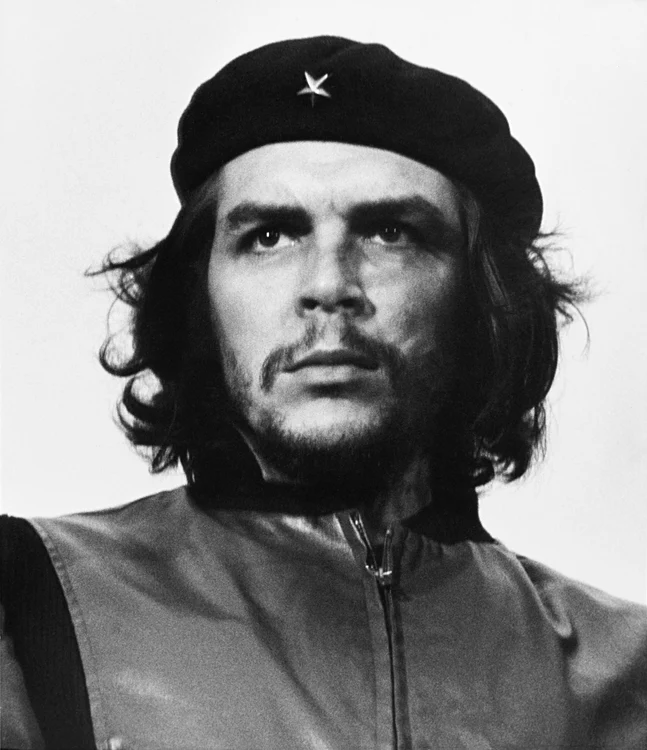
Photo Alberto Kora
Death made him more famous than he had been alive, on the Hollywood model, that of a broken youth. Kurt Cobain, Tupac Shakur, Marilyn Monroe: the same scenario, the same echo. “Dying to Live” – to die to live in the memory of others.
For the post-war left, Che was a Christ with Kalashnikov on the shoulder, a liberator of identity feelings, a promise of revolt in a world kneeling by capital and conformism. His image, surprised in the famous photo of Alberto Korda, is not just a portrait, a secular icon, multiplied on shirts, posters, tattoos, flags, which became part of the symbolic DNA of the 20th century.
But behind the myth, the man. The Argentine doctor who saw in Latin America not a geography, but an open wound. The traveler who understood, on his motorcycle, that you cannot heal poverty with clinical recipes. The revolutionary who chose the weapon as a stethoscope for a world of injustice.
And yet, for many, CHE remains a romantic criminal today, a man who killed in the name of an idea, an idealist blinded by dogma. In an era in which ideologies have become brands, and the revolution in the show, the figure of Che becomes a paradox: a symbol of freedom carried on the t-shirts of consumer products they would have despised.
In October 1967, in the small Bolivian village in Higuera, an execution platoon ended his life. But not to his presence. Che died with his eyes open, and somehow humanity could not close that look.
Today, more than half a century, its image remains a question mark. What do we actually look for in the figure of Che? A hero? A martyr? Or maybe just a projection of our own inability to believe in something really?
The Bolivian jungle swallowed, but not extinguished. In the smoke of his cigarette in the '67 his haze, the idea that the world can be changed either with the price of life.
Hasta Siempre, commander