
“We warned you.” China deals a huge blow to the US. The worst-case scenario is coming true


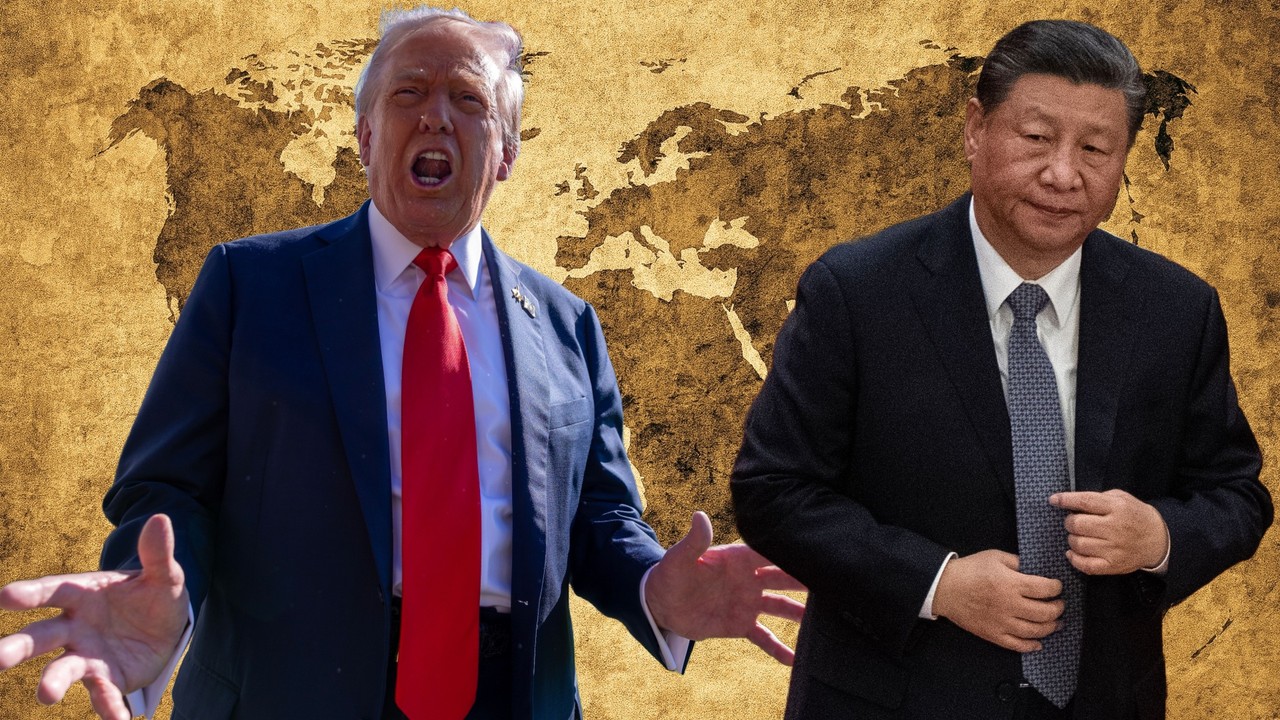
This whole situation also shows how fragile the uncertain economic peace between the two sides was. It raises new doubts about whether Trump, operating with a weakened national security team and a fragmented China strategy, is prepared for his latest showdown with Beijing.
“It's like a gun to your head before negotiations begin,” says Geoffrey Gertz, former director of international economics at the National Security Council under Joe Biden. However, you won't be able to “load the game” here, and the effects, no matter what ultimately happens, will be felt by the entire world.
It is also the clearest test yet of Trump's ability to translate his transactional approach to trade into a coherent China strategy — one that can withstand Beijing's deliberate and long-term economic warfare. Most of China's new restrictions will go into effect on December 1, while U.S. retaliatory measures are scheduled to take effect on November 1.
“China's actions are viewed by the administration as a serious escalation of trade tensions between the United States and China,” said Everett Eissenstat, deputy assistant to the president for international economic affairs and deputy director of the White House National Economic Council during Trump's first term.
China is demonstrating its power and trying to show the world that it is able to act as the main checkpoint for world trade
– he adds.
On Thursday, China's Ministry of Commerce announced the widest-ever export restrictions on rare earth metals, allowing Beijing not only to restrict supplies of raw materials and magnets — as it has in the past — but also any devices containing these elements. Since China's rare earth metals are used in everything from iPhones and electric vehicle engines to fighter jet sensors, these regulations effectively give Beijing potential veto power over much of the world's production.
The enormous potential of China's actions and the United States' reaction were visible on Friday: Trump's announcement of the introduction of tariffs caused the stock market to decline, and the S&P 500 index lost over 2%, which was the worst result since April.
China's show of strength
Former Trump officials say China's latest salvo is a particularly sophisticated show of forcewhich highlights the growing divergence between China's long-term strategy and the Trump administration's more improvised approach.
“We're playing 2D chess while Beijing is playing 4D chess,” says Liza Tobin, who served as China director of the National Security Council during Trump's first term and early in Biden's term.
White House advisers acknowledge that their approach to foreign policy is more top-down than bottom-up compared to previous administrations. However, they reject the idea that limiting the composition of the National Security Council has made it difficult for them to pursue a coherent foreign policy strategy towards China or other countries. In fact, they claim that streamlining their approach has made it stronger.
— A president who was elected to pursue his foreign policy is leading our foreign policy, which makes sense. Everything is dictated by the president and then implemented by others, explains one White House official anonymously. “History shows that more people do not mean better results,” he adds.
Still The escalation of tensions in China came at a time when Trump and Xi had hoped to meet at the end of the month on the sidelines of the Asia-Pacific summit in South Korea. Their meeting, the first in Trump's second term, was intended to potentially stabilize relations ahead of the Nov. 10 deadline for a decision on the next round of tariffs.
China, after months of feeling superior, may be testing how far it can go in negotiations with a White House that values deal-making — and discovering that even that has its limits.
This is the scenario that analysts have warned about – Beijing's overconfidence is met with Washington's impatience. This is whether [Trump] whether it escalates the conflict or holds back fire will depend on China's reaction in the next few days
– argues Craig Singleton, China researcher at the Foundation for Defense of Democracies.
“It's like a gun to your head before you start negotiations.”
Beijing's pressure campaign has hit politically sensitive areas of the US economyincluding boycotting U.S. soybeans and other agricultural products from Trump-friendly countries, echoing the approach taken during the president's first term. It has also shown its willingness to retaliate against the United States on port fees, with the countries planning to charge each other's ships to dock in their ports from October 14.
Trump has long viewed trade as the main measure of success in the U.S.-China relationship — some former officials say that approach could obscure broader technology and security issues.
“Last time, there was a much more conscious effort to strike a balance between the two, between economic issues and national security issues,” one former Trump official says anonymously. — It seems to me that currently it is more about “solving crisis A” without a broader ideological or strategic vision,” he adds.
The new export rules go far beyond previous restrictions by requiring government approval for technologies used in rare earth processing – including mining, smelting and separation – and prohibiting Chinese nationals from providing “substantial assistance or support” for these operations abroad.
Former officials who have worked on U.S.-China policy say the idea is to remind the United States how easily Beijing can turn mutual economic dependence into an advantage.
— It's like having a gun to your head before you start negotiating – says Geoffrey Gertz, former director of international economics at the National Security Council during Joe Biden's administration. — China does not say it is completely halting exports at this time, but it does say it has the ability to do so if it chooses and that it will be a precondition for negotiations between the United States and China.
In February, Trump issued an executive order directing agencies to expand domestic mineral production “to the maximum extent possible,” but even allies admit it will take years to bring new plants online.
Our country is so reliant on supplies from other places that I wonder at what point we should take corrective action and really think about how to solve this problem
– wonders one of the employees of the rare earth metals industry.
“To be honest, this problem has been going on for 20 years,” he added. — People simply don't realize what a difficult situation we are in.
And this is what China is counting on, argues Bradley Martin from RAND, who shares the opinion that The United States will be playing catch-up in rare earths for some time.
“China is assuming that we won't be able to deal with this problem as quickly and that there will be an imbalance in vulnerability because we will have to buy these raw materials more than they will have to sell them to us,” he adds.
Blow for blow. There has never been such an escalation of tensions between the US and China
Even as Beijing demonstrates its power, it is signaling an interest in easing tensions. China wants to work with the United States to establish “export control dialogue mechanisms” that will help ensure “the security and stability of global industrial and supply chains,” a spokesman for China's Ministry of Commerce said on Thursday.
This may be more than just rhetoric. The Trump administration's freeze earlier this year of exports to China of ethane — a chemical essential to China's petrochemical industry — was a reminder to Beijing that The United States could also weaponize its exports to deal a blow to China's economy.
“We have both a carrot and a stick here,” says Marc Busch, who advised both the Office of the U.S. Trade Representative and the Department of Commerce on trade issues from 2012 to 2018 and is now a professor of international business diplomacy at Georgetown University. — China suggests here: “let's address supply chain, stability and security in a sustainable way, not just piecemeal.”
Trump, speaking to reporters in the Oval Office on Friday evening, said he could still meet with Xi — and suggested the Nov. 1 date for new tariffs was an attempt to find a way out of the impasse with China.
The alternative is to deepen trade frictions, which could have dire consequences for the U.S. economygiven its continued dependence on China for imported industrial materials and consumer products.
Restrictions on rare earth exports “are one of the blows they could have delivered, and that's what they did,” says Cameron Johnson, senior partner at Shanghai-based supply chain consultancy Tidalwave Solutions. “They still haven't done this for pharmaceuticals, biotechnology or chemicals – tomorrow China could shut down our economy and we simply won't be able to do anything about it,” he warns.


