Exhumation of the victims of the Volhynian crime. Researchers discovered the remains in Ugły

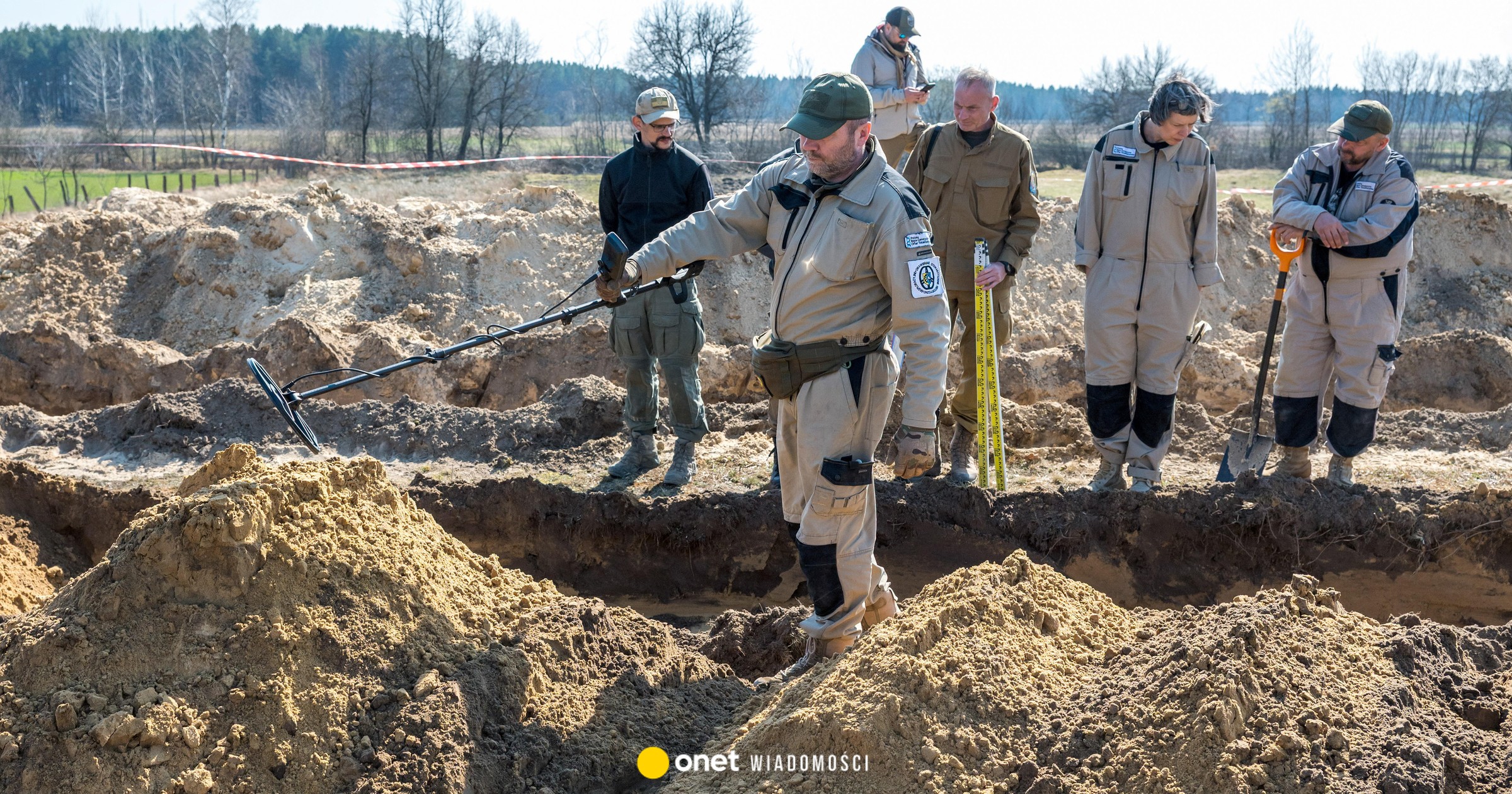
— We have examined all the indicated places. We found the remains of a cemetery chapel. We didn't find it [jednak] mass grave – described by prof. Andrzej Ossowski from the Pomeranian Medical University in Szczecin, who heads the Polish part of the research in Volhynia.
The scientist said that researchers found remains and a single skeleton near the chapel, which may be related to the Volhynia massacre of 1943.
The Polish side, together with Ukrainian partners, will apply for permission to carry out exhumation at the place where the remains were discovered and for permission to conduct further searches – In the area that was [uprzednio] indicated, nothing could be found, so we are finishing the work – noted Prof. Ossowski.
The massacre in Ugły in 1943. Over 100 Poles died
The work on the Polish side is carried out by a team led by prof. Ossowski, while the Ukrainian side is represented by the municipal enterprise of the Lviv Regional Council “Dola”. Financing for the expedition is provided by the Ministry of Culture and National Heritage.
The Polish settlement of Ugly in today's Ukraine was attacked on May 12, 1943 by a unit of the Ukrainian Insurgent Army (UPA) under the command of Nikon Semeniuk, nicknamed “Jarema”. According to historians' estimates, over 100 Poles died and 50 farms were burned. Some residents were murdered in their own homes, others died while trying to escape to the forest adjacent to the village.
Ukrainian sources do not question the fact of the crime in Ugly, but indicate that, apart from Poles, the murder victims were also Ukrainians from mixed Polish-Ukrainian families.
End of the exhumation ban. It was published by the Ukrainian Institute of National Remembrance
Since the spring of 2017, there has been a dispute over the ban introduced by the Ukrainian Institute of National Remembrance on the search and exhumation of the remains of Polish victims of wars and conflicts. Ukraine introduced it after Poland dismantled the UPA monument in Hruszowice in the Podkarpackie Voivodeship in 2017.
The decision to lift the moratorium on the search and exhumation of the remains of Polish victims of the Volhynian crime was announced at the end of November 2024 during a joint press conference by the heads of diplomacy of Poland and Ukraine, Radosław Sikorski and Andriy Sybiha.
Genocide in Volhynia. Ukrainians murdered up to 120,000. Poles
Bloody Sunday in Volhynia took place on July 11, 1943. It was the culmination of the Volhynian massacre, i.e. the mass extermination of the Polish civilian population in Volhynia by Stepan Bandera's Organization of Ukrainian Nationalists (OUN-B), the Ukrainian Insurgent Army (UPA) and the Ukrainian civilian population.
On Bloody Sunday, Poles were attacked in 99 towns, mainly in the Włodzimierz and Horochów counties. In the following days, the massacres continued.
The victims of the murders, which culminated in the summer of 1943, were Poles, and on a much smaller scale, Russians, Ukrainians, Jews, Armenians, Czechs and representatives of other nationalities living in Volhynia. The exact number of victims is not known, but historians estimate that up to 120,000 died during the Volhynia massacre. Poles.