The plastic in us: the invisible danger we are constantly exposing ourselves and how can our body and mind affect our

People are increasingly exposed to microplastic. They made their way into the blood, placenta, lungs and even reached the human brain. According to a study, only the brain could contain 5 grams of such particles, ie about one teaspoon, The Guardian reports.
The researchers suspect that these tiny particles could also affect the intestinal microbes.
“Although it is too early to make definitive statements related to health, the microbiome plays a central role in many aspects of well-being, from digestion to mental health,” says Dr. Christian Pacher-Deutsch, from the University of Graz, Austria.
“The reduction of exposure to microplastic, where possible, is therefore a wise and important caution,” the researcher drew attention.
Such discoveries raise anxious questions: how much plastic do we carry each of us in the body, how much does this really matter and what can we do something about it?
Increasingly contaminated with microplastic
Microplastics are detached from packaging, clothes, paints, cosmetics, tires and other objects. Some are small enough to penetrate through the mucosa of the lungs and intestines in the blood and internal organs – even in cells. What happens then remains, for the most part, unknown.
“We are constantly exposed to these particles,” says Dr. Jaime Ross, a neurologist at the University of Rhode Island, USA.
“But we know that microplastics are found in almost all the tissues that have been analyzed, and recent studies suggest that we now accumulate much more plastic than 20 years ago,” the neurologist warned.
“Many of us assumed that the plastic is inert-that it does not decompose and react-but I realized it is not so,” said the researcher.
How much the brain affects our
Dr. Ross became curious about the plastic from adolescence, when he saw how his mother's pasta containers were corroded.
Decades later, the doctor began to study what the microplastics of the mammal brain could do. Her first study, published in 2023, offered a hint: mice that drank mixed water with microplastic particles began to behave differently.
Usually, if you put mice in a brightly lit box, they stick to the walls, defensively. But those exposed to plastic ventured uneasy in open areas – a behavior more often encountered in aging and neurological diseases.
At dissection, it was discovered plastic in all organs, including in the brain, where an essential protein for brain health, GFAP, was reduced – reflecting a pattern observed in depression and dementia.
Meanwhile, people studies have increased concern.
Microplastics have been detected in the brain of patients with dementia and in the arterial plates of those with heart disease. Those with plastic loaded plates had a risk of almost five times higher to suffer a stroke, a heart attack or die in the next three years.
Experts cannot say exactly what the “safe” level of microplastic. The field of research is extremely young, and the tests performed on consumers are “very premature,” says Prof. Stephanie Wright, researchers in the field of microplastics at Imperial College London.
We are constantly exposed to these particles, and “from a historical point of view, we know that exposure to too many particles is harmful,” says Wright, giving as an example air pollution. “We just have to understand if there is something in these particles that make them disproportionately more harmful,” he said.
What can we do?
Although it is impossible to completely avoid microplastics, scientists say there are practical ways to reduce exposure.
It can start from the kitchen. “What you must avoid is the heat of plastic. So do not cook the food with plastic utensils, do not put hot drinks or plastic food,” says neurologist Jaime Ross.
Also, Ross says that more attention should be paid to daily activities such as preparing a tea cup or staining onion:
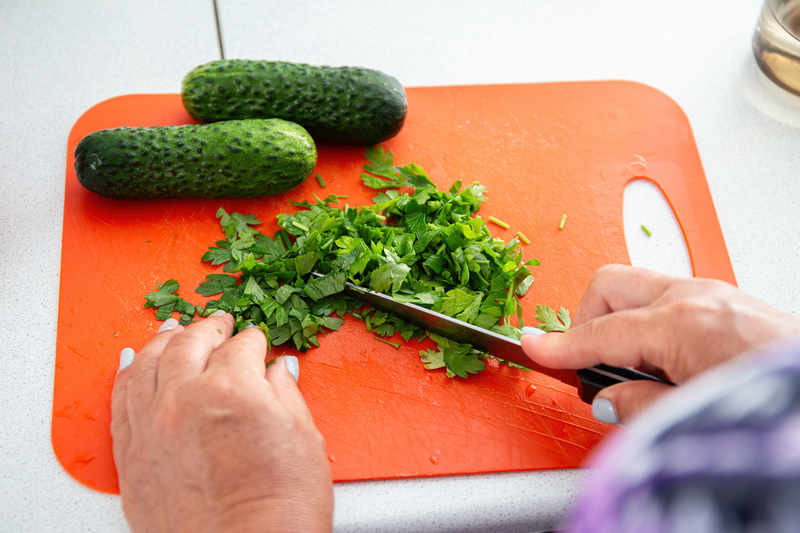
“The tea bags can release a lot of nano and microplastic. Even if the tea envelope is made of paper, they can be sealed with a glue for plastic, so you can try to make tea from the leaves. Chop vegetables on a plastic plate? Because it could also contaminate food,” the doctor said.