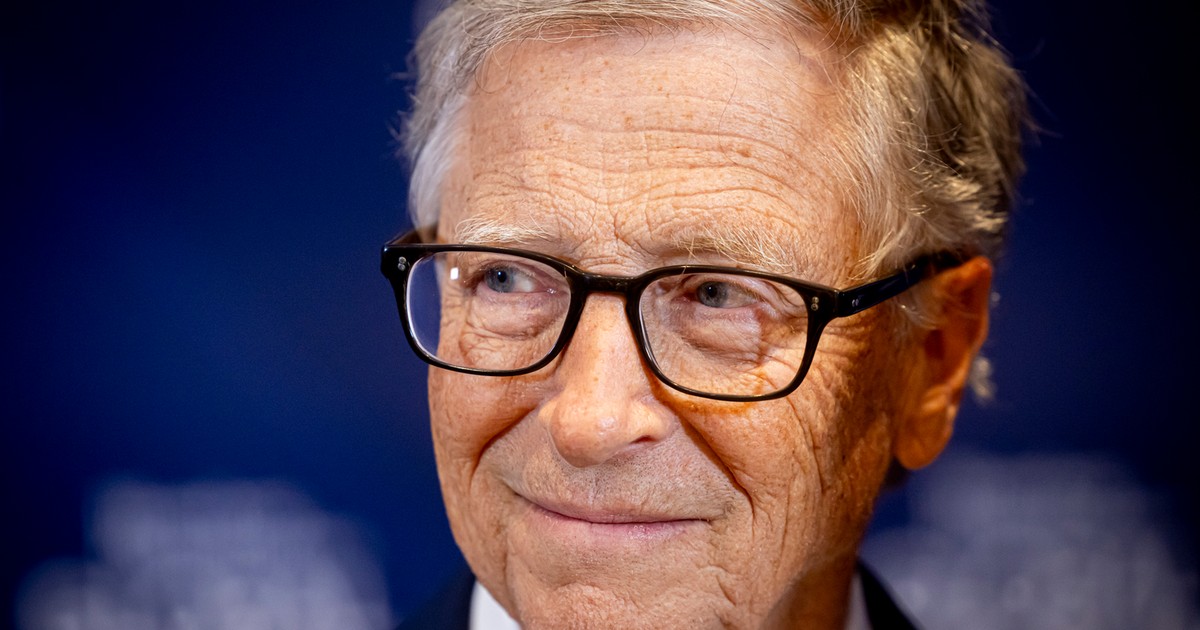
Over the past few months, Bill Gates has made moves that make his thoughts and quotes from the past sound very different today. In January 2025 it was released Source Code: My Beginnings — the first part of a planned trilogy in which he describes his childhood, early years at Microsoft and career turning points. In May, he announced that he intended to donate 99% of his fortune to the Gates Foundation and close its operations by the end of 2045, while increasing resources allocated to the fight against poverty, infectious diseases and maternal and child mortality. At the same time, it warns that 2025 could be the first year in decades in which progress in saving children's lives could be reversed – if the world reduces funding for global health care and research.
Gates made his fortune by creating Microsoft, which over time became a giant in the information technology sector. Currently, the billionaire is mainly devoted to philanthropy.
The Bill & Melinda Gates Foundation, founded by him and his wife in 2000, runs a number of charitable programs aimed at, among others: to eliminate infectious diseases and hunger.
The Financial Times wrote: “With a single signature on a checkbook, Gates can change the fate of more people than any other individual in human history.”
What path did Gates take before he reached the peak of fame? To help you understand this, we have collected the most important quotes from the founder of Microsoft, documenting his statements over a period of over 20 years.
They are a testimony to the metamorphosis of a former computer geek who became a software tycoon and then a philanthropist who changed the course of history. Bill Gates has walked this path and amassed a huge fortune along the way.
About your life path so far:
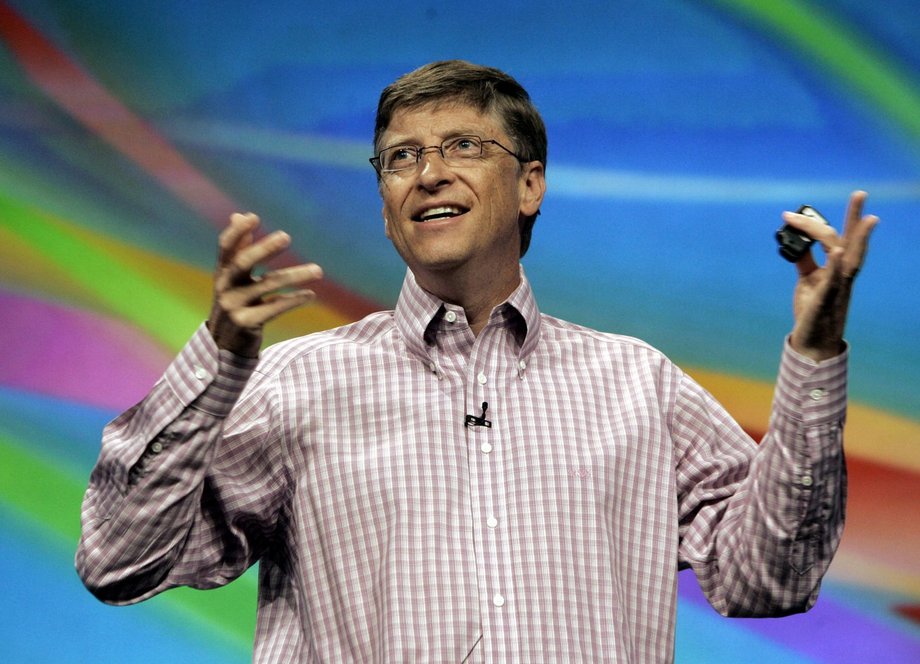
“We have come a long way – from the times when computers were ephemeral machines, extremely complex, to the times when they became our basic working tool. My dream was to make this plan come true and I must admit that, to a large extent, everything turned out as I expected.
|
EastNews
Of course, we can argue about details: about advertising campaign models, about choosing the best Internet protocol, or about the size of screens depending on applications. In any case, modern computers have less robots in them than I initially thought.”
Rolling Stone, March 13, 2014
About the source of Microsoft's success:
Our competitors were mostly masters of one product… They released some novelty, but they did not deal with issues of broadly understood product engineering. They didn't think ahead about the software. They didn't care about tools and performance. They released their product, but then they didn't improve it, they didn't create the next generation of devices
BBC, June 19, 2008
About the initial collaboration with Apple:
We tied our future to the market success of the Macintosh, and then to the popularity of graphical interfaces, but the basis for everything was the Macintosh. We worked together. The dates were uncertain. Quality was the big unknown. Just like the price. When Steve proposed the collaboration, he planned to create a computer that would be much cheaper than the one that eventually appeared on the market, but this did not turn out to be a big problem.
AllThingsD, May 31, 2007
About working with Steve Jobs:
“Steve and I were different, but we both had good collaborators. We had a lot of energy and worked really hard. We were partners on the original Mac software, and what's great is that we had more people involved than Apple.
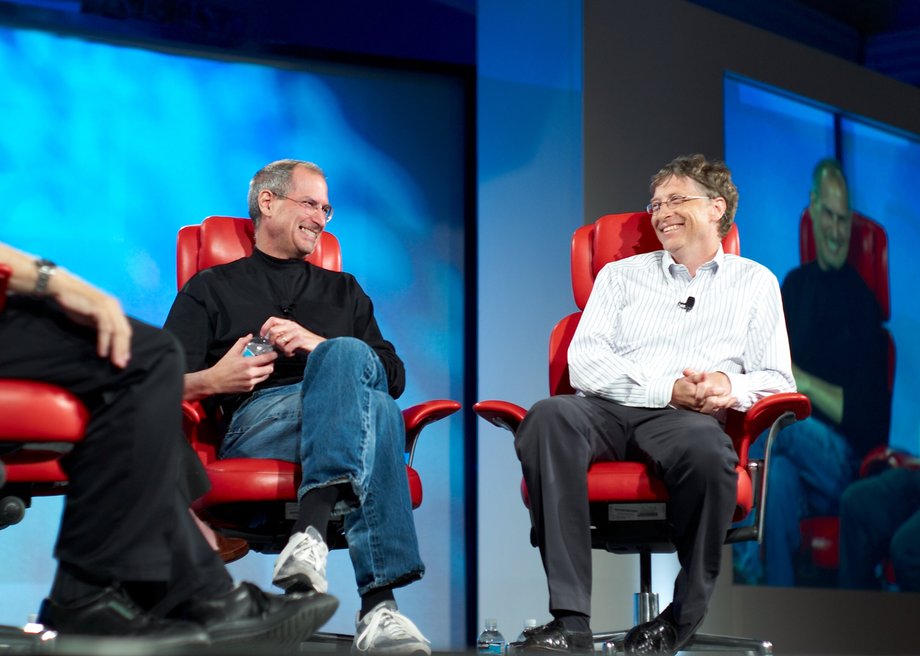
Steve Jobs and Bill Gates
|
Joi Ito / Flickr / CC BY 2.0
But at the same time, we were quite naive. Steve promised the computer would cost $499, but before we knew it, it was $1,999. Either way, working on the Macintosh was an unforgettable experience.
Rolling Stone, March 13, 2014
On the death of Steve Jobs:
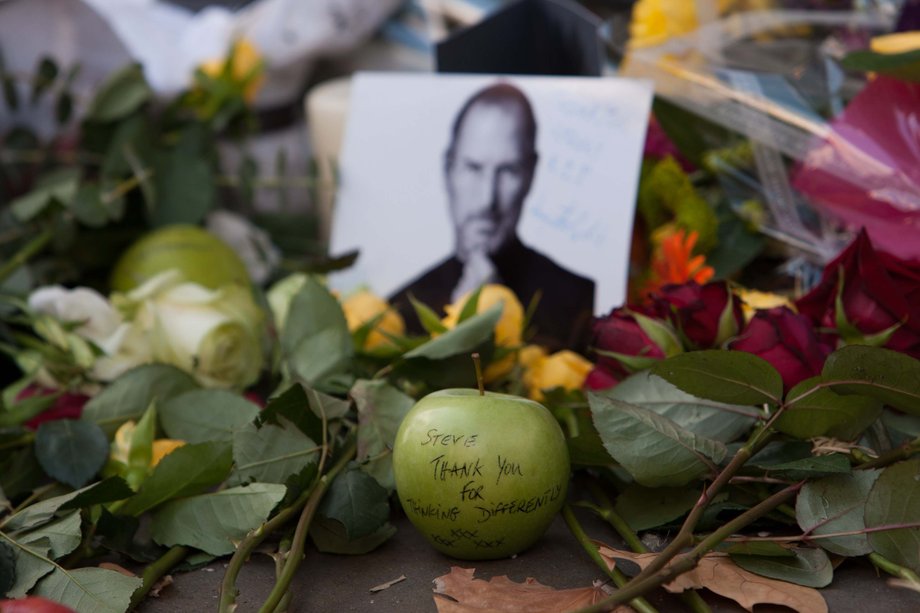
It is rare to find people who have had such a profound impact on our environment as Steve – and this impact will affect many generations to come. And those of us who were lucky enough to work with him can feel honored. I will miss him terribly
Business Insider, 2011
|
Martyn Wheatley / Forum Polish Photographers Agency
About Microsoft's development:
When in 1975 we created the slogan “a computer on every desk and in every home” at Microsoft, we had no idea that we would become such a gigantic company. I still had doubts that we would even be twice as big
AllThingsD, May 31, 2007
On his love of more mundane pursuits:
“Playing bridge is a rather old-fashioned activity, but I like it very much… Every evening I wash the dishes – other people in the house offer to help, but I prefer to do it my own way.”
Reddit, February 10, 2014
About success:
Success is a terrible teacher. He deceives intelligent people, tricking them into believing that everything will work out for them from now on
The Road Ahead, 1995
About failure:
There's nothing wrong with celebrating success, but it's more important to learn from failure
Investing Answers, 2011
About guilty pleasure:
“Having your own plane is a guilty pleasure. Warren Buffet named his plane Indefensible. Due to the activities of my foundation, such a machine is simply necessary for me.”
Reddit, February 10, 2014
On the role of technology:
“Okay, look at the Infosys headquarters in Bangalore, but for a better understanding, go five kilometers in any direction and look at a man who lives without running water, without a bathroom… The world is not flat, and personal computers are not at the top of the hierarchy of human needs.”
The Financial Times, November 1, 2013
On the perception of intelligence:
It's a very fleeting idea. It's about a certain insight, the ability to absorb new information. Finding yourself in a situation where something is explained to you and you immediately say, “Okay, what next?” Asking insightful questions. Understanding everything at once. The ability to remember. Finding ourselves in areas that initially seem completely foreign to us. Some creativity that brings results
Playboy, 1994

|
EastNews
On the desire to eliminate diseases:
“Total elimination is a special process… And zero is a magic number. Either you have to do everything to achieve it and enjoy your work; or you just get close to zero and give up, and then everything will return to the previous level. And then we will understand that we have lost credibility, wasted time and money that we could have spent on something else.”
The Financial Times, November 1, 2013
About the role of money:
I have everything I need in terms of food, clothing… After a certain point, money loses its usefulness for me. Their only function is to build an organization and transfer funds to the poorest
The Telegraph UK, January 18, 2013
About your work:
“The most important project I participated in was the creation of a personal computer. I grew up with it, went through my teens, twenties, and thirties. In fact, I even knew I couldn't get married too early, I was so obsessed with it. It's my life's work.”
AllThingsD, May 31, 2007
About the government:
We need to be realistic and realize that government is a blunt instrument. Without constant supervision by highly qualified and respected people, it will quickly fall into a spiral of errors
Rolling Stone, March 13, 2014
About development and investments:
“Development is sometimes perceived as a project in which you give something to people and nothing much happens. There is a lot of truth in this, and when you think more deeply, you come to the conclusion that investing in enterprises at an early stage of development is also stupid. The percentage of successful investments cries to heaven for vengeance.

|
pixxmixx / Reporter
But every now and then a success happens, someone starts Google or something similar, and suddenly investing in upstarts is considered amazing. Our success percentage is higher than others, but we should still strive to achieve even better results.”
Rolling Stone, March 13, 2014
About the role of dissatisfied customers:
The most dissatisfied customers are the source of the greatest knowledge for every entrepreneur
Forbes, March 4, 2014
About the competition:
“Microsoft has had some pretty vivid rivals in the past. It's good that there are museums that document that.”
InfoWorld, October 1, 2004
About your place in the universe:
There is a possibility, after all we cannot rule it out, that the universe exists solely for me. If so, I must admit that I really like it
TIME, January 13, 1997
About intellectual property:
“The shelf life of intellectual property is like the shelf life of a banana.”
Seattle Post-Intelligencer, July 7, 2011
About business:
When it comes to my thought processes, I spend maybe 10%. time to think about business. The business isn't that complicated, and I certainly wouldn't want to mention it on my business card
Playboy, July 1994
On the limitations of capitalism:
“The market does not prompt scientists, speakers, thinkers or governments to do the right thing. And only by paying attention to problems, by having fantastic people who care and are able to infect others with it, can we make appropriate progress.”
TED Talk, February 2009
On the importance of innovation:
“The modern lifestyle is not a political product. Before 1700, everyone was as poor as church mice, and life was short and brutal. And it wasn't because we lacked good politicians – we had them. But we started dealing with inventions – electricity, steam engines, microprocessors, we wanted to understand genetics, medicine and so on. Yes, stability and education are extremely important – no “I deny it – but the real engine of progress is innovation.”
Rolling Stone, March 13, 2014
On telling the truth immediately:
If I think something is a waste of time or defeats the purpose, I don't hesitate to say so. I'm blowing it straight. That's why during meetings you can often hear me say: This is the most idiotic idea I have ever encountered
Playboy, 1994
This article was originally published in 2016 and has been updated